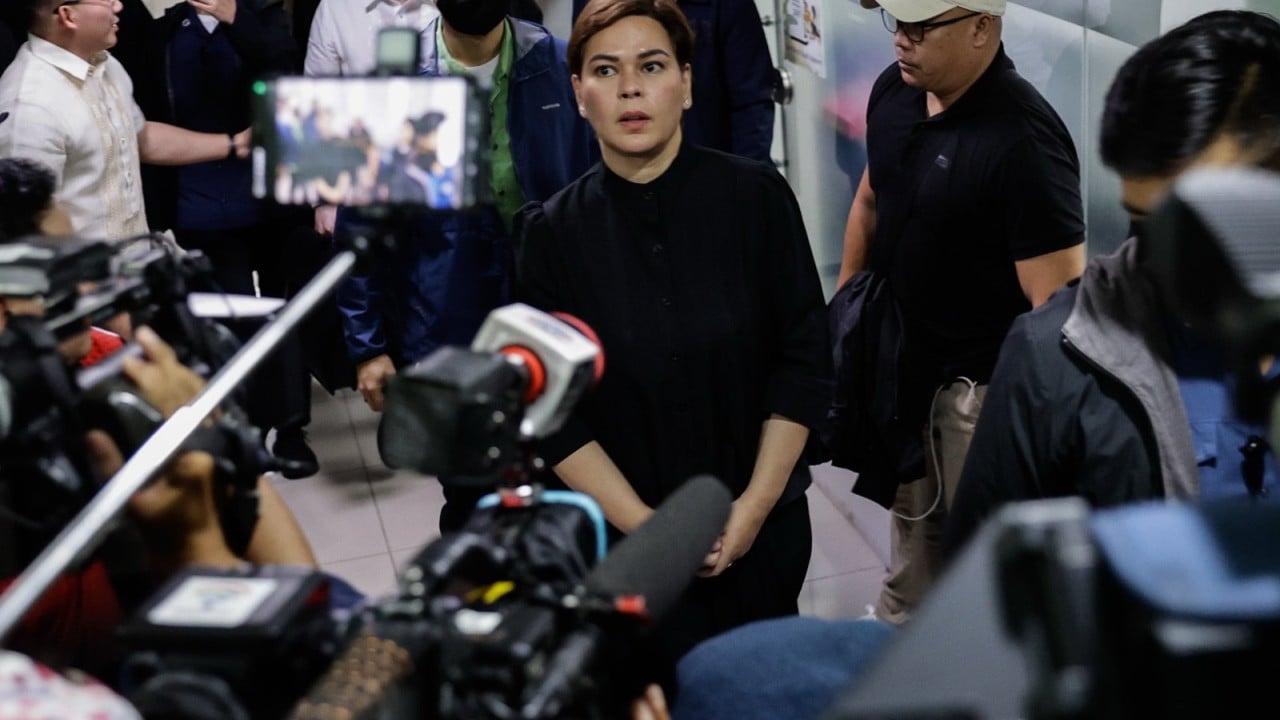
Philippine Vice-President Sara Duterte posted bail following criminal charges and a subsequent arrest warrant over an alleged online death threat directed at President Ferdinand Marcos Jr., First Lady Liza Araneta-Marcos, and former House Speaker Martin Romualdez. This legal escalation stems from a volatile virtual press conference held in November 2024, where Duterte openly declared she had supposedly contracted an assassin to target the country's highest officials if a plot against her life succeeded.
The Department of Justice filed charges of grave threats under the cybercrime framework, leading the Quezon City Regional Trial Court to set bail at 120,000 pesos per count. Simultaneously, Duterte faces a high-stakes Senate impeachment trial centering on separate allegations of confidential fund misuse, bribery, and unexplained wealth.
The Anatomy of a Political Rupture
Cracks in the Marcos-Duterte alliance did not appear overnight. When Ferdinand Marcos Jr. and Sara Duterte ran together under the "UniTeam" banner in 2022, the coalition looked untouchable. It combined traditional northern political machinery with the fierce, populist loyalty of the southern Davao bloc.
Yet power dynamics shifted rapidly after the election. Budget allocations became battlegrounds. Investigative scrutiny into the confidential funds of the Office of the Vice President and the Department of Education—both previously led by Duterte—triggered a fierce congressional pushback.
Her late-night tirade in November 2024 shattered any remaining illusion of political co-existence. By stating on record that she had commissioned a hit squad, she crossed from rhetorical hostility into explicit legal liability.
"If I'm killed, kill Marcos, Liza Araneta, and Martin Romualdez," Duterte declared during the broadcast.
Those words provided the state apparatus with the exact instrument needed to dismantle her political insulation. The National Bureau of Investigation moved quickly to review the broadcast, establishing what prosecutors categorized as a reasonable certainty of conviction for cyber-enabled grave threats.
Dual Track Justice and Constitutional Headaches
Can a sitting, impeachable officer face simultaneous criminal prosecution in regular courts while standing trial in the Senate? Defense lawyers argue vehemently that she cannot. Their legal strategy rests on the premise that the constitutional architecture protects high-ranking officials from ordinary criminal dockets while impeachment proceedings remain active.
Mainstream legal scholars point out a glaring flaw in that defense. The crimes alleged in the criminal complaint involve personal threats of violence rather than purely official misconduct tied strictly to the mechanics of impeachment.
Courts have signaled that the two tracks are procedurally distinct. One aims for removal from office and a permanent ban from future political bids. The other carries potential imprisonment ranging from months to years under the Revised Penal Code and cybercrime statutes.
This dual-track approach creates a strange legal theater in Manila. Every day spent in the Senate impeachment court runs parallel to the shadow of local court warrants and bail postings.
The 2028 Horizon and Public Resonance
Beneath the heavy veneer of legal arguments lies the brutal reality of the upcoming 2028 presidential election. Sara Duterte remains a formidable electoral figure. Public opinion polling continuously indicates that she retains core support segments who view these charges as weaponized state retaliation rather than genuine accountability.
Her family name carries immense weight. Her father, former President Rodrigo Duterte, faces his own compounding legal battles regarding his brutal anti-drug campaign, creating a multi-front war for the entire political dynasty.
If the current administration pushes too hard, it risks martyrdom optics, galvanizing sympathetic voters across the archipelago. If the courts back down or move too slowly, critics will point to elite impunity as proof of a broken justice system. Posting bail avoids immediate detention, but it does nothing to halt the slow erosion of her political coalition.
The institutional friction between Malacañang and the Vice-President's office exposes the fragility of Philippine democratic checks and balances. Courts will continue parsing legal definitions of cyber threats, while lawmakers debate the finer points of public fund expenditures.
The bail money has been paid, but the political fallout is only beginning.