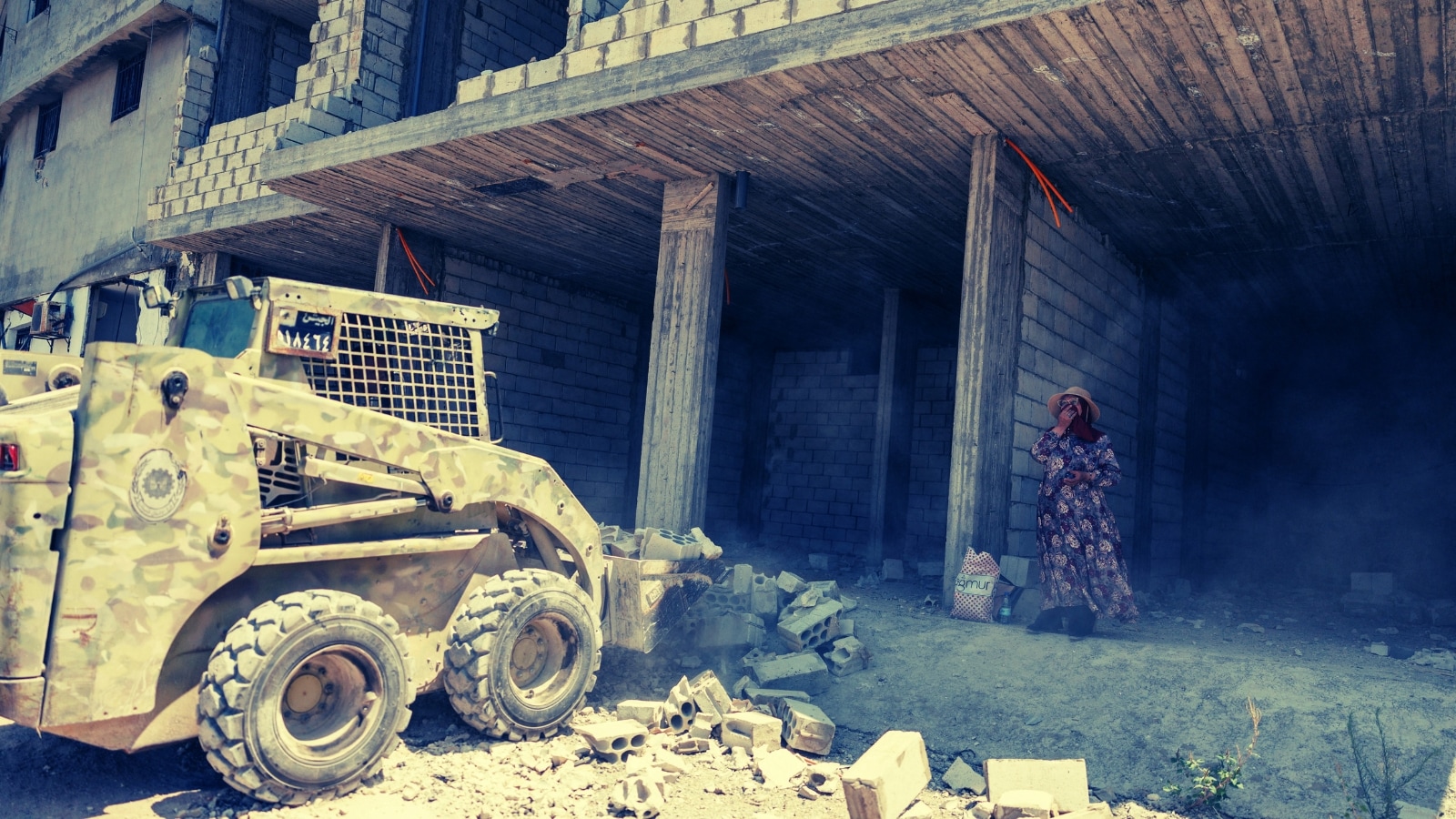
The wind does not care about treaties. It sweeps off the Mediterranean, charges across the dry plains of southern Lebanon, and shrieks over ridgelines that have seen too many empires rise and crumble into dust.
Up here, silence is never peaceful. It is a loaded weapon. Read more on a similar subject: this related article.
Months have passed since the ink dried on a ceasefire agreement meant to quiet the guns. Diplomats in distant capitals shook hands, flashed rehearsed smiles for the cameras, and declared a return to normalcy. They spoke of stability, of diplomatic breakthroughs, of a fragile peace taking root in blood-soaked soil. But maps drawn on mahogany tables in air-conditioned rooms rarely survive contact with the jagged geography of the ground.
Ask Tariq. He is not a general, nor is he a politician bargaining for leverage in a regional power struggle. He is a shepherd whose family has grazed goats on the stony slopes of the southern borderlands for three generations. When I spoke with him last autumn, before the worst of the thunder began, his greatest worry was the stubborn drought baking his olive groves. Today, his worry has a specific name. It is a hill. An anonymous, humpbacked crest of dirt, rock, and sparse scrub that military planners designate only by an alphanumeric coordinate, but which both sides treat as the center of the universe. Further reporting by The Washington Post explores related perspectives on the subject.
Ceasefires are legal documents. Mountains are physical realities. And on this particular ridge, physics is winning.
To understand why a few acres of jagged limestone can threaten a fragile regional truce, you have to abandon the clean abstractions of satellite imagery. On a monitor miles away, a strategic hill looks like a strategic chess piece. You occupy it, you command the valley. You control the sightlines. You dictate the terms of movement for miles around.
In reality, occupying that hill means huddling in cold, damp trenches while artillery craters from previous months scar the earth like open sores. It means staring through binoculars across a narrow valley at a young soldier from the opposing side who is doing the exact same thing, locked in a mutual hostage situation born of paranoia and pride.
(As a hypothetical illustration of the tactical deadlock: Imagine two men standing on opposite rooftops during a thunderstorm, each holding a live wire. Neither wants to let go first, because letting go means vulnerability, and vulnerability, in this neighborhood, is fatal.)
The ceasefire text was supposed to establish a buffer zone. It was designed to push heavy weapons back, to give peace a fighting chance by creating physical distance between bitter adversaries. Yet distance is an illusion when the terrain itself is the prize. Israel maintains that its troops must hold these elevated vantage points to prevent rearmament and preempt cross-border threats. Hezbollah insists that any foreign boot remaining on Lebanese soil is a continuation of an occupation, a direct violation of sovereignty that renders the ceasefire a dead letter before it can even breathe.
Both arguments possess a grim, internal logic. And that is precisely why nobody is sleeping.
The tension does not announce itself with a roar. It creeps in through the small, daily friction points. A patrol pushes fifty meters too far up a slope to check a suspected tunnel entrance. A drone hums overhead, a mechanical hornet buzzing persistently against the quiet. A warning shot rings out across a ravine, echoing off the stone walls of abandoned stone houses in border villages where the shutters remain permanently bolted.
Each minor provocation acts as a spark dropped into dry tinder.
Down in the valleys, ordinary civilians live inside the blast radius of these political standoffs. Entire communities that fled the heavy bombardments months ago find themselves packing their bags again, or worse, unpacking them with trembling hands while listening to the heavy thump of controlled detonations and repositioning armor up on the heights. They are caught in a cruel psychological purgatory. They are told the war is over, yet every morning they wake up and check the sky, reading the smoke patterns to determine if today is the day the truce finally snaps.
History whispers a warning here, and it is a stuttering, repetitive echo. We have seen this script before. It is a tragedy in multiple acts, where the intermission is simply labeled "Ceasefire." Every major conflict in this bruised corridor ends not with a final resolution, but with an exhausted pause. Troops dig in. Politicians posture. And both sides wait for the other to blink, to make a miscalculation, to hand them the moral justification for the next round of fire.
The hill itself does not care about politics. It has endured centuries of conquerors. Romans, Crusaders, regional kingdoms, modern armies—all have marched up its slopes, planted their flags, and eventually retreated into history, leaving behind only broken pottery, unexploded ordinance, and the graves of young men who died for dirt.
Up on the crest, the wind picks up again, carrying the sharp scent of wild thyme and the distant, metallic rattle of tracked vehicles shifting position in the freezing dawn. Tariq watches from a distance, leaning on his wooden staff, his flock scattered among the rocks below. He is not calculating trajectories or analyzing strategic doctrines. He is just waiting to see if he will be allowed to lead his goats back up the mountain this spring, or if the mountain will once again belong exclusively to the dead.