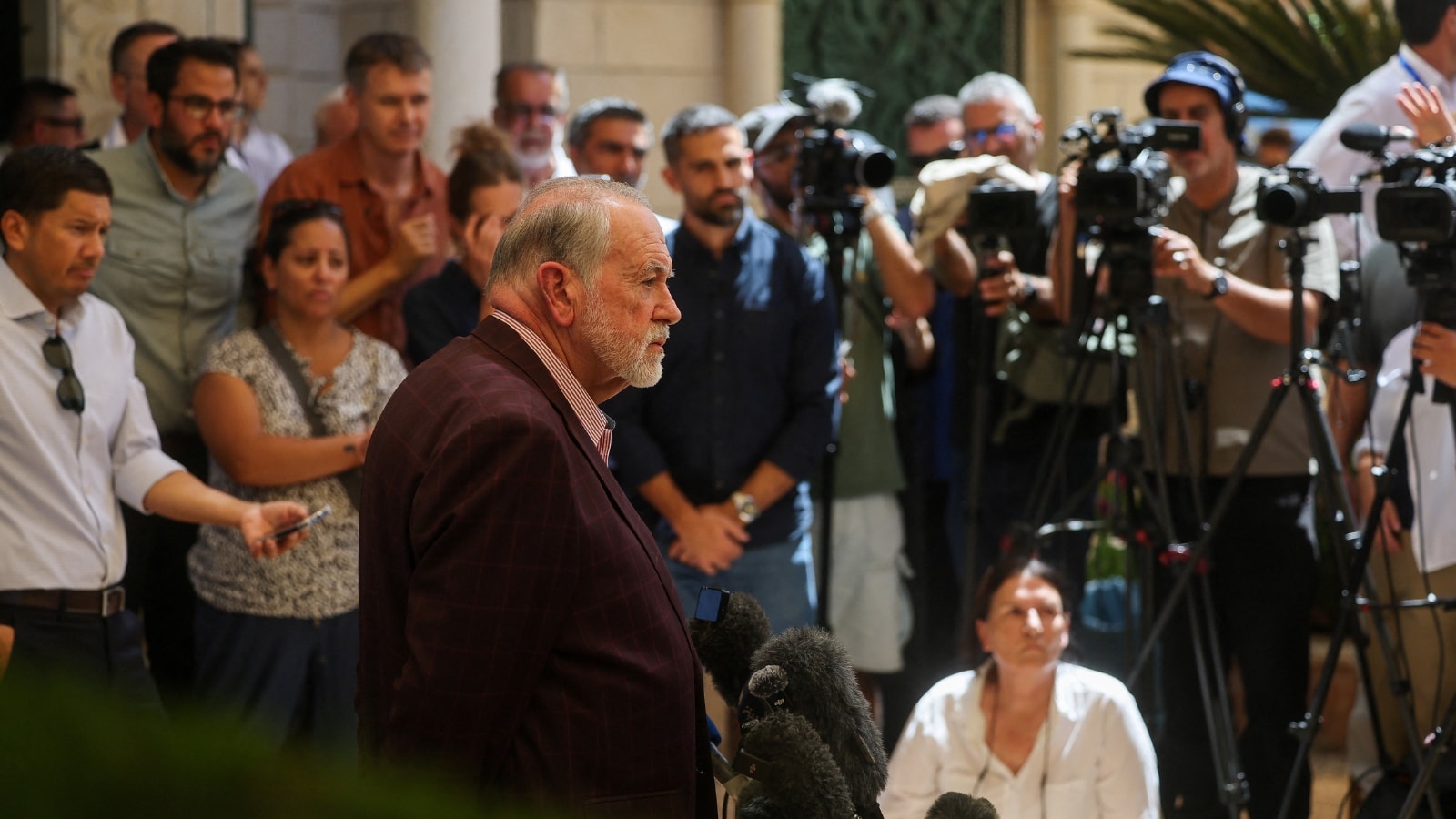
The gravel beneath the tires crunches with a familiar, heavy finality. It is the sound of a border crossed, not just between municipalities, but between two entirely different realities separated by a few yards of scorched earth and coils of rusted concertina wire. When a diplomatic convoy rolls into a Palestinian village in the West Bank these days, the dust it kicks up settles on olive trees that have stood for centuries, watching the slow, grinding erosion of a neighborhood's peace.
I remember the smell of sun-baked dust and crushed wild thyme from my time walking these exact roads. It clings to your clothes long after you have left the valley. But lately, that familiar scent carries something else. Fear. Thick, electric, and entirely unignorable.
The official reports call it an uptick in settler violence. Bureaucrats sitting in climate-controlled offices thousands of miles away love these sterile terms. They turn human terror into a spreadsheet metric. They reduce shattered windows, burned-out sedan frames, and terrified children hiding under kitchen tables to a quarterly data point.
Let us be entirely clear about what those numbers actually represent.
Imagine waking up to the sound of breaking glass at two in the morning. Not the sharp, clean shatter of a domestic accident, but the dull, heavy thud of stones thrown with intent. Imagine the orange glow of a torched car illuminating your living room walls, casting long, twisting shadows across family photographs. This is not a geopolitical abstraction. This is a Tuesday night for families living in places like Turmus Ayya or Huwara.
When a foreign ambassador steps out of an armored SUV in one of these towns, the immediate reaction from the locals is rarely one of political hope. It is exhaustion. It is the weary skepticism of people who have watched delegations arrive, nod gravely, scribble notes on expensive pads of paper, and then drive away before the dust settles.
Yet, this recent visit feels different. Or at least, it carries a heavier burden of necessity.
The ambassador walks through the alleyways flanked by security details, but the real protection needed here cannot be measured in bodyguards or bulletproof plating. It requires political will. It requires looking at a map of the West Bank not as a chessboard for ideological expansion, but as a patchwork of homes where real human beings are trying to sleep, work, and raise children without wondering if their front door will be kicked in before dawn.
To understand the current crisis, you have to look past the breaking news alerts and examine the geography of impunity. In many of these rural communities, the distance between safety and catastrophe is measured in minutes. When incidents occur, the response time of local authorities can stretch into hours. That vacuum of accountability is where the danger breeds. It is an environment where intimidation becomes policy by other means.
Consider the olive harvest. To outsiders, it sounds pastoral, almost romantic. Generations gathering to strip purple fruit from ancient branches, singing songs passed down through centuries. But today, the harvest is an act of quiet courage. Farmers walk out to their groves knowing that a short walk from their village lies an outpost where aggressive young men watch their every move through binoculars. Every basket of olives filled is a small victory against displacement. Every unmolested day is a brief reprieve.
When the ambassador meets with local council members behind closed doors, the conversation is rarely polite diplomacy. It is raw. People speak over one another, their voices cracking with a mix of fury and despair. They show smartphone videos of masked figures descending upon their properties with iron bars and torches. They demand to know a simple, agonizing question.
How long before this becomes unlivable?
There is no easy answer given in those rooms. Diplomacy is the art of speaking in carefully calibrated paragraphs while your interlocutors are screaming in punctuation marks. But the very presence of a high-ranking foreign envoy serves a specific, if fragile, purpose. It acts as a temporary mirror. It forces governments capitals away to look at the reflection of policies that have allowed lawlessness to fester in the hills.
We often talk about peace processes as if they are fragile crystal vases dropped on a marble floor, waiting for some master craftsman to glue the pieces back together. That metaphor is comfortable because it keeps the damage at a safe distance. But the reality on the ground is organic, biological, and bleeding. It is a living wound.
As the convoy prepares to leave, the children of the village gather at a safe distance. They do not wave flags or throw flowers. They watch the heavy vehicles turn around in the narrow square with wide, unblinking eyes. They have seen visitors come and go. They know the dust will settle, the cameras will pack away, and they will still be here, listening to the night, waiting for the sound of stones on glass.