The heat in the Gulf of Oman is a physical weight. It is a humid, suffocating blanket that smells of salt and heavy fuel oil. If you stand on the deck of a Very Large Crude Carrier (VLCC) drifting near the entrance of the Strait of Hormuz, the horizon disappears into a haze where the sky and the sea become the same shade of dull silver. You are currently floating at the world’s most sensitive jugular.
To the world’s energy markets, this is a statistic. To the men and women on these ships, it is twenty-one miles of nerves.
The Strait of Hormuz is the narrowest of passages. At its tightest point, the shipping lanes are only two miles wide in either direction. Through this needle’s eye passes roughly one-fifth of the global petroleum consumption every single day. If you drive a car in Tokyo, heat a home in London, or power a factory in Mumbai, your life is tethered to this specific patch of blue water. But for the Gulf states—Saudi Arabia, the UAE, Kuwait, Iraq—it is more than a trade route. It is an existential vulnerability.
The Geography of Anxiety
Consider a hypothetical captain named Elias. He has spent thirty years at sea. He knows that when he enters the Strait, he is entering a space where geography has conspired against the modern economy. To his north lies the Iranian coastline, jagged and watchful. To his south, the Musandam Peninsula of Oman. Elias isn’t just worried about the depth of the water or the traffic of other tankers. He is worried about the political temperature.
When tension spikes, the insurance premiums on his cargo skyrocket. A single "incident"—a limpet mine, a drone sighting, a seized vessel—vibrates through the global banking system in milliseconds. For the nations lining the Gulf, this is the "Hormuz Dilemma." They are some of the wealthiest entities on Earth, yet their entire economic survival depends on a doorway they do not fully control.
This isn't a new problem, but the stakes have shifted. In the 1980s, during the "Tanker War," ships were hit by missiles and still limped to port. Today’s global economy is more fragile, built on "just-in-time" supply chains that can't handle a week of silence in the Strait.
Pipelines and the Desert Mirage
The most obvious solution seems simple on a map: just go around. If the front door is blocked, use the side exit.
Saudi Arabia and the United Arab Emirates have spent billions trying to build these exits. The East-West Pipeline in Saudi Arabia stretches 750 miles across the scorched interior of the kingdom, carrying crude from the fields in the East to the port of Yanbu on the Red Sea. In the UAE, the Habshan–Fujairah pipeline cuts through the Hajar Mountains to reach the Gulf of Oman, bypassing the Strait entirely.
On paper, these are the shields of the desert. In reality, they are modest umbrellas in a hurricane.
The East-West Pipeline has a capacity of about 5 million barrels per day. The Habshan line adds another 1.5 million. Combined, these bypasses handle a fraction of the roughly 20 million barrels that typically flow through Hormuz. If the Strait closes tomorrow, these pipes become a desperate straw through which the world tries to drink an ocean.
There is also the matter of destination. Most of the oil flowing out of the Gulf is headed East—to China, India, Japan, and South Korea. Pumping oil to the Red Sea adds thousands of miles to the journey for an Asian-bound tanker, forcing it to circumnavigate the Arabian Peninsula or navigate the Suez Canal. Logistics aren't just about moving a product; they are about the relentless math of time and fuel.
The Ghost of Infrastructure
Beyond the physical pipes, there is the human cost of redirection. Imagine the logistical nightmare of recalibrating an entire planet's energy flow. It isn't just about the oil. The Gulf states rely on the Strait for almost everything they consume.
Desalination plants—the lifeblood of cities like Dubai, Doha, and Kuwait City—require specialized parts and chemicals that arrive via these same shipping lanes. Food security is tied to the same blue water. For a citizen in Riyadh or Abu Dhabi, a "choked" Strait doesn't just mean a dip in the GDP. It means the price of onions triples. It means the specialized technician needed to fix a power grid is stuck on a ship that can’t dock.
The invisible stakes are the social contracts between these governments and their people. These states have traded stability and prosperity for political quiet. If the oil stops flowing out, the money stops flowing in. If the money stops, the air conditioning stops. In the desert, that is a death sentence.
The Asian Pivot and the New Dependency
The most profound shift in this narrative isn't happening in the Middle East, but in the boardrooms of Beijing and New Delhi. For decades, the United States was the primary guarantor of security in the Strait. The U.S. Fifth Fleet, based in Bahrain, was the silent shadow ensuring the tankers kept moving.
But the U.S. is now a net exporter of energy. The "shale revolution" changed the calculus. While Washington still cares about global price stability, it no longer needs the Gulf’s oil to keep its own lights on.
The new "owners" of the Hormuz risk are the Asian superpowers. China is now the largest customer for Gulf crude. This creates a strange, tense irony. The nations most dependent on the Strait are no longer the ones with the massive carrier strike groups patrolling it.
Saudi Arabia and the UAE are pivoting. They are investing heavily in refineries and storage facilities in Asia—places like China’s Zhoushan or India’s Ratnagiri. By storing their oil closer to the customer, they create a buffer. They are essentially moving the "end of the pipe" thousands of miles away from the danger zone. It’s a brilliant strategy, yet it still requires the oil to get out of the Gulf in the first place.
The Silence of the Strait
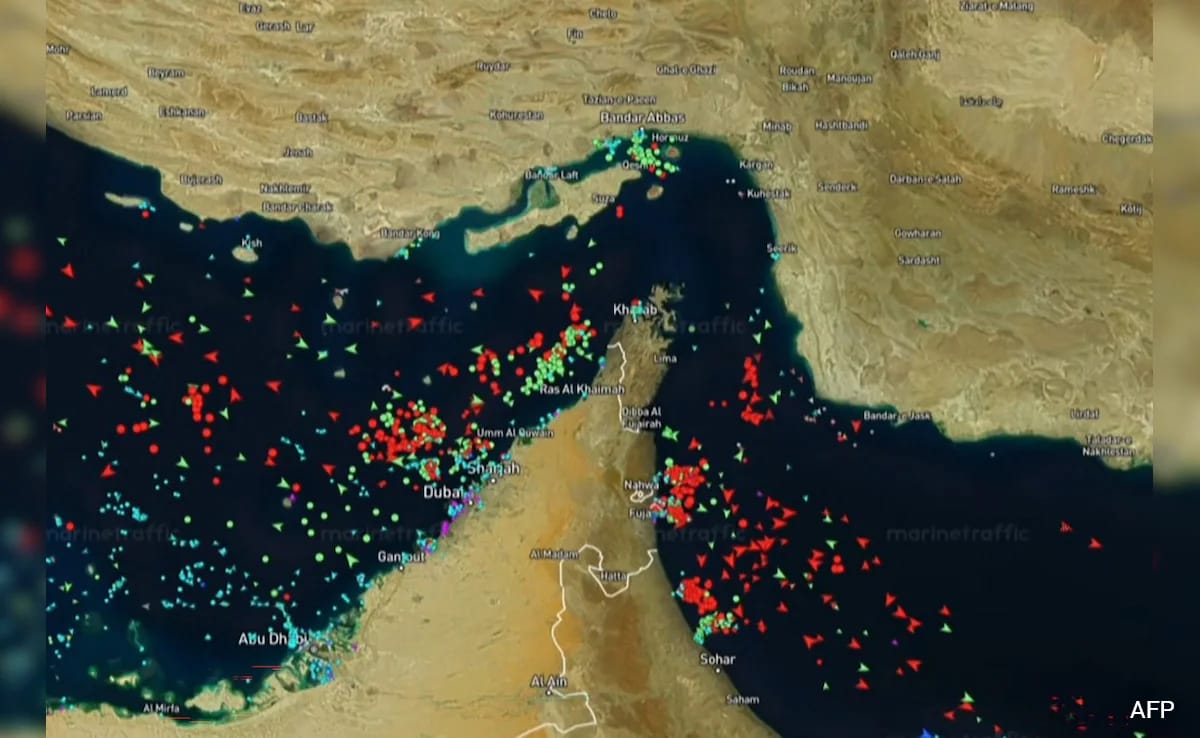
If you look at the Strait on a satellite tracking app, it looks like a swarm of bees. Hundreds of icons representing ships, each one a multi-billion-dollar asset. But there are moments, during high-level military drills or after a security threat, when the screen goes quiet.
That silence is the sound of the global economy holding its breath.
The Gulf states are currently trapped in a race against time. They are trying to diversify their economies through "Visions" and "Projects" that involve tourism, technology, and renewable energy. They want to become more than just "gas stations" for the world. But every skyscraper in Riyadh and every tech hub in Dubai is built on a foundation of carbon that must pass through those twenty-one miles.
They are building rail networks that will eventually link the Gulf to the Mediterranean. They are exploring hydrogen exports that might be easier to transport. They are playing a long game. But geography is a stubborn opponent.
The Irony of the Map
There is a specific kind of vertigo that comes from realizing how much of our comfortable, modern existence relies on a single, narrow passage of water. We like to think of our world as digital, ethereal, and borderless. We talk about the "cloud" and "global connectivity."
But the cloud runs on electricity. Electricity often runs on gas. Gas travels on ships. Ships must pass through the Strait.
We are still, at our core, a civilization of physical trade and narrow chokepoints. For the Gulf states, the options are limited. They can build more pipes, they can buy more sophisticated missile defense systems, and they can try to negotiate with their neighbors. But they cannot move their coastline.
The heat continues to shimmer over the water. The tankers continue to line up, their hulls sitting low in the sea, heavy with the liquid history of the earth. Captain Elias looks at his radar. He sees the narrow gap ahead. He knows that as long as the world demands the fire beneath the sand, he will have to keep threading this needle.
The Strait of Hormuz is not just a geographic feature. It is a reminder that for all our progress, the pulse of the world can still be squeezed by a few miles of salt water and the whims of men on the shore.