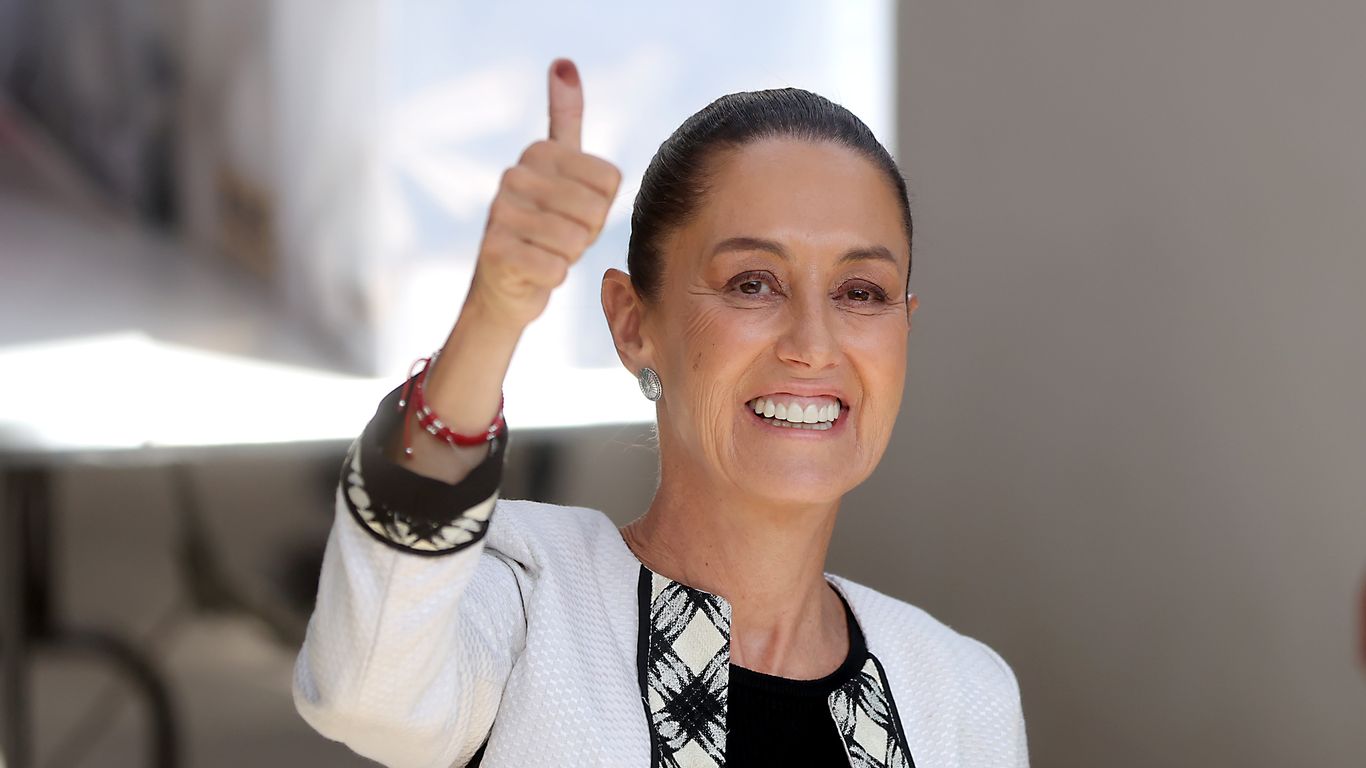
Claudia Sheinbaum doesn't have the luxury of a honeymoon phase. Just eighteen months into her presidency, she's finding out that the biggest threat to her "Second Story" of the Fourth Transformation isn't just the return of Donald Trump—it's the internal friction within her own Morena party. She’s essentially playing a high-stakes game of geopolitical Tetris, trying to fit Trump’s aggressive trade demands into a domestic political framework that still treats any concession to Washington as a betrayal of Mexican sovereignty.
The reality of 2026 is a lot messier than the campaign posters suggested. On one side, you've got a US president who views tariffs as a universal remote for foreign policy. On the other, you've got a Morena base that remains fiercely loyal to the nationalist, "hugs not bullets" rhetoric of Andrés Manuel López Obrador (AMLO). Sheinbaum is stuck in the middle, trying to modernize Mexico’s security and trade approach without looking like she’s taking orders from the White House.
The Trump Tariff Shadow and the USMCA Stress Test
It’s no secret that Trump loves leverage. Since his return to office, he’s made it clear that the 2026 USMCA review isn't going to be a "routine check-in." It’s a full-scale pressure test. Trump has already floated the idea of 25% tariffs on Mexican exports unless Sheinbaum does more to stop the flow of fentanyl and migrants.
But here’s the thing: Mexico is now the United States' largest trading partner. The supply chains are so intertwined that a trade war would basically be a circular firing squad. Sheinbaum knows this. She’s been quietly appointing technocrats—people like Roberto Lazzeri Montaño, the new ambassador to the US—who understand the nuts and bolts of trade better than the ideological firebrands of the old guard.
Sheinbaum’s "Plan Mexico" is her big bet. She wants to attract $277 billion in investment by positioning Mexico as the ultimate "nearshoring" hub. But Trump wants that investment to stay in the US, or at least come with heavy strings attached. If she caves too much to Trump’s "America First" demands to keep the trade doors open, she risks a massive backlash from the nationalist wing of Morena.
Cartels and the Sovereignty Trap
Security is where the tension gets truly uncomfortable. In April 2026, the US indicted a sitting Mexican governor and a national senator from the Morena party for alleged narco-ties. This wasn't just a legal move; it was a tactical strike. It forced Sheinbaum to choose: defend her party members and risk being labeled "soft on crime" by Trump, or cooperate with the US and be accused of violating Mexican sovereignty by her own supporters.
Sheinbaum has tried to walk a fine line. She’s moved away from AMLO’s "passive" approach to cartels, focusing more on intelligence and high-level arrests, like the recent operations against the Jalisco New Generation Cartel (CJNG). But the "sovereignty" card is still the most powerful one in Mexican politics. When news broke that US agents were involved in a raid in Chihuahua that ended in a fatal car crash, Sheinbaum had to publicly scold Washington.
"What we told the US was that the federal government didn't know about the involvement of these people and we hope that it's an exception," she said.
That’s the dilemma. She needs US intelligence to fight the cartels effectively, but she can't be seen as a puppet. Trump doesn't care about these optics. He’s threatened to use US military force against cartels unilaterally if he feels Mexico isn’t doing enough. That’s a nightmare scenario for Sheinbaum that would basically blow up her domestic credibility overnight.
Moving the Pieces Inside Morena
While she's dealing with Trump, Sheinbaum is also busy "de-Lopezobradorizing" her own party. It’s a subtle, chess-like process. She’s been moving AMLO loyalists into less central roles and bringing in her own trusted circle.
The resignation of Luisa María Alcalde as party president to take a legal role in the executive branch was a major tell. It allows Sheinbaum to install a new party leader—likely someone like Ariadna Montiel—who is more aligned with her institutional, technocratic style. Even AMLO’s son, Gonzalo López Beltrán, was reassigned to campaign work in Coahuila, away from the core of party power.
Sheinbaum is building a party that runs on her authority, not just on the nostalgia of the founding leader. This is crucial because, to survive the Trump years, she needs a party that is disciplined and willing to follow her lead on difficult compromises.
The China Factor
Then there's the "China Problem." Trump is obsessed with "backdoor" Chinese investment in Mexico, specifically in the EV sector. He’s pressured Mexico to align its trade policy with the US to block Chinese components.
Sheinbaum has actually shown a willingness to play ball here. She’s backed tariffs on Chinese imports, a move that would have been unthinkable for a traditional leftist leader. It’s a pragmatic sacrifice. She’s essentially telling Trump, "We’ll help you box out China if you leave our car manufacturing alone."
But this "economic security" pivot isn't popular with the hardline left in Morena, who see it as a surrender to US imperialism. They want Mexico to remain a neutral bridge between the East and West. Sheinbaum’s gamble is that the economic growth from US nearshoring will eventually quiet the ideological dissent.
What's Actually at Stake
This isn't just about two presidents who don't like each other. It’s about whether North America remains a unified economic bloc or fractures under the weight of populism and protectionism.
If you’re watching this play out, don't focus on the daily tweets or the "mañanera" rhetoric. Look at the appointments and the USMCA negotiation fine print. That’s where the real power is being brokered. Sheinbaum is trying to prove she can be a partner to the US without being a subordinate. It’s the hardest job in global politics right now.
Practical next steps for following this story:
- Watch the 2027 midterm prep: The internal Morena elections this year will reveal exactly how much control Sheinbaum has over the party’s narrative.
- Track the USMCA "Rules of Origin" talks: This is where the US will try to squeeze out Chinese influence; Mexico's response will signal their true trade priority.
- Monitor extradition requests: If Sheinbaum starts handing over high-profile Morena-linked figures to the US, you'll know she’s prioritized the relationship with Trump over party peace.


