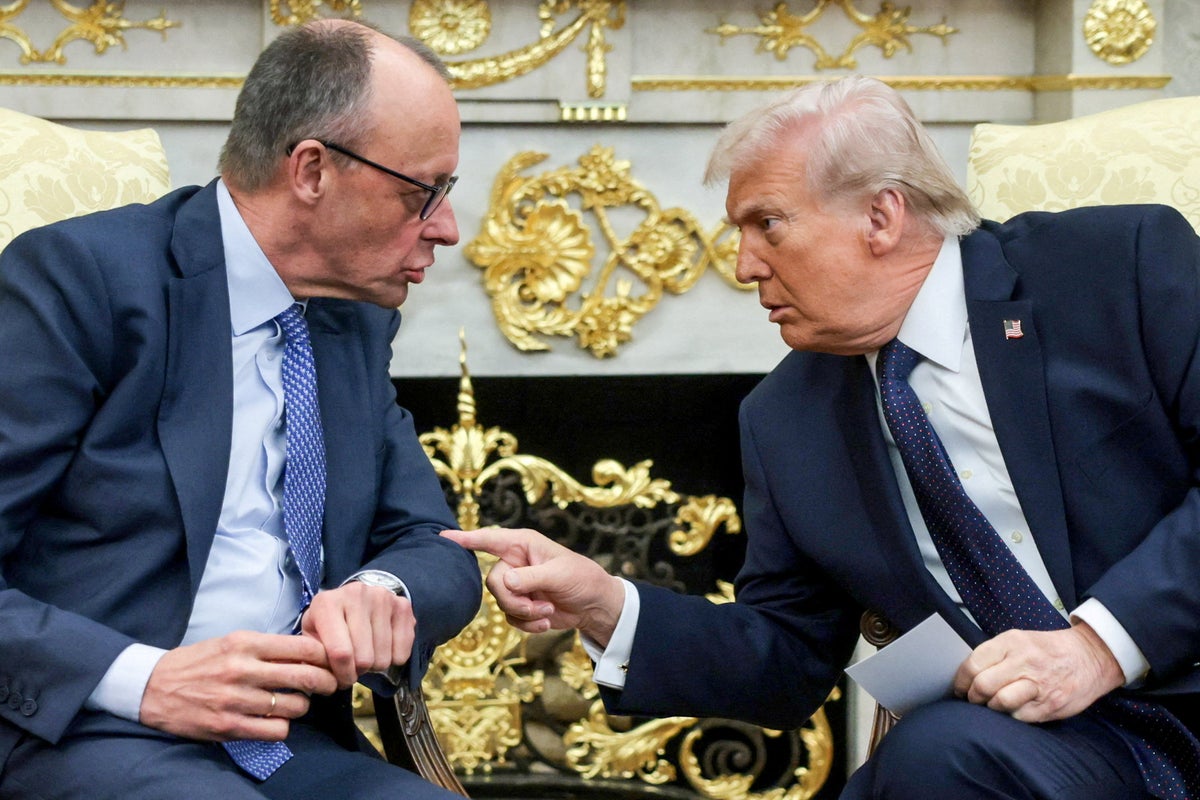
The legacy media is currently hyperventilating over a "diplomatic crisis." Donald Trump orders thousands of American troops out of Germany after a friction-filled standoff with Chancellor Friedrich Merz, and the foreign policy establishment reacts as if the sky is falling. They call it a "row." They call it a "betrayal of NATO." They paint a picture of a fractured West sliding into irrelevance because two leaders couldn't play nice in a bilateral meeting.
They are wrong. They are looking at the scoreboard while the entire stadium is being rebuilt.
The mainstream narrative suggests that American boots on German soil are the only thing preventing a total continental collapse. This is the "lazy consensus" of the decade. In reality, the withdrawal of US forces isn't a strategic failure; it is the long-overdue catalyst for European adulthood. For seventy years, Germany has operated under a security umbrella that allowed it to build a massive export economy while effectively outsourcing its defense to the American taxpayer. That era is over. Merz knows it. Trump knows it. It’s time the pundits figured it out.
The Myth of the Security Vacuum
The first thing you’ll hear is that removing 9,000 or 15,000 troops creates a "vacuum" that Russia will immediately fill. This assumes that the 21st-century battlefield is still about massed tank divisions crossing the North German Plain. It isn't.
Modern deterrence isn't about how many American GIs are buying schnitzel in Kaiserslautern. It is about cyber resilience, energy independence, and rapid-response logistics. By pulling troops, the US isn't "abandoning" Europe; it is forcing a redistribution of responsibility. The presence of these troops acted as a sedative for European defense spending. Why invest in a functional Luftwaffe or a digitized army when you can just rely on the US 1st Armored Division?
I’ve sat in rooms with defense contractors who laugh at the state of German procurement. They’ve spent years bloated on the "peace dividend," allowing their hardware to rot while lecturing the rest of the world on fiscal responsibility. This troop withdrawal is the cold shower Germany desperately needs to wake up.
The Merz Factor and the New Realism
Friedrich Merz is not Olaf Scholz. He is a transatlanticist, yes, but he is also a hard-nosed realist who understands power dynamics. The "row" being reported isn't a sign of weakness; it’s a sign of friction between two competing visions of the future.
Merz wants a Europe that can lead. Trump wants a US that doesn't have to. These two goals are actually aligned, even if the rhetoric is jagged. The media focuses on the personality clash because it’s easy to write about. They miss the structural shift: the US is pivoting to the Indo-Pacific, and Germany is being forced to become the central pillar of European security.
If you want to understand the "People Also Ask" questions about whether NATO is dying, look at the math. NATO isn't dying; it's being forced to undergo an aggressive restructuring. A NATO where Germany actually meets its 2% (or 3%) GDP commitment because it no longer has a choice is a far stronger alliance than one held together by American subsidies and German promises.
Follow the Money Not the Rhetoric
The economic argument against the withdrawal is equally flimsy. Critics claim this will devastate the local German economies near bases like Ramstein or Grafenwoehr. While local landlords might feel the sting, the macro-economic reality is different.
The US spends billions maintaining these facilities. That capital doesn't just vanish; it gets reallocated. If those troops move to Poland or back to the US, it forces Germany to fill that logistical hole with its own personnel and infrastructure. This creates a domestic "defense economy" in Germany that has been suppressed for decades.
Imagine a scenario where Germany is forced to develop its own integrated drone defense systems and autonomous logistics chains because it can no longer rely on the US Army's "turnkey" protection. That is where the real innovation happens. The "disruption" here isn't the loss of US spending; it’s the forced birth of a sovereign European defense industry that doesn't have to ask Washington for permission.
The Brutal Truth About Deterrence
We have been told that US troops in Germany are a "tripwire." If Russia attacks, they hit Americans, and the US is forced into the war.
Here is the contrarian truth: The tripwire is an artifact of the Cold War. In a world of hypersonic missiles and gray-zone warfare, a static base in Stuttgart is a target, not a deterrent. Deterrence today is about the "Total Defense" models seen in Finland or the Baltics. It’s about a society-wide readiness that Germany has lacked for a generation.
By removing the "security blanket," the US is effectively telling Berlin: "Your defense is your responsibility." This isn't an act of isolationism. It’s an act of radical empowerment.
Why the Establishment is Terrified
The foreign policy "experts" hate this move because it breaks their toys. They have spent forty years navigating the comfortable corridors of US-German relations. They like the status quo because it’s predictable. They know how to manage a Germany that is a "civilian power." They have no idea how to manage a Germany that is a "military power."
The fear isn't that Europe will be conquered; the fear is that the US will lose its leverage over European policy. If the US isn't paying for the defense, the US doesn't get to dictate the trade terms or the energy policy. This is a massive shift in the global power balance, and yes, it’s risky.
The downside? Germany might decide its interests don't align with Washington's on China or the Middle East. That’s the price of a partner that pays its own way. You can't have a strong, independent ally that also does exactly what you say 100% of the time.
Stop Mourning the Status Quo
If you are a business leader or a policy maker, stop looking for "stability" in the old models. The era of the permanent American garrison in Western Europe is over. The friction between Trump and Merz is just the sound of the gears shifting.
The smart move isn't to lobby for the troops to stay. The smart move is to invest in the inevitable explosion of European defense tech and sovereign infrastructure that will follow this withdrawal. Germany is about to spend hundreds of billions of Euros on its military-industrial complex. That is where the story is.
The media wants you to focus on the "row." You should be focusing on the rearmament.
The US is finally leaving the nest. It’s time for Germany to fly, or fall. Either way, the era of the subsidized superpower protectorate is dead. Stop trying to resuscitate the corpse.
Get your house in order. The Americans aren't coming back to save the budget this time.