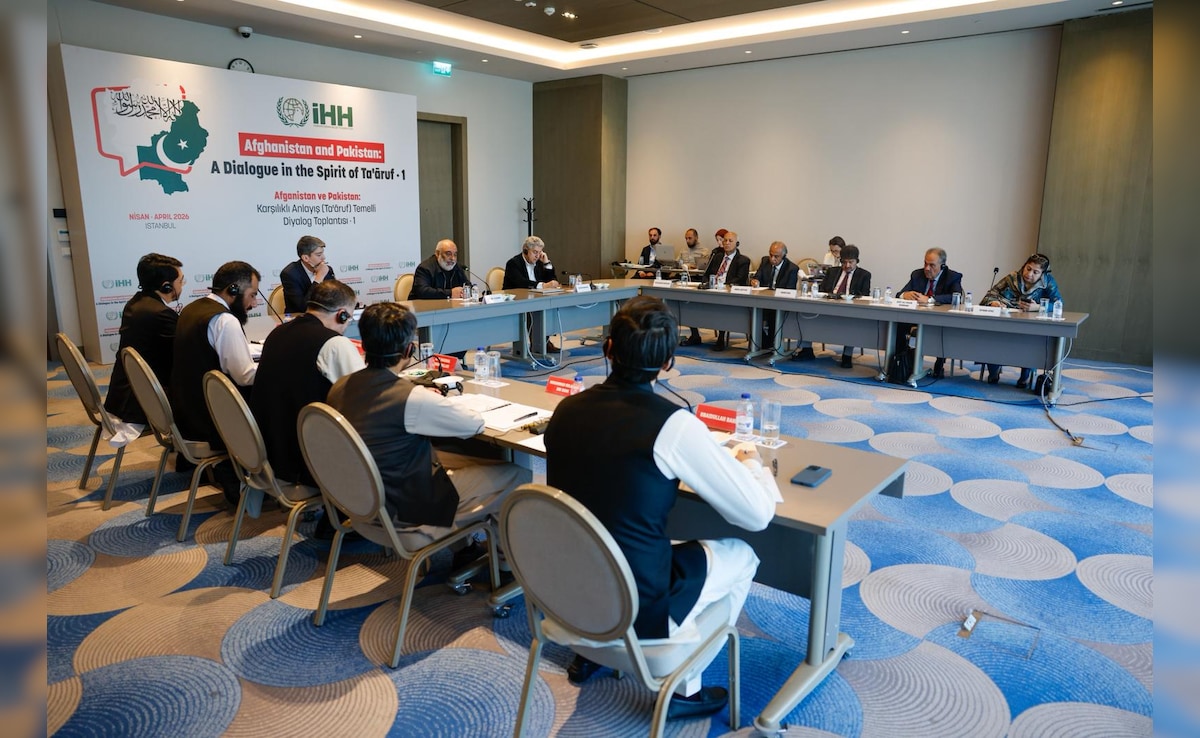
You’d think that in a high-stakes peace meeting aimed at stopping soldiers from dying on a border, someone would double-check the slides. Apparently not. During recent talks in Istanbul intended to de-escalate the increasingly bloody conflict between Pakistan and Afghanistan, a digital map displayed behind the delegations reportedly featured "inaccurate" boundaries. It’s the kind of blunder that makes diplomats cringe and nationalists boil.
Honestly, it sounds like a bad office comedy. But when you’ve got two nuclear-adjacent neighbors who’ve spent the last year trading drone strikes and artillery fire, a map isn't just a graphic. It’s a statement of sovereignty. If you’re trying to convince the Afghan Taliban to stop sheltering militants, showing a map that misrepresents their territory (or your own) is like walking into a HR meeting and getting the employee’s name wrong. It kills the vibe and, more importantly, the trust.
The Istanbul Blunder and Why It Stings
The meeting in Istanbul wasn't a casual coffee chat. It followed a brutal October where border clashes reached a decade-high peak. We’re talking about "Operation Khyber Storm," where Pakistan launched airstrikes into Kabul and Khost, and the Taliban retaliated by smashing border outposts. The stakes were literally life and death.
Then came the map. While the Pakistani Ministry of Foreign Affairs usually tries to downplay these things as "technical glitches" or "artistic representations," the timing couldn't be worse. In diplomacy, symbols are everything. When a map appears at a peace summit, every line is scrutinized. If the Durand Line—the contentious border between the two—is shown incorrectly, or if provincial boundaries look "off," it feeds the narrative that Islamabad isn't serious or, worse, that it’s being provocative.
The Afghan delegation, led by figures like Amir Khan Muttaqi, is already prickly about territorial integrity. They’ve spent months accusing Pakistan of violating their airspace. Seeing a "faux pas" on a big screen just gave them more ammunition to claim that Pakistan is "unreasonable."
Beyond the Slide Deck: The Real Crisis
Don't let the map distraction fool you. The real issue isn't a PowerPoint error; it's the fact that the two countries are essentially in a low-grade war. Pakistan is dealing with a massive surge in TTP (Tehreek-e-Taliban Pakistan) violence. They're convinced the TTP is using Afghan soil as a launchpad.
The numbers are grim:
- Over 4,000 people killed in frontier provinces in 2025.
- More than 80 border clashes in a single year.
- Airstrikes hitting targets deep inside Afghanistan.
Pakistan wants a guarantee that no security incident will ever happen on its soil again. Muttaqi called that "unrealistic." He’s right. No government can guarantee zero crime or zero militancy. But Pakistan's frustration is also valid. If you’re losing hundreds of soldiers to militants who cross the border, you don't want to hear about "artistic" maps. You want results.
Why These Gaffes Keep Happening
You’d be surprised how often this happens in the "Afpak" region. It’s not always about malice; sometimes it’s sheer incompetence. In previous regional summits, like the CASA-1000 inauguration, we’ve seen similar "discrepancies" where maps were labeled as "paintings" to dodge political fallout.
But in 2026, with social media acting as a 24/7 outrage machine, these mistakes don't stay in the room. They’re leaked, screenshotted, and used to drum up hyper-nationalism on both sides. When the Pakistani delegation "leaves the negotiating table"—as Afghan media claimed they did in Istanbul—every small error is magnified. It becomes proof of a "lack of coordination" or a sign that the diplomats aren't prepared.
The Cost of Poor Diplomacy
When talks fail because of "unreasonable demands" or "technical ruses," the consequence isn't just a stalled treaty. It’s closed trade routes. For a country like Afghanistan, which is already struggling under sanctions, the closure of key crossings like Torkham or Chaman is a death sentence for local business. For Pakistan, it means more instability in its most volatile provinces.
If you’re watching this from the outside, it might look like petty bickering over a border line drawn in the 19th century. But for the people living in Khyber Pakhtunkhwa or Balochistan, these "faux pas" lead to real-world escalations. When diplomacy looks amateur, the military takes the lead. And when the military takes the lead, the bombs start falling again.
What Needs to Change Now
Stop focusing on the slides and start focusing on the ground. Pakistan needs to stop using "border errors" as a deflection from its internal security failures, and the Taliban needs to stop pretending they can't see the TTP fighters in their backyard.
Here is what actually needs to happen:
- Third-Party Verification: Whether it's Qatar, China, or Turkey, someone needs to act as a formal "map-checker" and mediator to ensure technical details don't derail political progress.
- Economic De-linkage: Keep the trade routes open even when the generals are shouting at each other. Economic pressure on Kabul usually backfires by making the Taliban more stubborn.
- Realistic Security Goals: Asking for a "zero-incident guarantee" is a non-starter. Both sides need a joint mechanism for counter-terrorism that involves actual data sharing, not just finger-pointing at summits.
The Istanbul meeting might have been a mess, but it’s the only path forward. If they can’t even get the map right, there’s zero chance they’ll get the peace right. It's time to hire better graphic designers—and maybe some more realistic diplomats.
Pakistan Agrees To Hold Ceasefire Talks With Afghanistan's Taliban Govt In China
This video provides essential background on the diplomatic efforts and mediated talks between Pakistan and the Taliban, which adds context to why recent meetings and their subsequent "faux pas" are so critical for regional stability.