The porcelain mug in your hand feels permanent. It has weight. It has a smooth, glazed surface that retains the heat of your morning coffee. You probably didn’t think about the shipping manifest that brought it from a kiln in Guangdong, or the trade inspectors in Washington who scanned its HS code. You just wanted a cup of coffee.
But thousands of miles away, in a wood-paneled room within the Office of the United States Trade Representative (USTR), a group of officials is looking at a list. That list includes your mug. It includes the steel in your toaster, the chemicals in your detergent, and the digital code running your favorite apps.
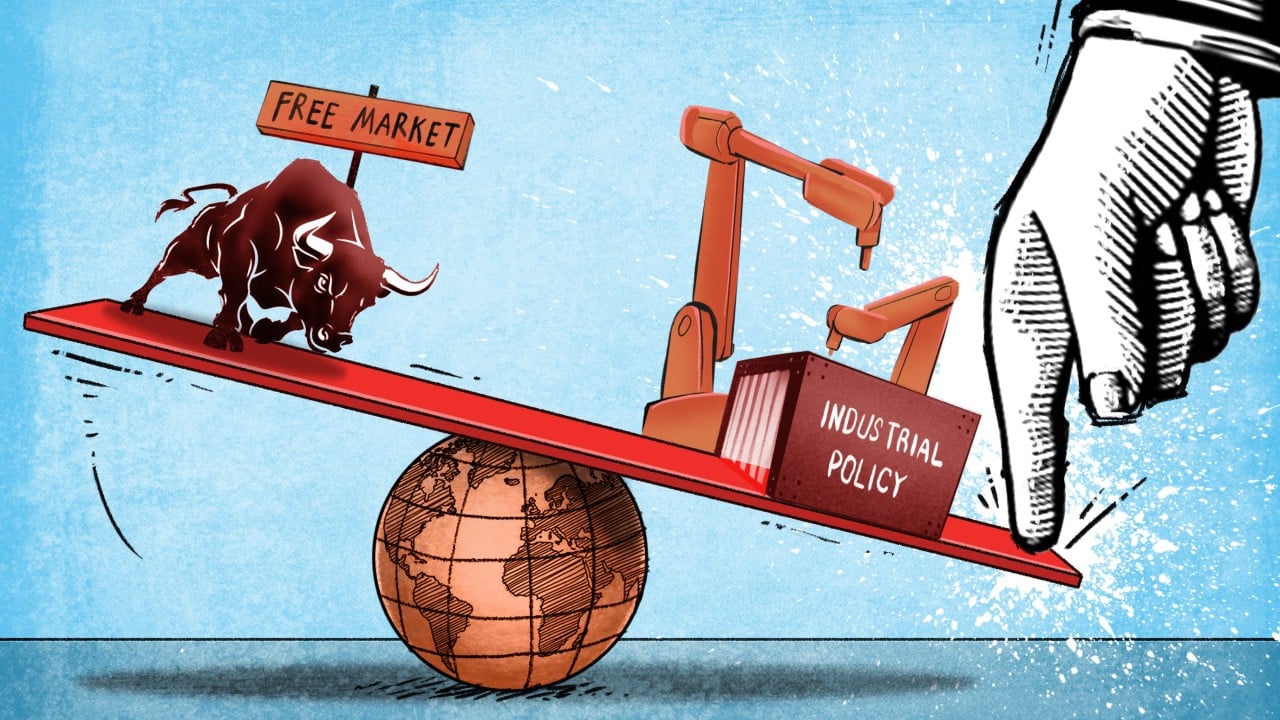
The U.S. Section 301 probe is a dry name for a blunt instrument. It is a legal sledgehammer from the 1974 Trade Act, designed to swing at countries that play outside the lines of "fair" commerce. Right now, that hammer is being polished. The targets? India, China, and the European Union.
We talk about trade wars as if they are fought with battalions. They aren't. They are fought with spreadsheets. When the U.S. decides that India’s digital services tax is discriminatory, or that China’s intellectual property practices are predatory, they don’t send an army. They change a number in a database.
Suddenly, a 10% tariff becomes 25%.
The Baker and the Border
Consider Sarah. She owns a small bakery in a mid-sized American city. Sarah doesn't follow international trade law. She follows the price of butter and the cost of stainless steel mixing bowls. When the last round of Section 301 tariffs hit European goods, Sarah’s favorite brand of Irish butter jumped in price. Her new industrial oven, built with German precision, stayed sitting in a port for three weeks because the customs paperwork had changed overnight.
Sarah is the collateral damage of a "probe."
When the U.S. investigates India’s tax on Silicon Valley giants, India doesn't just fold. They lean back. They might retaliate by making it harder for American apples or almonds to reach their markets. While the titans of tech and the giants of government argue over digital sovereignty, the farmer in Washington State watches his crop rot because the math no longer works.
The tension is real.
Why the Hammer Swings
The logic behind Section 301 is rooted in a sense of grievance. The U.S. argues that while the world has become a global village, some neighbors are building fences that shouldn't be there.
China remains the primary focus. The "Special 301" reports often read like a spy novel: allegations of forced technology transfers, state-sponsored hacking of trade secrets, and a systemic effort to hollow out American innovation. For years, the consensus was to wait. To negotiate. To use the World Trade Organization (WTO) as a polite referee.
That era is over.
The WTO is slow. A dispute can take years to resolve, and by the time a ruling is handed down, the industry in question might already be extinct. Section 301 is the American response to that slowness. It is unilateral. It is aggressive. It says: We aren't waiting for a referee who has lost his whistle.
But moving fast has a cost.
The Triangle of Friction
India presents a different challenge than China. This isn't about stolen blueprints; it’s about the "Equalization Levy." India wants to tax the revenue that companies like Google and Meta make from Indian users. The U.S. sees this as a targeted attack on American success.
Then there is the EU. The friction there often centers on "Green" taxes or aircraft subsidies. It’s a sophisticated, high-stakes game of chicken between old allies.
Imagine a three-way tug-of-war. Every time one side pulls, the rope burns the hands of the people holding it.
The U.S. says these tariffs are "remedial." They are meant to pressure other nations into changing their behavior. If China stops subsidizing its steel, the U.S. might drop the tariff. If India drops its digital tax, the U.S. will put the hammer away.
In theory, it’s a negotiation tactic. In practice, it’s a tax on the American consumer.
The Ghost in the Machine
A tariff is not paid by the exporting country. That is a common misunderstanding that lingers like a ghost in political rhetoric. When the U.S. imposes a tariff on French wine or Chinese electronics, the French or Chinese government doesn't write a check to the U.S. Treasury.
The American importer pays it.
The company bringing those goods into the country pays the tax at the border. To keep their profit margins, they pass that cost to you. That porcelain mug? It just got $2 more expensive. The laptop you need for school? Add $150.
This is the invisible tax. It doesn't show up on your W-2. It doesn't appear as a line item on your receipt. It is baked into the price of living in a world where trade is used as a weapon.
The Human Toll of Policy
We often look at these probes through the lens of national pride. We want our country to "win." But winning in a trade war is a strange concept. It’s like winning a fight by seeing who can hold their breath the longest while underwater.
There are workers in Bangalore whose livelihoods depend on seamless digital trade with the West. There are factory workers in Ohio whose jobs are threatened by cheap, subsidized imports. There are families in the EU who wonder why their local products are suddenly being squeezed out of the American market.
The stakes are not just numbers on a balance sheet. They are mortgages. They are college tuitions. They are the ability of a small business to survive another winter.
The USTR probe is currently looking at "acts, policies, and practices" that are unreasonable or discriminatory. The language is intentionally broad. It gives the government the "robust" flexibility—to use their word—to strike wherever they feel the most leverage.
But leverage is heavy.
The Fragile Equilibrium
Global trade is a delicate ecosystem. For decades, we operated on the assumption that more trade was always better. We built supply chains that stretched across oceans, relying on the idea that a part made in Vietnam could be assembled in Mexico and sold in Chicago without a hitch.
That trust is evaporating.
We are moving toward a world of "fragmented trade." The Section 301 probes are a symptom of this fragmentation. We are retreating into silos. The U.S. is looking to protect its tech and manufacturing. India is looking to protect its digital future. The EU is looking to protect its social and environmental standards.
Everyone is right in their own eyes. Everyone has a grievance that feels justified.
But as the probes conclude and the new tariffs are potentially announced, the result remains the same. The "remedy" often feels a lot like the ailment.
The Sound of the Gavel
The hearings are often quiet. Experts testify about "weighted averages" and "non-tariff barriers." They speak in an acronym-heavy dialect that is designed to be impenetrable to the average person.
But you should listen.
Listen because the outcome of these probes dictates the cost of the world around you. It dictates whether the next great innovation happens here or there. It dictates whether we see each other as partners in a global market or as rivals in a zero-sum game.
The hammer is still in the air. When it falls, it won't just hit a government or a corporation. It will vibrate through the floorboards of every home that relies on the flow of goods and ideas across a border.
The porcelain mug is still warm. Enjoy the coffee. The price of the next refill is currently being decided in a room you'll never enter, by people who have never met you, using a law written before you were born.
The world is getting smaller, yet the distance between us has never felt more expensive.
Would you like me to look into the specific list of products currently under review in the newest USTR filings?