The ink on a government contract doesn’t just represent money. It represents a tether. When the United States Department of State recently moved toward a $7 billion arms agreement with the United Arab Emirates, the headlines focused on the numbers. They calculated the cost of the munitions and the specific models of the GBU-39 Small Diameter Bombs. They tracked the legislative hurdles. But the numbers are the least interesting part of the story.
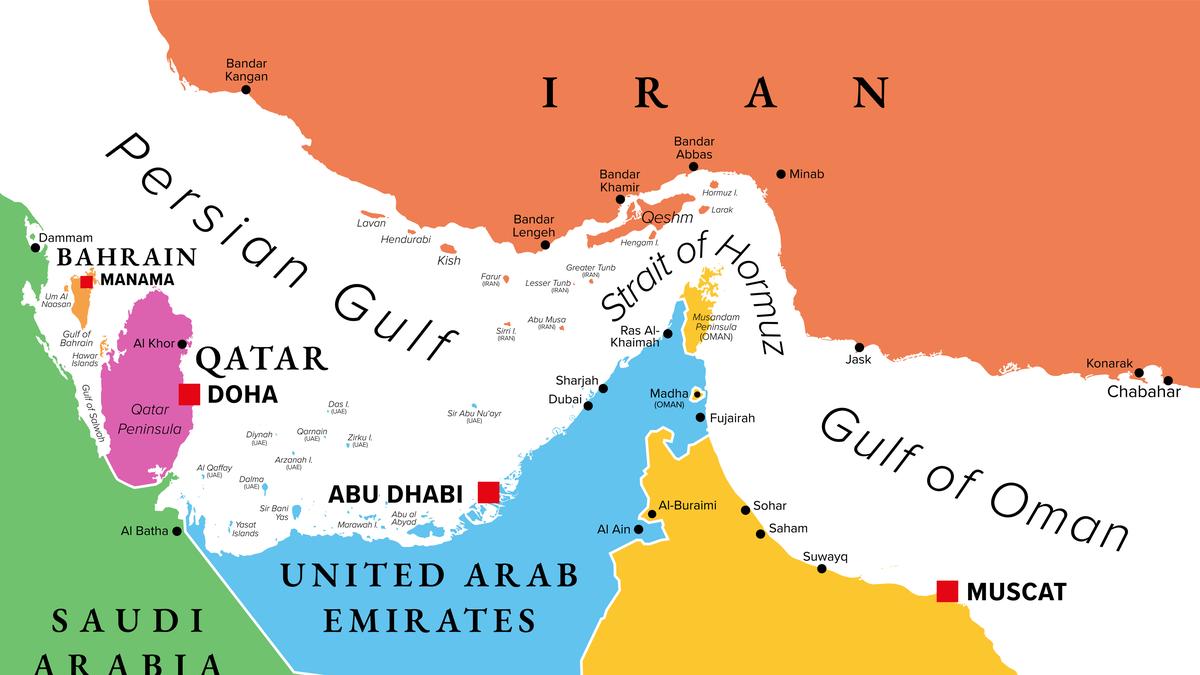
To understand why a desert nation is spending the equivalent of a small country's GDP on things that fall from the sky, you have to look past the spreadsheets. You have to look at the map.
Imagine a pilot sitting in a pressurized cockpit over the Persian Gulf. Beneath him, the lights of Dubai and Abu Dhabi flicker like a spilled bag of diamonds against the velvet black of the desert. He isn't just flying a machine; he is flying a geopolitical statement. Every time he adjusts his heading, he is navigating a web of alliances that stretches back decades. He is the end point of a supply chain that begins in a factory in Missouri or Arizona, where workers in safety vests carefully assemble guidance systems.
Those workers and that pilot are now linked by a $7 billion invisible thread.
The Weight of the Hardware
Modern warfare has moved away from the blunt trauma of the past. We no longer talk about carpet bombing. Instead, we talk about "precision." The UAE is looking to acquire thousands of these precision-guided munitions. Specifically, they are eyeing the GBU-39/B and the GBU-53/B StormBreaker.
These aren't just bombs. They are flying computers.
Consider a GBU-53/B. It is a small, winged cylinder designed to find its way through smoke, fog, and dust. It can distinguish between a civilian car and a mobile missile launcher from miles away. When the UAE buys these, they aren't just buying explosives. They are buying the ability to see through the chaos of a modern battlefield. They are buying the American "edge."
But why now?
The Middle East is a jigsaw puzzle where the pieces are constantly being reshaped. To the north, Iran looms as a permanent shadow. To the south and west, non-state actors and shifting insurgencies create a landscape of perpetual friction. For the UAE, these weapons are a form of insurance. They are a signal to their neighbors that their "fortress" is not just built of glass and steel skyscrapers, but of the most sophisticated kinetic technology on the planet.
The Industrial Marriage
There is a cold, hard business reality behind the diplomacy. When a nation buys $7 billion worth of American hardware, they aren't just making a one-time purchase. They are entering into a decades-long marriage.
You don't just buy an advanced missile system and walk away. You need the software updates. You need the specialized racks to carry them. You need the American technicians to teach your crews how to maintain the delicate sensors. You need the logistical backbone that only the Pentagon can provide.
This is the "tether."
By choosing American systems, the UAE is effectively locking its defense strategy into the American orbit. If they bought from Russia or China, the plugs wouldn't fit. The data wouldn't sync. The "synergy"—a word often overused but here quite literal—would vanish. This $7 billion handshake ensures that for the next twenty years, Emirati generals and American defense contractors will be on a first-name basis.
It is a massive boost for the American defense industrial base. Think of the towns where these munitions are built. For a community in the American heartland, a $7 billion foreign military sale translates to job security, mortgage payments, and local tax revenue. The geopolitics of the Persian Gulf are keeping the lights on in small-town America.
The Invisible Stakes
Critics often point to the human cost of these sales. They ask where these bombs will eventually land. It’s a valid, heavy question that hangs over every boardroom at Raytheon or Boeing. The UAE has been a key player in regional conflicts, most notably in Yemen.
There is an inherent tension here. On one side, there is the strategic necessity of bolstering a "moderate" Arab ally. On the other, there is the moral weight of providing the tools for high-intensity conflict.
The Biden administration’s approval of this sale suggests a pivot toward pragmatism. They are betting that a well-armed UAE is a more stable UAE. They are betting that by providing "smart" bombs, they are actually reducing the likelihood of "dumb" mistakes. It is a gamble played with high stakes and very little room for error.
The Language of Deterrence
In the world of international relations, you don't always buy weapons to use them. You buy them so you don't have to.
The UAE has spent the last two decades transforming itself into a regional powerhouse. They have moved from being a collection of coastal trading posts to a "Little Sparta," as some American generals have called them. They want to be the ones who set the terms of the conversation in the Gulf.
When a cargo ship enters the Strait of Hormuz, its captain is acutely aware of who holds the keys to the airspace. A $7 billion investment in precision munitions is a loud way of saying that the UAE intends to keep those keys. It is a deterrent. It is a way of telling any potential aggressor that the cost of an incursion would be mathematically, and physically, ruinous.
The Echo in the Desert
If you were to stand in the middle of the Empty Quarter, the vast desert that makes up much of the UAE, you would feel a silence so profound it seems heavy. But that silence is a facade.
High above, the invisible architecture of global power is being built. Satellites are tracking movements. Data is being crunched in servers halfway across the world. And soon, the warehouses in the UAE will begin to fill with the most sophisticated munitions ever devised.
This isn't just news about a "weapons deal." It is a story about the changing nature of power. We are moving into an era where influence is bought in increments of $7 billion, and security is measured by the precision of a sensor.
The pilot in the cockpit doesn't think about the $7 billion. He thinks about the mission. The worker in the factory doesn't think about the pilot. He thinks about the tolerances of the circuit board he is soldering. But they are part of the same machine.
The deal is done. The notification has been sent to Congress. The gears are turning.
The desert remains quiet for now, but the wind is carrying the scent of jet fuel and the heavy, metallic tang of a world preparing for whatever comes next. The true cost of this deal won't be known when the money changes hands. It will be known years from now, in the silence that follows a choice we haven't even had to make yet.
Across the globe, the machines are waiting.