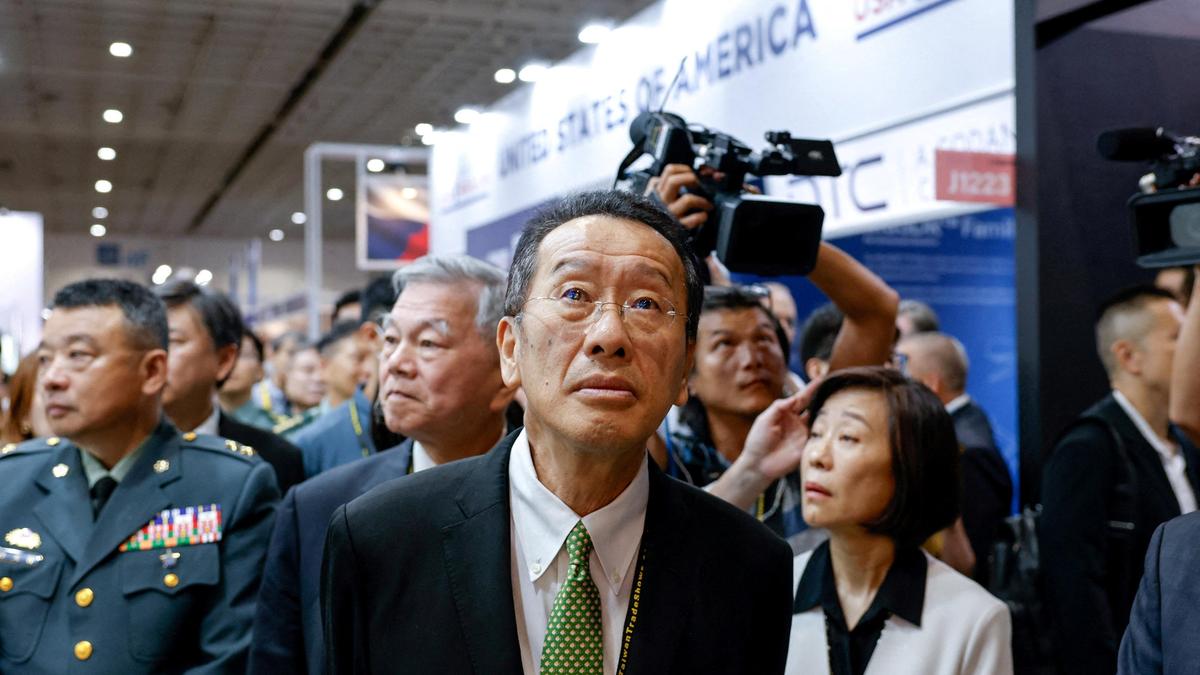
The headlines are screaming about a "pressing threat" again. Taiwan’s Defense Minister Wellington Koo just warned that China’s military expansion is so relentless it creates an "urgent security risk." If you’re reading this, you’re probably wondering if 2026 is finally the year the Taiwan Strait turns into a multi-generational catastrophe. Honestly? It's not.
Despite the spike in Chinese naval vessels and fighter jets crossing the median line this week, the reality on the ground is far more nuanced than a simple "invasion is coming" narrative. A brand new 2026 U.S. intelligence report just dropped, and it says something that might surprise you. Beijing has no plans to invade by 2027. They still prefer "peaceful unification"—which is just a polite way of saying they’d rather bully Taiwan into submission than risk a bloody, high-stakes gamble that could end the Chinese Communist Party’s rule forever.
Deterrence is working, but it’s changing shape. We aren't just talking about big tanks and shiny jets anymore. We’re talking about "Hellscapes," swarms of drones, and making the cost of an attack so astronomically high that Xi Jinping looks at the math and says, "Not today."
The Math of a Failed Invasion
China isn't stupid. They’ve watched Russia struggle in Ukraine for years. An amphibious assault on Taiwan is ten times harder than a land invasion of a neighbor. You have to move hundreds of thousands of troops across 100 miles of rough water, and Taiwan is essentially a natural fortress.
Minister Koo’s strategy is simple. Make the assessment of a successful invasion so low that China won't even try. If Taiwan’s defense capabilities keep improving, that "invasion date" gets pushed back again and again.
Why Beijing is Hesitating
- The Purge Problem: Xi Jinping has been cleaning house in the People’s Liberation Army (PLA). High-ranking generals are disappearing. You don't launch the most complex military operation in history when you don't trust your own admirals.
- Economic Drag: China’s domestic economy is slowing down. A war would trigger global sanctions that would make the Russian ones look like a slap on the wrist.
- The US Factor: While the Trump administration’s stance is often seen as transactional, the 2026 National Defense Strategy still reaffirms a "strong denial defense" in the First Island Chain. Beijing can't be 100% sure the U.S. won't step in.
Turning the Strait into a Hellscape
The old way of thinking was "force-on-force." Taiwan gets a tank, China gets a better tank. That's a losing game for Taipei. Now, the shift is toward asymmetric warfare—the "porcupine" strategy.
By the end of 2026, Taiwan will have the highest density of anti-ship missiles in the world. We’re talking about 1,400 Hsiung Feng II and III missiles combined with U.S. Harpoons. If a Chinese fleet tries to cross that water, they aren't facing a navy; they're facing a wall of fire.
The Drone Revolution
The new buzzword in Taipei is "Hellscape." This isn't just a scary name. It’s a specific plan to flood the Taiwan Strait with tens of thousands of drones—aerial, sea-surface, and underwater.
- First Layer: 80km out, long-range kamikaze drones hit the big ships.
- Second Layer: 40km out, uncrewed vessels disrupt the formations.
- The Beach: If they even make it to the sand, they’re met with FPV drones and "Taiwan Dome" missile defenses.
This kind of "low-cost, high-volume" defense is what keeps military planners in Beijing awake at night. It’s hard to target 20,000 small drones with a billion-dollar destroyer.
Gray Zone Games and Cognitive Warfare
If China isn't going to invade tomorrow, what are they doing? They’re playing the "Gray Zone" game. This is the stuff that happens just below the level of actual war.
Between February and March 2026, we saw an "unusual lull" in Chinese flights near Taiwan. Why? Some think it was bad weather; others say it was a recalibration before high-level diplomatic meetings. But when they returned, they brought new tricks.
The PLA is now using drones to spoof aircraft signals. They can make one drone look like twenty planes on a radar screen. It’s a form of cognitive warfare designed to exhaust Taiwan’s pilots and confuse their command. It’s about making Taiwan’s society feel like resistance is futile.
The Political Roadblock in Taipei
Here’s the part people often miss. It’s not just about what China does; it’s about what’s happening inside Taiwan’s own parliament.
President Lai Ching-te wants a $40 billion defense boost. But he doesn't have a majority. Opposition lawmakers in the Kuomintang (KMT) have been blocking these "blank checks," arguing the plans lack detail. This domestic friction is a gift to Beijing. If Taiwan can't agree on its own defense budget, it sends a signal of weakness to both China and the United States.
What Actually Happens Next
The threat is "pressing" because China is building the capacity to invade, not because they’ve decided to pull the trigger.
If you want to understand where this is going, watch the "Drone Labs" and the missile production numbers. Taiwan is racing to finish its domestic submarine program while simultaneously trying to build a "Whole-of-Society" resilience plan. They’re fixing the power grid and making sure the internet stays on even if the undersea cables are cut.
The goal isn't to win a war. It's to make the war so obviously disastrous for China that it never starts.
Next steps for you: Keep a close eye on the upcoming April leader-level engagements between Washington and Beijing. These meetings usually dictate whether the "Gray Zone" activity in the Strait gets turned up or dialled back for the summer. If you’re looking at defense stocks or regional stability, the passage (or failure) of Taiwan’s supplemental defense budget in the coming weeks is the most important signal to watch.