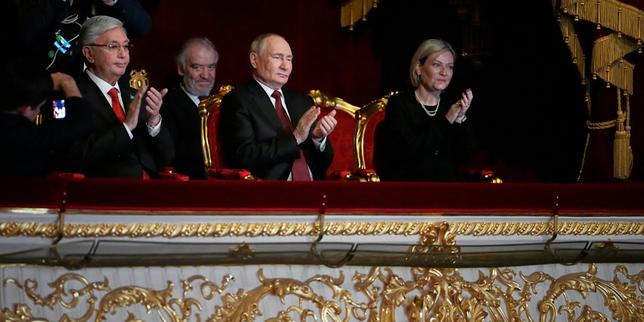
Culture is rarely just about art when the Kremlin is involved. For years, the Russian state has treated classical music, ballet, and traditional arts as extensions of its foreign policy. It's a sophisticated "musical special operation" designed to soften Western hearts while the military breaks Western alliances. You might think a Tchaikovsky concert in Paris or a Shostakovich performance in Berlin is just a night out at the theater. It isn't. It's a calculated move in a much larger geopolitical game where the baton is sometimes as heavy as a literal weapon.
Vladimir Putin understands something many Western leaders have forgotten. High culture carries a prestige that money can't buy. By exporting Russia’s immense artistic heritage, the Kremlin creates a "halo effect" that blinds European publics to the reality of its political aggression. When you're moved to tears by a world-class pianist, it’s much harder to view their sponsoring government as a threat to global stability. That's the trap.
The Kremlin Playbook for Artistic Infiltration
The strategy works because it exploits the Western belief that art should be separate from politics. This sounds noble in theory, but it’s a weakness that Moscow uses to its advantage. For decades, the Russian government has funneled massive subsidies into specific performers and ensembles that act as cultural ambassadors. These aren't just talented individuals; they're often people with direct ties to the Russian power structure.
Think about the high-profile conductors who have held prestigious posts in European capitals while simultaneously serving as vocal supporters of Putin's domestic policies. They don't just lead orchestras. They open doors. They attend dinners with European elites, industrialists, and politicians. They provide a "civilized" face for a regime that regularly ignores international law. This isn't a conspiracy theory. It's a documented method of influence where the goal is to make Russian interests inseparable from European cultural life.
Why Europe Keeps Falling for the Performance
Europeans love their tradition. The continent’s identity is wrapped up in the works of great composers and writers. Putin knows this. By positioning Russia as the "true" guardian of traditional European values—expressed through grand, classical performances—he builds a bridge to conservative elements within the EU.
This creates a weird cognitive dissonance. On one hand, European governments pass sanctions. On the other, their state-funded halls host performers who have explicitly endorsed the annexation of territory or the suppression of dissent. It creates a "business as usual" atmosphere even during a crisis. It suggests that while there might be a "little disagreement" over borders, we’re all still part of the same high-society club. This erosion of moral clarity is exactly what the Kremlin wants.
The Logistics of the Musical Special Operation
How does it actually happen on the ground? It's about more than just booking a venue. It involves a complex network of foundations, "friendship societies," and oligarch-funded initiatives.
- Sponsorship chains: Large Russian corporations, often in the energy sector, provide the funding for tours and festivals. This makes European cultural institutions financially dependent on Russian money.
- Youth programs: Competitions and masterclasses for young European musicians help shape the next generation’s worldview, ensuring a pro-Kremlin bias remains in the arts for decades.
- Symbolic dates: Scheduling major performances around sensitive political anniversaries to project strength and cultural dominance.
When a major energy firm sponsors a grand opera in Vienna, they aren't just being generous. They're buying a seat at the table. They're making it socially awkward for those same elites to advocate for tough energy policies later that week. It's a subtle, effective form of capture that doesn't involve a single soldier.
Breaking the Spell of Neutrality
We have to stop pretending that state-funded Russian culture is neutral. It’s not. In a consolidated autocracy, no major institution operates without the state's blessing. If a performer is allowed to tour the world with the state’s resources, they’re part of the machine.
Critics often complain that "canceling" Russian artists is a form of McCarthyism. That misses the point entirely. This isn't about the nationality of the artist or the beauty of the music. It’s about the funding and the platform. When we allow the Kremlin to use our stages to wash its reputation, we’re participating in our own manipulation. The music is great. The intent behind its promotion is cynical.
What Real Cultural Defense Looks Like
Protecting European interests doesn't mean banning Tchaikovsky. It means being honest about who is paying for the performance and why. Transparency is the only real defense against this kind of soft-power manipulation.
European cultural institutions need to vet their donors with the same rigor that banks use for anti-money laundering checks. They need to ask where the money comes from and what the "ambassadors" have said back home. If a conductor or soloist has signed letters supporting illegal invasions, they shouldn't be given a platform in a democracy. It’s that simple.
We also need to support independent Russian artists—the ones who have been exiled or silenced because they refuse to be part of the "musical special operation." These are the voices that actually represent the future of Russian culture, not the state-sanctioned stars who fly on private jets to perform for the very people their government is trying to divide.
Governments must provide alternative funding for arts organizations so they don't feel forced to take "gas money" to keep the lights on. It’s a matter of national security. When culture is used as a smokescreen for hybrid warfare, the response has to be political, not just artistic.
Check the board of directors and the primary sponsors of your local opera house or philharmonic. Look for ties to state-aligned Russian entities. If you find them, write to the management. Demand that they prioritize ethical sourcing over easy funding. Support local, independent arts initiatives that don't rely on autocratic subsidies. Real culture thrives on freedom, not as a tool for a "special operation."