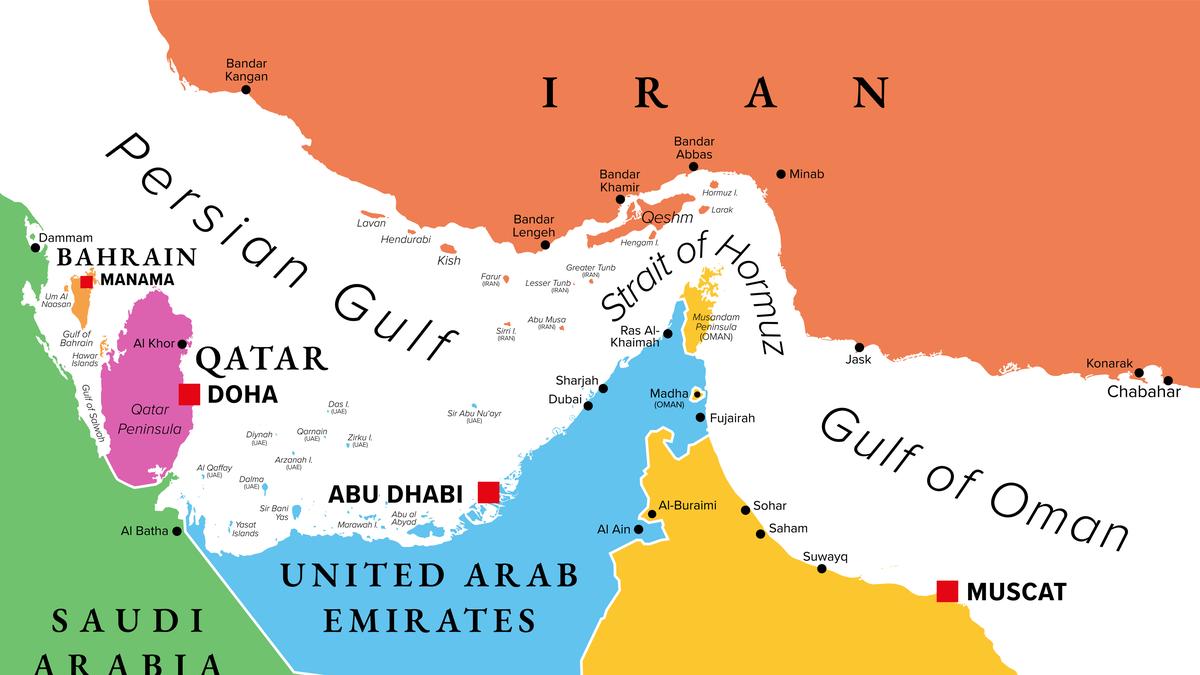
The world’s most dangerous maritime chokepoint just hit the breaking point. If you haven’t been watching the Strait of Hormuz, it’s time to start. On March 19, 2026, a powerhouse coalition—the UK, France, Germany, Italy, the Netherlands, Canada, and Japan—issued a scathing joint statement. They didn't just express "concern." They condemned what they’re calling a "de facto closure" of the strait by Iranian forces.
This isn't some distant diplomatic spat. It's a direct hit to the global jugular. We’re talking about a narrow strip of water where 25% of the world’s seaborne oil and a massive chunk of liquefied natural gas (LNG) pass through daily. When that door slams shut, your gas prices, your heating bills, and even the price of the food on your table start climbing.
The Breaking Point in the Gulf
The statement follows a string of terrifying escalations. Iran has been accused of laying mines, launching drone strikes, and targeting unarmed commercial vessels. But it’s not just the ships. Civilian energy infrastructure—oil and gas installations—has been caught in the crosshairs.
What makes this specific joint statement different? It’s the shift in tone. For a long time, European nations and Japan tried to play the middle ground, often resisting the more aggressive "escort" tactics pushed by Washington. Not anymore. These seven nations are now openly "ready to contribute to appropriate efforts" to ensure safe passage. That’s diplomatic speak for: We’re sending the navies.
What’s Actually Happening on the Water
The situation on the ground—or rather, on the waves—is chaotic.
- The Phantom Closure: While Iran hasn't officially declared the strait closed, their Revolutionary Guard (IRGC) has been broadcasting warnings over VHF radio telling ships to stay out.
- The Logjam: Reports suggest over 150 tankers are currently sitting idle outside the strait, afraid to move.
- The Human Cost: This isn't just about cargo. Since late February 2026, at least 11 seafarers have been killed or gone missing.
Why This Hits Your Wallet
You might think a naval standoff in the Middle East doesn't affect a commute in Toronto or a factory in Osaka. You'd be wrong. Brent crude has already spiked past $100 a barrel, hitting $126 at its recent peak.
But it’s the "hidden" costs that really bite. The International Energy Agency (IEA) just authorized a coordinated release of strategic petroleum reserves to keep things from spiraling. That’s a "break glass in case of emergency" move. When the world’s biggest economies start tapping into their emergency stashes, you know the situation is grim.
The Fertilizer Connection
Here’s the detail most news outlets are missing: The Gulf isn't just about oil. It’s a massive exporter of urea and ammonia—the building blocks of fertilizer. About a third of the world’s fertilizer supply flows through that tiny strait. If farmers can't get fertilizer, they can't grow crops. If they can't grow crops, food prices skyrocket everywhere. This is a massive threat to global food security that goes way beyond the gas pump.
The New Naval Reality
The "Coalition of the Willing" is growing. France has already pledged a dozen ships to the region. The UK is sending military planners to sync up with the U.S. Navy. Even Japan, which usually keeps its Self-Defense Forces on a tight leash, is signaling it’s ready to step up.
We’re seeing a historic shift in how international waters are policed. The joint statement explicitly cites UN Security Council Resolution 2817, framing the disruption as a "threat to international peace and security." This gives these nations the legal cover they need to move from "monitoring" to "active defense."
The Insurance Trap
Even if a ship could physically get through, it might not be allowed to try. Marine insurance premiums have gone through the roof. Some insurers are refusing to cover voyages through the Gulf altogether. When the insurance dries up, the trade stops. It doesn't matter if the strait is technically "open" or "closed" if no shipowner is willing to risk a $200 million vessel without coverage.
What Happens Next
Don't expect this to blow over by next week. The damage to energy infrastructure in places like Qatar and Saudi Arabia—reportedly hit by retaliatory strikes—could take years to fully repair. QatarEnergy has already hinted that some of its LNG capacity might stay offline for three to five years.
If you’re a business owner or just a concerned citizen, watch these three things:
- Naval Escorts: Keep an eye on when the first "protected" convoys start moving. If they get hit, all bets are off.
- IEA Releases: If the IEA announces a second round of reserve releases, it means the market is in deep trouble.
- The Fertilizer Markets: Watch for spikes in agricultural commodities. That’s where the long-term pain will be felt.
The age of "free and open" seas is being tested like never before. The joint statement by these seven nations is a line in the sand. Now we wait to see if anyone crosses it.
You should check your local energy provider’s latest rate forecasts and consider locking in prices if you’re in a region heavily dependent on imported natural gas.