Philippine politics just crossed another explosive line. Vice President Sara Duterte found herself at the center of a fast-moving criminal storm after a Quezon City court ordered her arrest on multiple counts of grave threats. The charges stem from an infamous 2024 virtual press briefing where Duterte bluntly claimed she had contracted someone to assassinate President Ferdinand Marcos Jr., First Lady Liza Araneta-Marcos, and former House Speaker Martin Romualdez if she herself were killed.
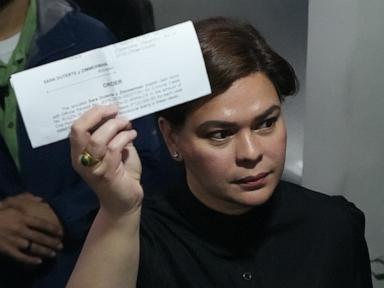
Instead of hiding or waiting out the clock, Duterte’s legal team moved quickly. She posted a 360,000 peso bail—amounting to 120,000 pesos for each of the three counts under the Cybercrime Prevention Act—at the Quezon City Regional Trial Court. Stepping out in a stark black outfit, she immediately turned the moment into a political staging ground, telling supporters and press that she still doesn't feel safe from state harassment.
If you're trying to figure out whether this is just standard political theater or an existential threat to her 2028 presidential ambitions, look past the noise. This is a full-scale institutional collision between two of the most powerful political dynasties in modern Philippine history.
The Roots of the Clash
To understand why a sitting vice president is posting bail for threatening the commander-in-chief, you have to rewind to the 2022 elections. Back then, the UniTeam alliance looked invincible. Ferdinand Marcos Jr. and Sara Duterte joined forces, combining the loyalists of the Marcos legacy with the fierce populist backing of the Duterte family. It was a marriage of convenience designed to sweep the polls.
It worked brilliantly. Then it imploded.
Policy disagreements started piling up almost immediately. Foreign policy became a massive wedge issue. Marcos pivoted sharply back toward traditional defense ties with the United States and pushed back against Chinese aggression in the South China Sea. Meanwhile, the Duterte camp openly criticized the administration's cozy relationship with Washington and its handling of former President Rodrigo Duterte's contentious drug war.
Family alliances in Manila never die quietly. Once the political marriage dissolved, the gloves came off entirely.
Unpacking the Grave Threats Charge
The legal basis for the arrest warrant goes back to November 2024. During an online rant, Duterte detailed a chilling hypothetical scenario. She stated she told an operative that if she were ever assassinated, they shouldn't stop until Marcos, his wife, and Romualdez were dead. She explicitly called it "no joke".
Naturally, the National Bureau of Investigation didn't view it as a joke either. They filed three counts of grave threats under Section 6 of Republic Act No. 10175, which heavily penalizes threats made via information and communications technologies.
Duterte’s camp has tried multiple defensive strategies, initially challenging the jurisdiction of the courts by pointing out her status as an impeachable official. Legal experts quickly pointed out the flaw in that argument. Criminal charges and legislative impeachment proceedings operate on entirely different tracks under Philippine law. One handles penal code violations; the other handles abuse of public trust and high crimes. Both can—and currently do—happen at the exact same time.
The Impeachment Double Whammy
The criminal arrest warrant is only half the battle. Duterte is simultaneously fighting for her political life in the Philippine Senate, which is currently sitting as an impeachment court.
The House of Representatives, firmly controlled by allies of the Marcos administration, voted overwhelmingly to impeach her. The complaint doesn't just rest on the assassination comments. It throws the kitchen sink at her, including massive allegations of unexplained wealth, misuse of confidential state funds during her stint as Education Secretary, and general corruption.
If the Senate convicts her during the ongoing trial, the consequences are permanent. She will be stripped of the vice presidency and banned from holding public office ever again. That outcome would instantly obliterate her plans to run for the presidency in 2028.
What Happens Next on the Ground
Posting bail stops immediate detention, but it doesn't solve the bigger picture. Duterte’s legal team faces an uphill battle across multiple courtrooms while managing a televised public trial that plays out daily on national news.
For the average Filipino citizen, the spectacle creates deep polarization. Supporters see a populist champion being politically persecuted by an establishment bent on silencing opposition. Detractors see a reckless leader facing long-overdue accountability for crossing lines that no elected official should ever cross.
The legal proceedings will grind forward through the regional trial courts, while the Senate impeachment trial dictates the immediate future of the vice presidency. Keep an eye on how the Duterte base mobilizes around these court appearances. Public sentiment could easily shift the dynamics inside the Senate chamber before a final verdict is reached.