History rarely arrives with the theatrical crash of falling masonry. More often, it slips through the door in worn boots, smelling faintly of stale coffee and bureaucratic anxiety, carrying a clipboard that nobody wants to sign.
We talk about geopolitical crises as if they were weather events—storms gathering over distant capitals, atmospheric pressures shifting across oceans, vast and impersonal. But wars, even the quiet ones that never quite detonate into full-page headlines, are constructed out of small, brittle human choices. They are built by men sitting in windowless rooms at three in the morning, convincing themselves that a minor escalation is merely a punctuation mark, when it is actually a fuse.
Consider what happens when a superpower decides that a regional confrontation is nothing more than small potatoes.
The phrase itself is a linguistic sedative. It suggests insignificance. It invites dismissal. When political commentators and strategists label an emerging friction point with Iran as small potatoes, they are attempting to exorcise fear through condescension. They are looking at a volatile mix of proxy networks, maritime choke points, and domestic political survival, and shrugging.
I remember sitting in a dimly lit newsroom years ago, watching a ticker tape chatter about minor skirmishes in the Persian Gulf. The consensus then was identical to the consensus now: noise, not signal. Just posturing. A localized flare-up meant to satisfy hardliners back home. Nobody gets hurt if you keep the stakes low, right?
Wrong.
The danger of small potatoes is that they grow in the dark.
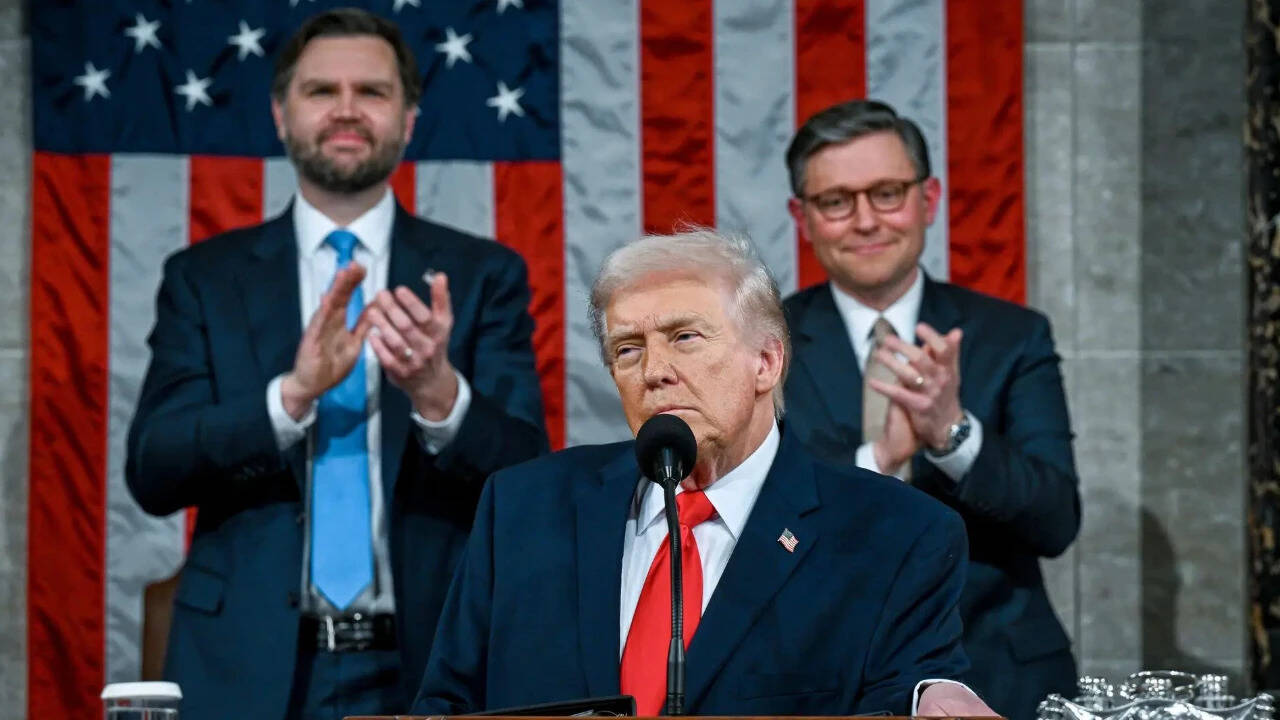
Donald Trump’s political and military posture toward Iran has long oscillated between performative maximalism and sudden, jarring disinterest. The critics who mash him—to borrow the rough idiom of modern media critique—do so because they see a profound contradiction. How do you simultaneously threaten total economic obliteration and dismiss minor military friction as beneath serious strategic concern?
To understand this disconnect, we have to look past the podium and into the psychology of modern statecraft.
Imagine a veteran diplomat who has spent forty years watching the Middle East chew up administrations of both parties. She doesn't see maps or ideological doctrines; she sees graveyards of good intentions. When she hears politicians toss around terms like maximum pressure, she knows the physical reality behind those words: cargo ships delayed, families separated by sudden sanctions, local militias quietly rearming in the hills, and young sailors on grey destroyers scanning dark water at midnight, wondering if tonight is the night someone makes a calculation error.
A foreign policy built on the premise of manageable conflict is a house of cards constructed in a wind tunnel.
When a nation treats a localized theater as a minor distraction, it invites miscalculation. Adversaries do not read press releases the way Washington thinks they do. In Tehran, a dismissive American label is not interpreted as confidence; it is interpreted as a lack of resolve, or worse, arrogance. And arrogance is the fertile soil where accidents turn into conflagrations.
Think of how a maritime incident unfolds in the Strait of Hormuz. It is rarely a grand clash of armadas. It starts with a speed boat cutting across the bow of a commercial tanker. It escalates with a radio transmission delivered in heavily accented English, crackling through static. A hand tightens on a heavy machine gun. A pulse spikes. The distance between diplomacy and disaster is measured not in miles, but in the five seconds it takes a twenty-year-old conscript to make a split-second decision based on fear and training.
If the high command in Washington views the entire theater as small potatoes, those five seconds carry zero institutional buffer. There is no urgency in the planning rooms. There is no intense diplomatic back-channel working overtime to defuse the localized tension before it metastasizes. There is only the assumption that everything will hold because it has always held before.
Until it doesn't.
This is the central illusion of modern deterrence. We assume that because a war hasn't started, our containment strategy is inherently working, rather than simply lucky. We mistake the absence of catastrophe for the presence of wisdom.
Trump’s critics are right to point out the absurdity of treating nuclear negotiations and regional proxy wars like real estate negotiations, where you walk away from the table whenever you grow bored. But the critics often miss the deeper pathology. The problem isn't just that the approach is transactional. The problem is that it treats human lives and regional stability as leverage in a domestic political game, where the scoreboard is measured in daily news cycles rather than generational outcomes.
When you reduce a complex geopolitical adversary to a punching bag for domestic consumption, you trap yourself in a rhetorical corner. You must always sound tough, even when you are doing nothing. You must always dismiss the risks, even when the margins for error are razor-thin.
And that is where the narrative breaks down.
Because the people living beneath the flight paths, the merchants trying to trade through sanctioned ports, and the soldiers standing watch on the decks do not have the luxury of calling anything small potatoes. To them, the conflict is the air they breathe. It dictates whether their children can go to school, whether their currency will buy bread tomorrow, or whether a stray missile will find its way through a shattered window.
We have exported our domestic political theater to foreign shores, treating foreign capitals as props in an ongoing reelection campaign. We measure success by whether a speech plays well on cable television, completely ignoring the slow, corrosive erosion of trust happening on the ground.
History is littered with the bones of empires that miscalculated because they confused their own indifference with strategic control. They called the warning signs minor. They laughed off the localized skirmishes. They assumed the other guy would blink because the stakes were too low to justify a wider war.
The tragedy is that the warning is never hidden. It is written in the nervous chatter of the radio waves, the sudden shifts in oil prices, the quiet movements of troops at dawn. It is broadcast daily, waiting for someone to stop treating it as entertainment and start treating it as reality.
The fog does not lift because we demand clarity. It lifts only when the first shell lands, shattering the comfortable illusion that anything in this world was ever truly small enough to ignore.