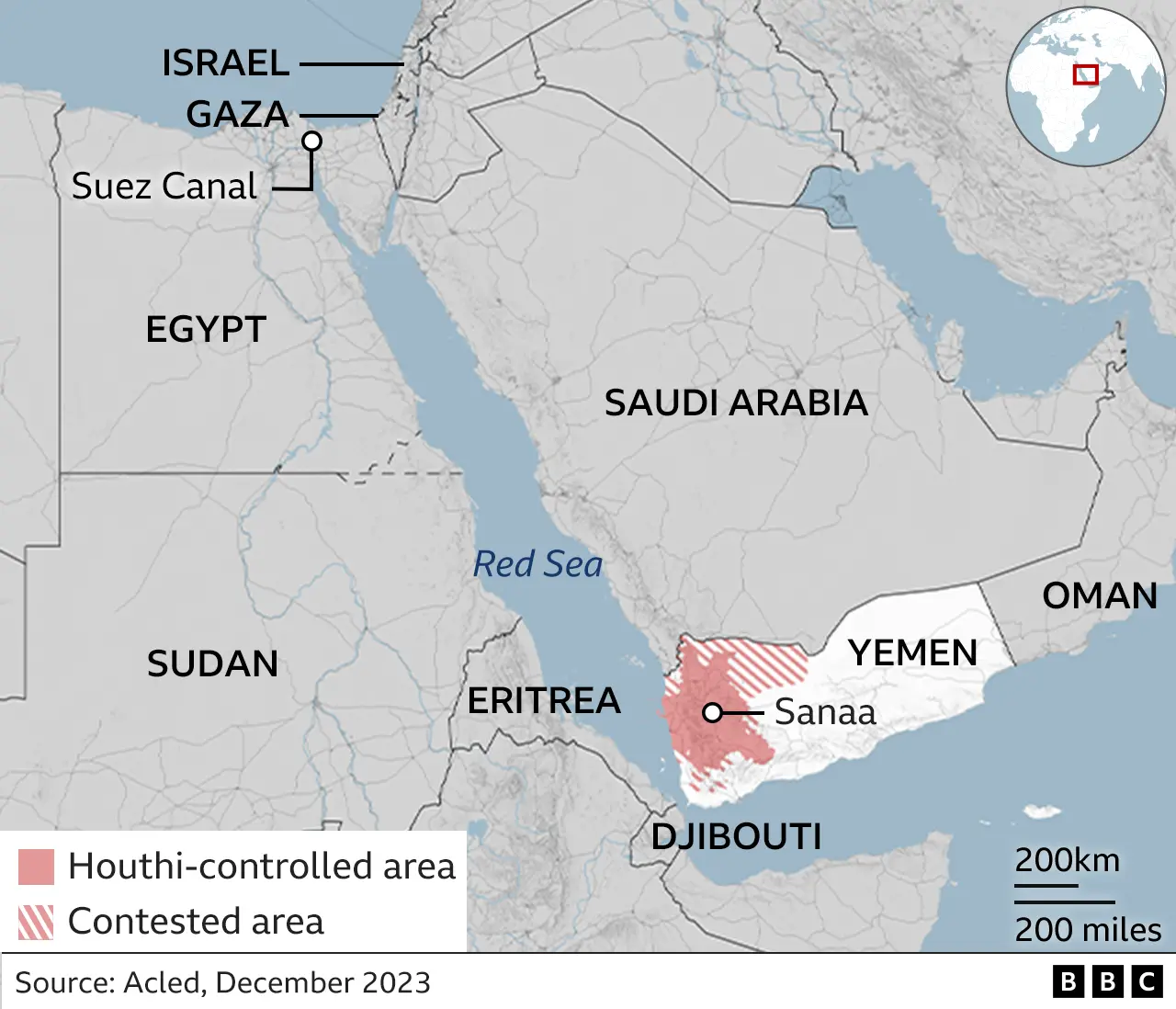
In a small, windowless office in a city you will never visit, a man named Elias stares at a digital map. Elias is a cartographer for a major tech company. His job is to ensure the lines on your phone match the reality of the dirt beneath your boots. Most days, this is simple. Roads are paved; buildings are numbered. But today, Elias is looking at a smudge of gray—a "frozen conflict" zone where two nuclear powers claim the same mountain range.
If he moves the border three pixels to the left, he triggers a diplomatic crisis. If he moves it to the right, his company’s app gets banned in a market of a billion people.
We navigate our lives through these digital rectangular panes, trusting that the blue dot representing "Us" is anchored in a stable, undisputed reality. We are wrong. The world is currently littered with what diplomats call "forgotten entities"—territories that exist in the physical world but have been deleted, blurred, or contested out of existence by the software that runs our lives.
The Ghost in the Geography
Consider the curious case of the traveler who wakes up in a city that technically doesn't exist.
You can walk its streets. You can smell the charcoal smoke from the kebab stands and hear the rhythmic clatter of old Soviet-era trams. You can pay for a coffee with local currency. Yet, when you try to tag your location on social media, the dropdown menu offers you a choice of three different countries, none of which reflect the flag flying over the town hall.
This isn't just a quirk of travel. It is a fundamental shift in how power is exercised. In the past, if a nation wanted to erase a neighbor, it needed tanks and infantry. Today, it needs a seat on a standards committee or a quiet meeting with a product manager in Silicon Valley.
When a territory falls into this "broken glass" category—unrecognized, sanctioned, or simply ignored—the human cost is immediate and invisible. Imagine trying to start a small business in a place the internet doesn't recognize. You cannot use a global payment processor. You cannot receive a package from an international courier because your "country" is a drop-down error. Your identity is a 404 message.
The Algorithm of Exclusion
We often think of geopolitics as a clash of grand ideologies or the movement of naval fleets. That is the old way. The new geopolitics is an algorithmic ambush.
When a region is labeled "High Risk" or "Undetermined" by a central database, the ripples are catastrophic. It starts with the banks. An automated compliance script flags any transaction originating from a specific set of coordinates. Suddenly, a grandmother cannot receive money from her son abroad. A hospital cannot order spare parts for an MRI machine because the automated export system sees the destination as a black hole.
There is no person to appeal to. There is no embassy to storm. There is only a line of code written by a developer who was likely thinking about efficiency, not the sovereignty of a mountain village they couldn't find on a globe.
This is the "ambush" of the forgotten. We have built a world where "truth" is whatever the most powerful server says it is. If you aren't on the map, you don't have rights. If you aren't in the database, you don't have a voice.
The People Between the Lines
Let’s look at a hypothetical student named Maya. She lives in a territory that declared independence twenty years ago but is still legally considered part of a neighboring state.
Maya is brilliant. She wants to study data science. But when she tries to register for an online certification, the platform asks for her nationality. Her actual country isn't listed. If she chooses the neighbor—the country that claims her land but provides none of her services—she feels like a traitor. If she leaves it blank, the "Submit" button remains grayed out.
She is stuck in the glass.
The tragedy is that the "stability" of the international order often depends on keeping people like Maya in limbo. To recognize her home is to "destabilize" a region. To ignore her home is to condemn her to a life of digital shadows.
We are told that the internet made the world smaller, more connected. In reality, it has made the borders sharper and more unforgiving. In the analog world, you could smuggle a letter or walk across a porous frontier. In the digital world, the border is a firewall. It is binary. You are either 1 or 0.
The Fragile Illusion of Order
Why does this matter to those of us living in "recognized" nations? Because the glass is more fragile than we admit.
The tools used to marginalize these forgotten entities are the same tools that manage our own lives. The ability to "de-platform" a territory is the precursor to the ability to de-platform a community, a movement, or an individual. When we accept that geography can be edited for convenience or corporate compliance, we surrender the idea of objective reality.
The entities in ambush are not just breakaway republics or disputed islands. They are the precedents for a world where your access to the global commons is a privilege granted by a software update, not a right guaranteed by your existence.
Elias, our cartographer, knows this. He spends his lunch breaks looking at old paper maps from the nineteenth century. They are beautiful, hand-drawn, and wildly inaccurate about the size of continents. But they have one thing the digital maps lack: a sense of humility. The old mapmakers used to draw monsters in the blank spaces. They admitted they didn't know what was there.
Modern maps don't allow for blank spaces. They force a choice. They demand a label. And in that demand, they crush the nuance of human life.
We are entering an era where the most dangerous place to be is in the gap between what is real and what is recorded. The forgotten entities are not just on the fringes of the map; they are the cracks in the foundation of the digital age. They are a warning that when we trade the messy, complicated truth of the physical world for the clean, clickable lies of a screen, we lose more than just a border.
We lose the ability to see each other.
The next time you zoom in on a map, look for the gray zones. Look for the places where the roads seem to end in nothingness or the labels become vague. There are millions of people living in those pixels. They are waiting for the world to remember that a human life weighs more than a data point.
They are still there, even if your phone says they aren't.
The screen stays bright. The blue dot pulses. Outside the window, the world remains stubbornly, beautifully unmapped.