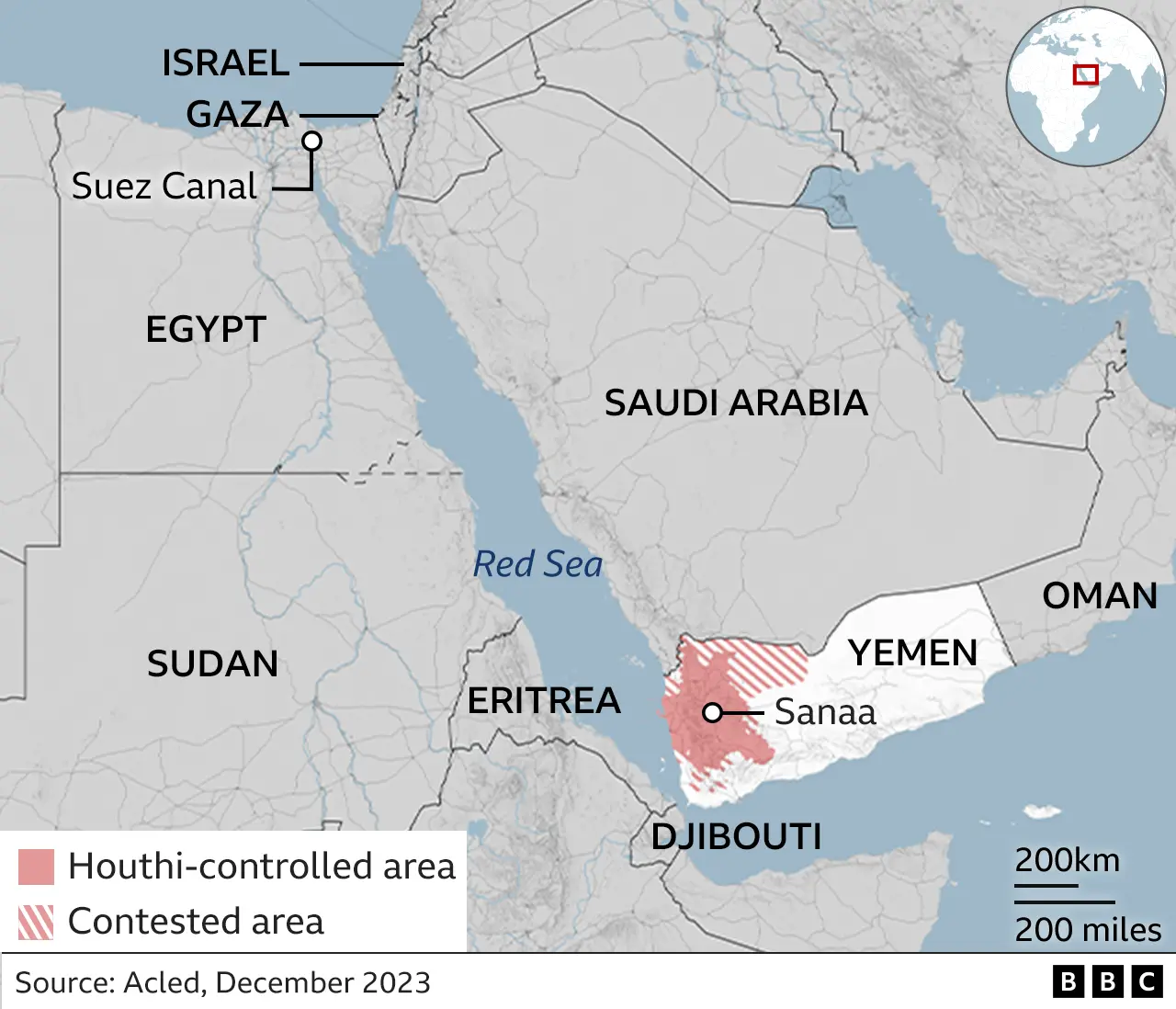
The stabilization of Southern Yemen is currently gated by a fragmented security architecture and a lack of institutional absorption capacity. While external observers often characterize the conflict as a binary struggle between the Houthi movement and the internationally recognized government, the southern theater operates under a distinct set of variables. To achieve durable equilibrium, Gulf-led interventions must shift from a reliance on direct liquidity injections to a model of Strategic Arbitrage, where capital is deployed to bridge the gap between local governance structures and international maritime security requirements.
The primary bottleneck is not a lack of resources, but the High Cost of Transactional Governance. In the absence of a unified administrative body in Aden and its environs, every dollar of aid or investment faces a "fragmentation tax"—the loss of value through redundant security checkpoints, divergent local regulations, and the competing interests of the Southern Transitional Council (STC) and various local militias. Recently making news in this space: The Kinetic Deficit Dynamics of Pakistan Afghanistan Cross Border Conflict.
The Tripartite Architecture of Southern Instability
Understanding the potential for stabilization requires deconstructing the region into three distinct operational layers. Each layer presents a specific risk profile and a corresponding opportunity for Gulf-based sovereign wealth funds and development agencies.
- The Maritime Transit Variable: The proximity to the Bab al-Mandab Strait makes the southern coastline a critical node in global energy and logistics supply chains.
- The Sub-National Governance Layer: Local councils often possess higher legitimacy than the central government but lack the technical expertise to manage large-scale infrastructure projects.
- The Paramilitary Security Matrix: Security is currently a decentralized commodity, provided by various groups with varying degrees of loyalty to regional patrons.
The Capital Absorption Constraint
A significant failure in previous stabilization efforts was the assumption that the Central Bank of Yemen (CBY) could act as a friction-less conduit for reconstruction funds. The reality is a Bifurcated Monetary System. With two competing central banks and differing valuations of the Yemeni Rial (YER), capital inflows often trigger localized inflation without improving the purchasing power of the average citizen. Additional details regarding the matter are detailed by USA Today.
To bypass this, strategic intervention must utilize Ring-Fenced Infrastructure Vehicles (RIVs). These are project-specific entities that operate under international accounting standards, shielded from the volatility of the national budget. By focusing on the Port of Aden and the Mukalla corridor, investors can create "pockets of efficiency" that demonstrate the viability of the south as a standalone economic zone.
The formula for calculating the success of these RIVs is determined by the Stabilization Multiplier ($S_m$):
$$S_m = \frac{I_c \times L_g}{R_p}$$
Where:
- $I_c$ = Infrastructure Connectivity (the ability of a project to link local production to global markets)
- $L_g$ = Local Governance Buy-in (the degree to which regional leaders are incentivized to protect the asset)
- $R_p$ = Residual Political Risk (the probability of kinetic interference from opposing factions)
Energy As a Foundation for Sovereignty
Electricity generation is the single most visible metric of governance success in Southern Yemen. The current deficit in the Aden power grid acts as a ceiling on all other economic activity. Current reliance on expensive, high-emission diesel generators is a fiscal drain on the state.
Transitioning to a Hybrid Energy Matrix—utilizing the region's high solar irradiance alongside liquefied natural gas (LNG) from the Shabwah fields—reduces the cost per kilowatt-hour and diminishes the leverage of fuel-smuggling networks. This is not merely a utility upgrade; it is a decapitation of the war economy. When the state provides cheaper, more reliable power than the black market, the informal power structures lose their primary mechanism of social control.
The Security-Development Feedback Loop
The greatest risk to Gulf interests is the Security Vacuum Paradox: the more a specific region is stabilized, the more it becomes a target for spoilers who benefit from chaos. To mitigate this, security must be integrated into the economic framework through Vested Protection Agreements.
Instead of paying for security as an overhead cost, regional security forces should be integrated into the logistics chain. This creates a direct correlation between the volume of trade flowing through a port and the revenue available to the forces guarding it. It transforms a mercenary relationship into a stakeholder relationship.
Institutional De-Risking for International Partners
International organizations remain hesitant to engage in Southern Yemen due to the lack of clear legal frameworks regarding property rights and contract enforcement. The Gulf states are uniquely positioned to act as Institutional Guarantors. By establishing special economic zones (SEZs) governed by a hybrid of Yemeni law and international commercial arbitration standards, the perceived risk for third-party investors can be lowered.
The success of such zones depends on the Hardening of Civil Infrastructure. This includes:
- Digitalizing the land registry to prevent fraudulent claims.
- Implementing biometric payroll systems for civil servants to eliminate "ghost workers."
- Establishing a regional "single window" for customs and permits to reduce bureaucratic friction.
The Logistics of the Southern Corridor
The geography of the south dictates its economic destiny. The coastline stretching from Dhubab to Al-Ghaydah offers multiple points of entry into the hinterland of the Arabian Peninsula. However, the internal road networks are degraded.
The strategy must prioritize the Intermodal Logistics Backbone. Repairing the coastal highway and connecting it to the agricultural hubs in Lahj and Abyan creates a domestic value chain that can feed the urban centers. This reduces the reliance on imported foodstuffs, which currently accounts for a massive portion of the trade deficit.
Addressing the Human Capital Deficit
Decades of conflict have led to a massive brain drain. No amount of infrastructure investment will yield results if there is no local workforce capable of maintaining it. A "Masterclass" approach to reconstruction requires the establishment of Technical Vocational Hubs focused on maritime logistics, renewable energy maintenance, and digital administration.
These hubs should be seen as part of the security strategy. By providing high-value employment to young men who would otherwise be recruited by militias, the Gulf states can effectively drain the manpower pool available to extremist groups. The cost of training one technician is significantly lower than the cost of neutralizing one insurgent.
The Geopolitical Insurance Policy
For the United Arab Emirates and Saudi Arabia, a stable Southern Yemen is a strategic necessity rather than a philanthropic endeavor. A fractured south provides a corridor for illicit Iranian influence and a sanctuary for Al-Qaeda in the Arabian Peninsula (AQAP).
The Strategic Play here is the creation of a "Buffer of Prosperity." By saturating the coastal regions with investment and infrastructure, the Gulf states create a physical and economic barrier that insulates the rest of the peninsula from the instability of the north. This requires a shift from short-term military objectives to long-term economic integration.
Constraints and Failure Points
This strategy is not without significant hurdles. The primary failure point is the Political Cohesion Gap. If the STC and the broader government cannot reach a durable power-sharing agreement, any infrastructure investment is at risk of being seized or destroyed during internal power struggles.
Furthermore, the Houthi Kinetic Threat remains a constant. The use of drones and missiles to target southern oil terminals, as seen in late 2022, can freeze the entire economy. A robust air defense umbrella is the prerequisite for any significant capital deployment. Without the "iron dome" of security, the "silk road" of reconstruction cannot exist.
The second limitation is the Global Commodity Price Volatility. Since Yemen remains an importer of staples, any global spike in wheat or fuel prices can wipe out the gains made through local economic stabilization. Therefore, the RIVs mentioned earlier must also include a Commodity Hedging Component to protect the local population from external price shocks.
Implementation Vector
The transition must begin with the Aden Port Authority Modernization. By installing modern container handling technology and integrating a blockchain-based cargo tracking system, the port can double its throughput within 24 months. This generates the immediate cash flow needed to fund the secondary layers of the stabilization plan, such as grid modernization and road repair.
Following the port modernization, the focus must shift to the Shabwah-Hadramout Energy Nexus. Restarting the LNG exports is the only way to provide the southern administration with a sustainable, non-aid-dependent revenue stream. This requires a tripartite agreement between the local tribes, the central authorities, and the international oil companies (IOCs).
The final phase involves the Formalization of the Informal Economy. By providing low-interest credit to small and medium enterprises (SMEs) that register with the local chambers of commerce, the administration can bring a massive amount of hidden capital into the formal system. This expands the tax base and allows for the gradual phasing out of external budgetary support.
The objective is to move from a state of Fragile Dependence to one of Resilient Interdependence. Southern Yemen should not be a ward of the Gulf states, but a partner in the Red Sea security and trade architecture. This shift requires the cold, calculated application of economic principles over the emotive or purely kinetic strategies of the past.
Deploying specialized technical teams to Aden to oversee the digital transformation of the customs and tax offices is the immediate tactical requirement. This provides the transparency needed for the next tier of sovereign investment to flow.


