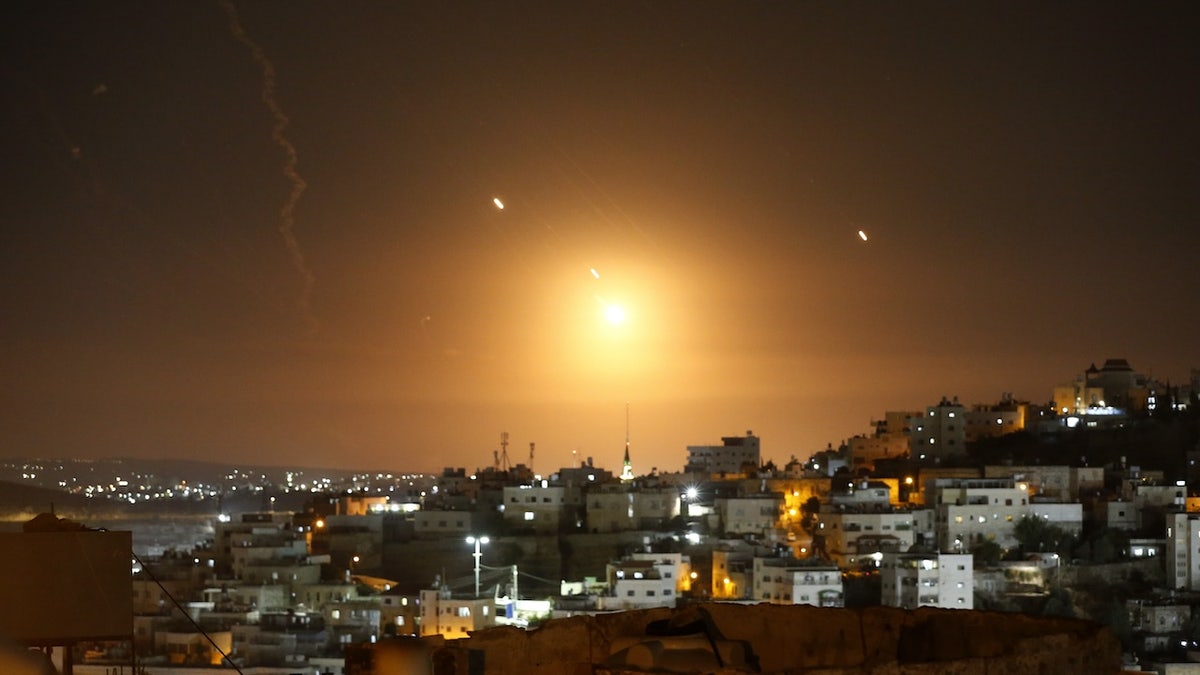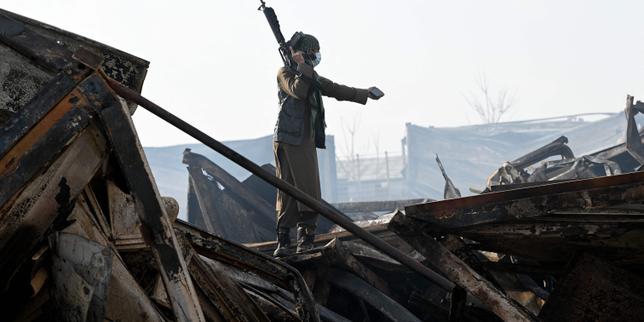
The headlines are screaming about a massacre. They claim an "escalation" between Pakistan and Afghanistan after a bombardment in Kabul allegedly left 400 people dead. It’s a convenient narrative. It’s also wrong. Most reporting on the Af-Pak border conflict right now is a masterclass in stenography masquerading as journalism. If you believe the current "lazy consensus" that this is just another military flare-up, you are missing the tectonic shift in regional power dynamics.
The number 400 is the first red flag. In the fog of Kabul’s current informational vacuum, casualty figures are treated like currency—inflated by the Taliban for sympathy and weaponized by regional proxies for leverage. To understand what is actually happening, you have to stop looking at the bodies and start looking at the maps.
The Sovereignty Charade
Mainstream outlets love to talk about "sovereignty violations." It’s the favorite phrase of international lawyers who have never stepped foot in the Durand Line’s mountainous gray zones. Here is the reality: the border between Pakistan and Afghanistan has never functioned as a line of sovereignty. It is a sieve.
For decades, Pakistan’s Inter-Services Intelligence (ISI) played a double game, supporting the Taliban to secure "strategic depth" against India. Now, the monster they fed has its own house, and it isn't taking orders. The recent strikes aren't a sign of Pakistan's strength; they are a public admission of total policy failure. When a state starts dropping bombs on its neighbor’s capital, it isn’t demonstrating power. It is screaming that it has lost control of its own proxies.
The Tehrik-i-Taliban Pakistan (TTP) Factor
The "lazy consensus" says the Taliban is a monolithic entity. It isn't. The Afghan Taliban and the Pakistani Taliban (TTP) are cousins with the same DNA but different targets.
- The Afghan Taliban: Wants to rule a pariah state in peace.
- The TTP: Wants to dismantle the Pakistani state and replace it with a caliphate.
The Pakistani military thought they could keep these two separate. They were wrong. Kabul is now providing a safe haven for the very insurgents that are bleeding Pakistan dry in Waziristan and Khyber Pakhtunkhwa. When Islamabad strikes Kabul, they aren't trying to win a war. They are trying to force a negotiation that the Taliban no longer feels the need to attend.
Why the "400 Dead" Narrative Serves Everyone (But the Truth)
Why would the Taliban claim such an astronomical death toll? Simple. It’s the only way to get the world to look at them without mentioning girls' education or public executions.
- Victimhood as Currency: By inflating casualty numbers, the Taliban shifts the global conversation from "oppressive regime" to "sovereign victim of aggression."
- Internal Cohesion: Nothing unites fractured militant factions like a common external enemy. Pakistan is the perfect villain for a Taliban leadership struggling with internal dissent.
- Pressure on Islamabad: If the international community buys the 400-casualty figure, the diplomatic pressure on Pakistan becomes unbearable, forcing them to cease operations and giving the TTP room to breathe.
I’ve seen this script before. During the 20-year US occupation, casualty figures were routinely massaged by both sides to fit the flavor of the month. To believe a 400-person death toll from a precision-targeted strike in a densely populated urban center without immediate, verifiable satellite or ground-level photographic evidence is a failure of basic intelligence gathering.
The Economic Suicide of the Durand Line
The "experts" will tell you this is a military crisis. It’s actually a trade war with guns. Pakistan is broke. Its economy is in a tailspin, kept on life support by IMF tranches and Saudi handouts. Afghanistan is even worse off, surviving on a trickle of humanitarian aid and black-market smuggling.
The real escalation isn't the bombing; it's the closure of the Torkham and Chaman border crossings.
- Fact: Over 70% of Afghanistan’s legal exports go through Pakistan.
- Fact: Pakistan relies on Central Asian energy routes that must pass through Afghanistan.
By bombing Kabul, Pakistan is lighting its own wallet on fire. It is a desperate attempt to show the TTP that their hosts aren't safe, even if it means destroying what’s left of the regional economy. This isn't strategic; it's emotional. It’s a jilted lover throwing bricks through a window because they realized they were never actually in charge.
Dismantling the "Regional Stability" Delusion
"People Also Ask" if this will lead to a full-scale war. The answer is no, but for a reason that would make a diplomat cringe: neither side can afford the bullets.
A full-scale war requires logistics, a functioning supply chain, and a soldier who knows he’ll get paid next month. Pakistan's military is currently preoccupied with internal political upheaval and a collapsing currency. The Taliban's "air force" consists of captured Black Hawks they barely know how to maintain.
The "escalation" we are seeing is Performative Warfare.
- It’s designed for domestic consumption.
- It’s designed to scare the TTP.
- It’s designed to signal to China that Pakistan is still the "security guarantor" of the region.
China is the only player that actually matters here. Beijing’s Belt and Road Initiative (BRI) depends on a stable corridor through Pakistan. If the Af-Pak border stays hot, China’s billions are at risk. Watch the meetings in Beijing, not the skirmishes in Kabul. When China loses patience, the "escalation" will vanish as quickly as it started.
The Flaw in the "Peace" Argument
Stop trying to find a "peaceful solution" to the Durand Line. There isn't one. The border was drawn by a British civil servant in 1893 who didn't care about Pashtun tribal dynamics, and it won't be fixed by an international committee in 2026.
The unconventional truth? The instability is the point. Both regimes use the border conflict to distract from their own governing failures. If the border were settled, the Taliban would have to explain why they can't feed their people, and the Pakistani military would have to explain why they consume such a massive chunk of the national budget.
Stop Asking the Wrong Questions
Most people are asking, "How do we stop the fighting?"
The real question is, "Who benefits from the chaos?"
If you want to understand the next six months, ignore the official casualty counts. Watch the price of flour in Kabul and the value of the Rupee in Islamabad. Watch the TTP’s recruitment videos. If those videos show militants using Pakistani-made equipment, you know the "bombing" was just theater.
The "escalation" isn't a new chapter. It's the final, desperate gasp of a 20-year policy that assumed you could control a fire by standing in the middle of it. Pakistan is finally getting burned by the flames it fanned, and Kabul is happy to watch it burn, even if they have to exaggerate the damage to keep the world watching.
Don't wait for a peace treaty. It's not coming. Instead, watch for the moment Pakistan realizes that the "strategic depth" they spent forty years building has turned into a strategic grave.
The bomb wasn't the event. The realization that the bomb didn't work is the event.
Pack up your maps. The lines don't matter anymore. Only the grudges do.
Go look at the trade data. That’s where the real war is being lost.