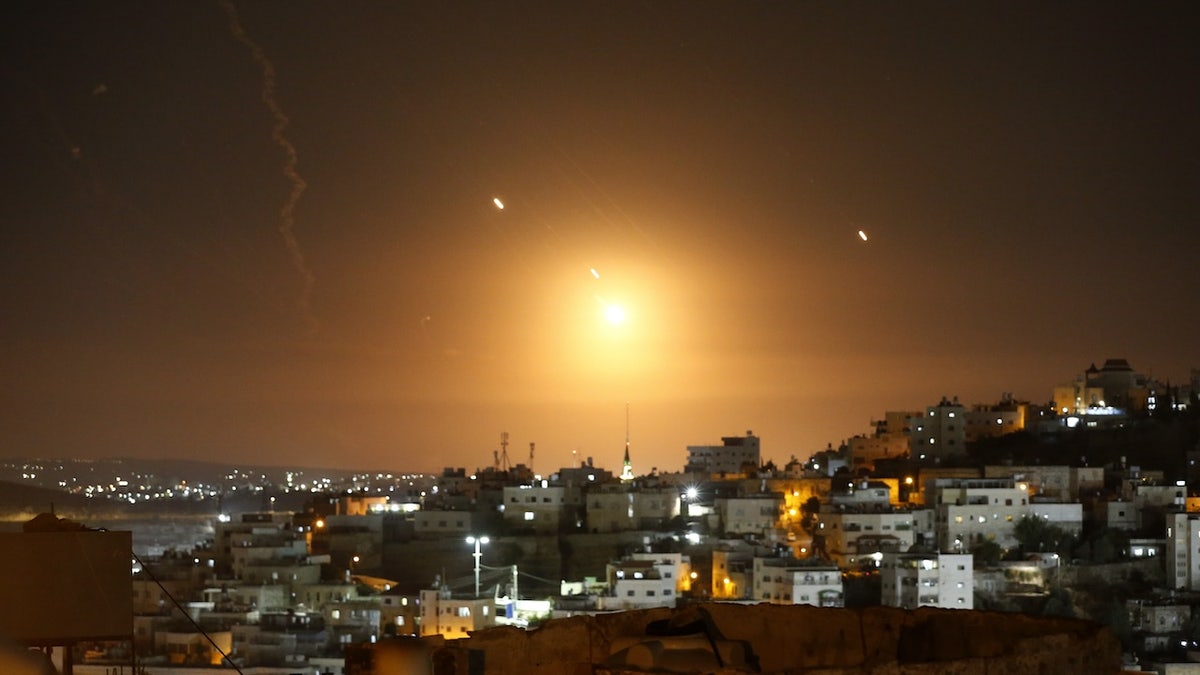
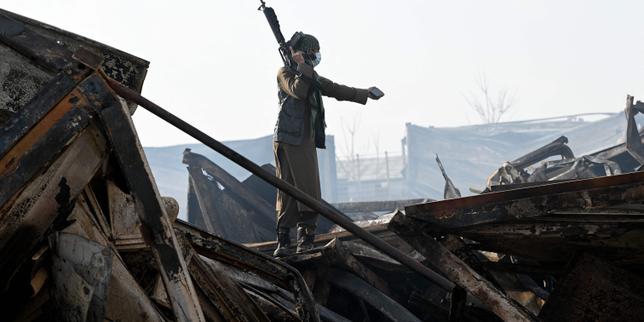
The tactical shift happened in a matter of hours. Ukrainian assault units, long pinned by the density of Russian minefields and the unblinking eye of overhead surveillance, finally found the seam. They didn't just survive the "kill zone"—they occupied it. This recent advance represents a departure from the meat-grinder logic of the last year, signaling a pivot toward high-speed, decentralized warfare that bypasses traditional trench logic. While the world watches the front lines as a static map, the actual breakthrough is happening in the invisible layer of electronic warfare and drone integration.
Most observers mistake a "kill zone" for a simple stretch of contested ground. It is far more lethal than that. In modern military doctrine, a kill zone is a pre-calibrated area where every square meter is registered for artillery fire and overseen by thermal-imaging drones. Stepping into it used to be a death sentence. To move through it now, Ukraine is using a cocktail of repurposed civilian tech and high-end NATO intelligence to "blind" the Russian defense. They aren't just charging; they are systematically dismantling the sensors that make the kill zone functional.
The Mechanics of the Modern Breach
Success in these advanced sectors relies on a concept called the "OODA loop"—Observe, Orient, Decide, Act. The side that cycles through this process faster wins the immediate engagement. For months, Russia held the advantage here because their "eyes" were everywhere. Cheap, $500 FPV (First Person View) drones acted as a literal ceiling, preventing any meaningful troop movement.
To break the stalemate, Ukrainian engineers began deploying "bubble" electronic warfare (EW) systems. These are portable devices, often mounted on the backs of individual soldiers or the hoods of humvees, that create a localized jammer. By knocking out the signal between a Russian pilot and their drone within a 100-meter radius, Ukrainian squads are effectively creating a temporary fog of war. They move under this invisible umbrella, sprinting between cover before the Russian artillery can react to their new coordinates.
This isn't about massive tank columns. Large formations are too easy to spot and too slow to hide. Instead, the breach is being led by four-man teams. These units operate with a level of autonomy that would be unrecognizable to a Soviet-era general. They don't wait for orders from a central command post. They identify a weakness, suppress the local drone threat, and take the ground.
The Problem with Static Defense
Russia’s strategy has been built around the "Surovikin Line," a massive network of dragon’s teeth, anti-tank ditches, and minefields. On paper, it is impenetrable. In practice, it relies on the assumption that the defender can see the attacker coming. Once you strip away the drone surveillance, the "kill zone" becomes just a field.
The mines remain a nightmare. Ukraine is currently the most heavily mined country on earth, with densities reaching five mines per square meter in some southern sectors. Standard de-mining equipment, like the American M58 MICLIC, is loud and attracts immediate fire. The new approach is quieter. It involves using thermal cameras at dusk to identify mines that have been heated by the sun all day. They glow differently than the surrounding soil. Combat engineers then use small, precision-dropped charges from drones to clear a narrow path just wide enough for infantry.
The Artillery Chess Match
Behind the infantry push is a terrifyingly efficient artillery duel. The "kill zone" is only effective if the big guns can hit their targets. Ukraine has shifted its focus from massed fire to "counter-battery" dominance. Using Western-supplied radar systems like the AN/TPQ-36, they can track the trajectory of a Russian shell back to its source in seconds.
Before the infantry even starts their advance, these radar systems are "hunting." As soon as a Russian gun fires to defend the kill zone, its position is compromised. Within two minutes, a Ukrainian HIMARS or M777 battery responds. This has forced Russian artillery to pull back further from the front line, increasing their response time and giving the Ukrainian assault teams the precious minutes they need to dig in and hold the newly won ground.
The Human Cost of Incremental Gains
We shouldn't sanitize the reality. Taking a few hundred meters of a kill zone is a brutal, visceral experience. Even with electronic warfare and thermal imaging, the margin for error is zero. A single unjammed drone or a miscommunication in the artillery cover can wipe out an entire squad.
The psychological toll on these "breach units" is immense. They are operating in an environment where they are being hunted by robots from the sky. Unlike traditional combat, where you might see your enemy across a field, here the enemy is often a silent hum at 3,000 feet. The soldiers who are making these advances are among the most experienced on the planet, having survived multiple rotations in the harshest conditions of the 21st century.
Why Air Power Isn't the Silver Bullet
There is a common misconception that a few dozen F-16s would instantly clear the kill zones. It’s a seductive idea, but it ignores the reality of modern Integrated Air Defense Systems (IADS). The Russian S-400 systems make the airspace over the front lines extremely dangerous for any fourth-generation fighter.
The real air war isn't happening at 30,000 feet; it’s happening at 30 feet. The tactical breakthrough Ukraine is seeing right now is a result of winning the low-altitude battle. By flooding the air with their own reconnaissance drones while jamming the enemy’s, they are achieving a localized "air superiority" that doesn't require a single jet engine.
The Logistics of Holding Ground
Winning the ground is only half the battle. Holding it is arguably harder. Once a Ukrainian unit takes a Russian trench in the kill zone, they are immediately targeted by everything the Russians have left. The first priority isn't celebrate; it's to turn the trench around. Russian trenches are designed to face West. Within minutes of taking a position, Ukrainian troops must dig new firing steps and reinforcement points that face East.
Supply lines to these forward positions are incredibly fragile. Everything—water, ammunition, batteries for the EW systems—must be carried in by hand or by small, autonomous ground vehicles (UGVs). These "robot mules" are the unsung heroes of the current advance. They can crawl through the mud and mines where a truck would be blown apart, keeping the forward units alive during the critical first 48 hours of an occupation.
Geopolitical Stakes of the Breach
This isn't just about tactical geometry; it's about political momentum. Every time Ukraine proves it can advance through these "impossible" zones, it refutes the narrative of a permanent stalemate. The "kill zone" was designed to break the will of the Ukrainian military and its Western backers. By showing that these defenses can be dismantled with a mix of grit and high-tech ingenuity, Ukraine is keeping the door open for continued international support.
However, the clock is always ticking. Russia is also learning. They are already modifying their drones to operate on different frequencies to bypass Ukrainian jamming. This is a race where the finish line keeps moving. The side that stops innovating for even a week finds itself back in the meat grinder.
The tactical victory in the kill zone proves that static defenses are never truly permanent. They are only as good as the technology used to defend them. As Ukraine continues to integrate AI-driven drone swarms and more sophisticated electronic warfare, the very definition of a "kill zone" will have to be rewritten. The ground is moving, and it's moving East.
Stockpiling more jammers and training more decentralized "breach" squads is the only way to turn these rare advances into a sustained collapse of the defensive line.