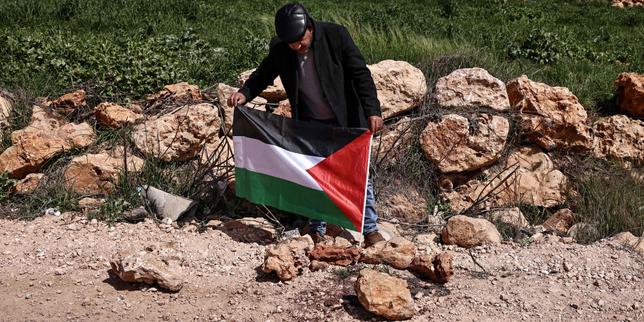
The numbers coming out of the West Bank aren't just statistics. They're a map of a disappearing society. While global attention remains fixed on the borders of Gaza, a quieter but equally violent transformation is tearing through the hills of the West Bank. UN experts recently sounded the alarm, reporting that over 36,000 Palestinians have been forced from their homes in a single year. This isn't a random byproduct of conflict. It's a systematic campaign of displacement driven by settler violence and state-backed expansion. If you've been following the region, you know the situation is always tense, but we've reached a point where the term "unprecedented" actually fits.
The scale of this displacement is staggering. We're talking about entire communities—herders, farmers, and families who have lived on the same land for generations—wiped off the map in a matter of months. When the UN describes this as a "massive expulsion," they aren't being hyperbolic. They're looking at the data. In just twelve months, the combination of physical threats, the destruction of water infrastructure, and the seizure of grazing lands has made life impossible for thousands. It's a calculated squeeze.
The mechanics of the silent surge
How do you move 36,000 people without a formal declaration of war? You do it through a thousand small cuts. It starts with a new outpost on a hilltop. Then comes the harassment. Settlers, often armed and sometimes accompanied by soldiers, block access to wells. They burn olive groves. They graze their own flocks on Palestinian crops. For a small community like Wadi as-Seeq or Ein Samiya, these aren't just inconveniences. They're death sentences for their way of life.
Most people think of displacement as a sudden event—a bulldozer at the door. While that happens, the modern reality is more about psychological and economic exhaustion. When a father can't guarantee his children won't be harassed on the way to school, or when a shepherd loses his entire flock to theft or poisoning, the decision to leave becomes an act of survival. The UN Office for the Coordination of Humanitarian Affairs (OCHA) has documented hundreds of these incidents. They show a clear pattern: violence leads to abandonment, and abandonment leads to the formal legalization of new settler outposts.
State policy by another name
We need to be honest about the role of the Israeli government here. This isn't just a few "bad apples" or rogue actors in the hills. The line between settler activity and state policy has almost completely evaporated. Since late 2023, the acceleration of these displacements has coincided with a massive increase in the distribution of firearms to "civilian security squads" in settlements.
Finance Minister Bezalel Smotrich and National Security Minister Itamar Ben-Gvir haven't hidden their goals. They've pushed for the "regularization" of outposts that were once considered illegal even under Israeli law. By providing these outposts with electricity, water, and military protection, the state effectively adopts the displacement as its own. It's a tag-team effort. The settlers move in, create a "security friction zone," and the military eventually restricts Palestinian movement in the area for "safety reasons." The end result is always the same: more land for one group, less for the other.
Why the 36,000 figure is likely an undercount
The UN's count of 36,000 displaced individuals is a conservative floor, not a ceiling. It primarily tracks those who have been forced to leave their primary residences due to direct violence or home demolitions. It doesn't fully capture the "secondary displacement" of people who move from rural areas into overcrowded urban hubs like Ramallah or Nablus because they can no longer work their land.
When a community leaves, the history of that place starts to fade. Names of hills change. Ancient stone structures are reclaimed or destroyed. This is about the erasure of a presence. The international community often issues "stern warnings" or expresses "deep concern," but for the families currently loading their belongings onto tractors in the Jordan Valley, those words feel pretty empty.
The role of infrastructure as a weapon
You don't need a tank to displace a village when you have a permit system. In Area C—which makes up about 60% of the West Bank—Palestinians are almost never granted building permits. When they build out of necessity, the structures are labeled "illegal" and slated for demolition.
- Water access: Settlers often take control of natural springs, fencing them off for private use.
- Road networks: Segregated roads cut off Palestinian villages from one another, making a five-minute trip take an hour through checkpoints.
- Solar panels and schools: Even donor-funded humanitarian projects, like solar arrays or primary schools, are frequently targeted for demolition.
The international response is failing the data
For years, the "two-state solution" has been the default script for diplomats. But the data on the ground suggests that the physical foundation for such a solution is being dismantled piece by piece. The displacement of 36,000 people isn't just a human rights crisis; it's a geopolitical shift. Every community that vanishes makes the prospect of a contiguous Palestinian state more of a fantasy.
Sanctions on individual settlers, which we've seen from the U.S., UK, and EU recently, are a start. But they're a bandage on a gunshot wound. Targeting four or five people while the state treasury continues to fund the expansion of the outposts they live in is performative at best. Real change requires addressing the structural incentives that make displacement profitable and politically popular for the current Israeli leadership.
What happens when the world looks away
History shows that displacement doesn't just stop on its own. It accelerates. The success of one outpost in clearing a valley provides the blueprint for the next. We're seeing a push to "finish the job" in strategic areas like the E1 corridor, which would effectively bisect the West Bank and cut East Jerusalem off from its Palestinian hinterland.
The 36,000 people displaced this year are a warning. They represent the breakdown of international law in real-time. If the global community continues to treat these events as isolated incidents rather than a singular, coordinated campaign, the West Bank as we know it will cease to exist.
Stay informed by tracking the daily reports from OCHA and B'Tselem. Don't just look at the headlines; look at the maps. The changing borders of Area C tell the real story of where this is headed. Pressure your local representatives to move beyond "concern" and toward actual policy consequences for settlement expansion. The time for quiet diplomacy has passed while the displacement continues at a record pace.