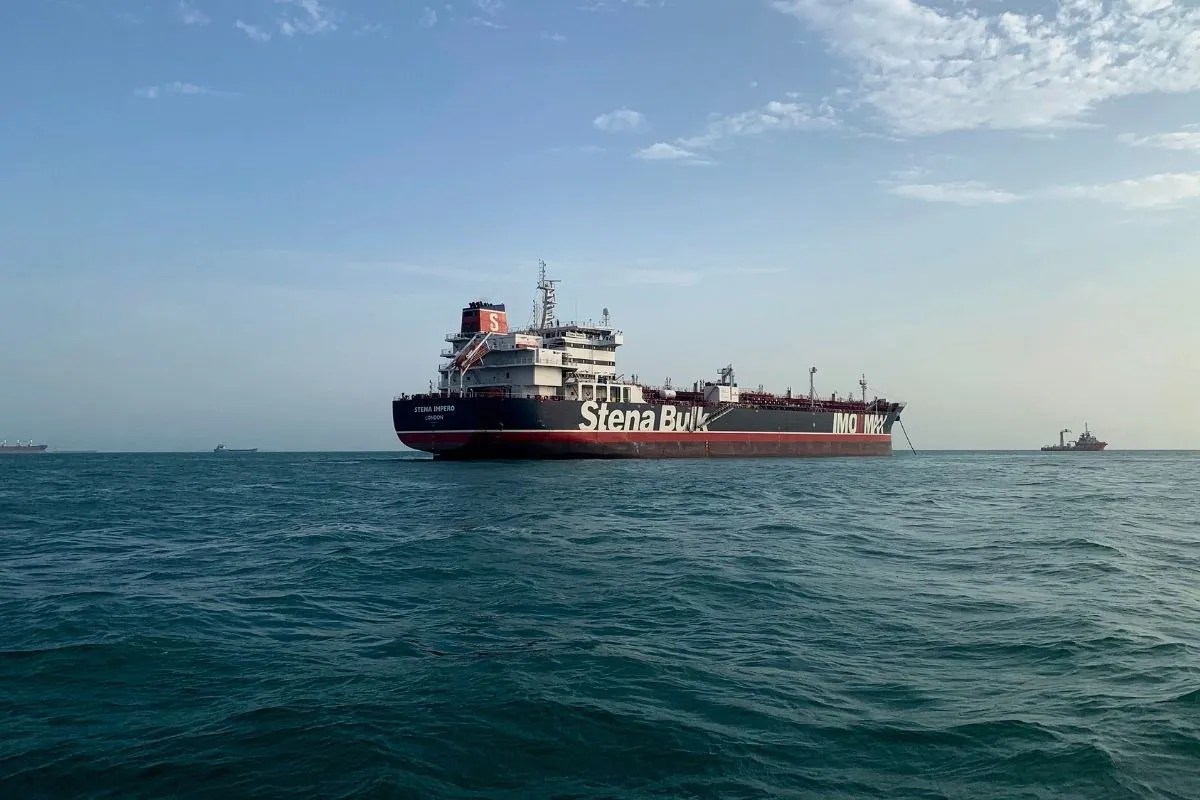
The convergence of domestic political rhetoric and naval logistics creates a distinct signaling mechanism that observers often misinterpret as literal intent. When a United States President suggests a naval task force could pivot from an Iranian mission to a Cuban intervention, the primary value lies not in the tactical feasibility of the maneuver, but in the reaffirmation of the "Monroe Doctrine" within a modern maritime framework. To analyze the strategic weight of such statements, one must deconstruct the operational constraints of a Carrier Strike Group (CSG), the economic cost of mission creep, and the psychological impact of opportunistic force projection.
The Triad of Naval Signaling Constraints
Political statements regarding naval deployments operate within a fixed reality of logistics and international law. For a fleet returning from the Persian Gulf to engage in operations near Cuba, three specific variables dictate the success of that signal.
1. The Fuel and Maintenance Bottleneck
A naval vessel is a finite resource governed by the Operational Readiness Cycle. Ships returning from the Fifth Fleet area of operations (Middle East) are frequently at the end of their maintenance tether. The propulsion systems, whether nuclear or conventional, and the crew's operational endurance have been optimized for a specific duration. Diverting a strike group to Cuba introduces a "Maintenance Debt." If a ship is delayed by 30 days for a secondary mission, the subsequent dry-dock interval is pushed back, creating a cascading failure in fleet availability for the next 24 months.
2. Legal Precedence vs. Kinetic Action
Under the United Nations Convention on the Law of the Sea (UNCLOS), "Innocent Passage" allows naval vessels to transit through territorial waters, but "Taking on Cuba" implies a breach of sovereign maritime boundaries or the enforcement of a blockade. A blockade is an act of war. Therefore, rhetoric involving such actions functions as a Coercive Diplomacy Framework. It forces the adversary to calculate the cost of a high-variance event—even if that event has a low probability of occurrence.
3. The Geographic Pivot Factor
The transit from the Strait of Hormuz to the Caribbean involves navigating several "Chokepoints," including the Bab-el-Mandeb, the Suez Canal, and the Strait of Gibraltar. Each of these geographic constraints requires a specific posture. A fleet optimized for anti-piracy or missile defense in the Red Sea requires a re-configuration of its air wing and sensor arrays to handle the littoral (shallow water) environment of the Cuban coastline.
The Cost Function of Opportunistic Interventions
Military operations are rarely conducted on a whim because the Marginal Cost of Engagement rises exponentially when a mission lacks a pre-defined objective.
- Personnel Attrition: Extending a deployment beyond the standard six-to-nine-month window correlates directly with decreased retention rates and increased human error.
- Opportunity Cost: Deploying assets to the Caribbean to "take on" a secondary adversary leaves the primary theater—typically the Indo-Pacific or the North Atlantic—under-resourced.
- Fuel Consumption Ratios: The logistics of maintaining a constant presence in the Florida Straits requires a continuous "Gas Station at Sea" (Underway Replenishment). If the supply chain is still oriented toward the Mediterranean or Mid-Atlantic, the cost per gallon of JP-5 aviation fuel increases significantly due to the redirected transit of tankers.
The Psychology of the Secondary Theater
Cuba serves as a unique psychological theater for U.S. domestic and foreign policy. Unlike Iran, which represents a long-range ballistic and regional hegemony threat, Cuba represents a "Near-Abroad" security concern. When a Commander-in-Chief links these two disparate geographies, they are utilizing a Transitive Threat Model.
This model suggests that if the U.S. is capable of projecting power 7,000 miles away in the Persian Gulf, its capacity to do so 90 miles from its own shore is absolute. The rhetoric serves as a reminder to regional actors that proximity does not grant immunity from the reach of a returning expeditionary force.
Naval Logistics as a Predictive Tool
To determine if a joke about "taking on Cuba" will transition into a policy shift, analysts must monitor the Combatant Command (COCOM) Handover.
Naval assets are "chopped" or transferred between geographic commanders. A CSG moving from Central Command (CENTCOM) to European Command (EUCOM) and finally to Northern Command (NORTHCOM) follows a rigid bureaucratic and radio-frequency protocol. If the strike group maintains its high-intensity sensor sweeps upon entering the NORTHCOM area of responsibility, the rhetoric is backed by technical intent. If the strike group shifts to "Dark Ship" or transit-only emissions, the statements remain purely in the realm of political theater.
The second indicator is the Air Wing Composition. A carrier returning from a theater where it was conducting overland strikes (like Iraq or Syria) carries a specific loadout of precision-guided munitions. Engaging a maritime target or enforcing a naval quarantine around an island requires a shift toward anti-ship missiles and electronic warfare suites. Without a documented change in the ordnance loaded at sea, a physical intervention remains logistically impossible.
The Mechanism of Deterrence Inflation
There is a risk inherent in using naval movements as punchlines. This is known as Deterrence Inflation. If the U.S. repeatedly signals its intent to intervene in Cuban affairs via returning task forces but never executes, the "Fear Premium" associated with those naval assets decreases.
- Adversary Adaptation: Cuba and its allies (Russia/China) observe these rhetorical cycles. They use the window of the "joke" to test their own coastal defenses or to conduct "Grey Zone" operations, knowing the U.S. fleet is actually in a state of transit-weariness.
- Allied Confusion: Regional partners in the Caribbean Basin require stability for trade. Sudden shifts in naval posture, even if only verbal, increase insurance premiums for commercial shipping and disrupt coordinated drug interdiction efforts.
Strategic Recommendation for Caribbean Stability
The most effective use of a returning naval force is not a spontaneous intervention, but a Planned Presence Operation. If the objective is to exert pressure on the Cuban administration, the Department of Defense should decouple the rhetoric from the transit.
A CSG should complete its deployment, undergo the necessary maintenance reset, and then be deployed as a fresh, dedicated task force to the Caribbean. This avoids the "Maintenance Debt" and signals a deliberate, well-funded policy rather than an opportunistic detour. This approach ensures that the fleet remains a credible instrument of national power, capable of sustained operations rather than a fleeting presence on the way to a home port.
Strategic superiority is maintained through the predictability of power and the unpredictability of tactics. Linking a routine transit to a major geopolitical shift without the requisite logistical "tail" undermines the perceived competence of the naval command structure. Analysts should ignore the humor and focus on the Quarterly Readiness Reports; that is where the true intent of the U.S. Navy is written.