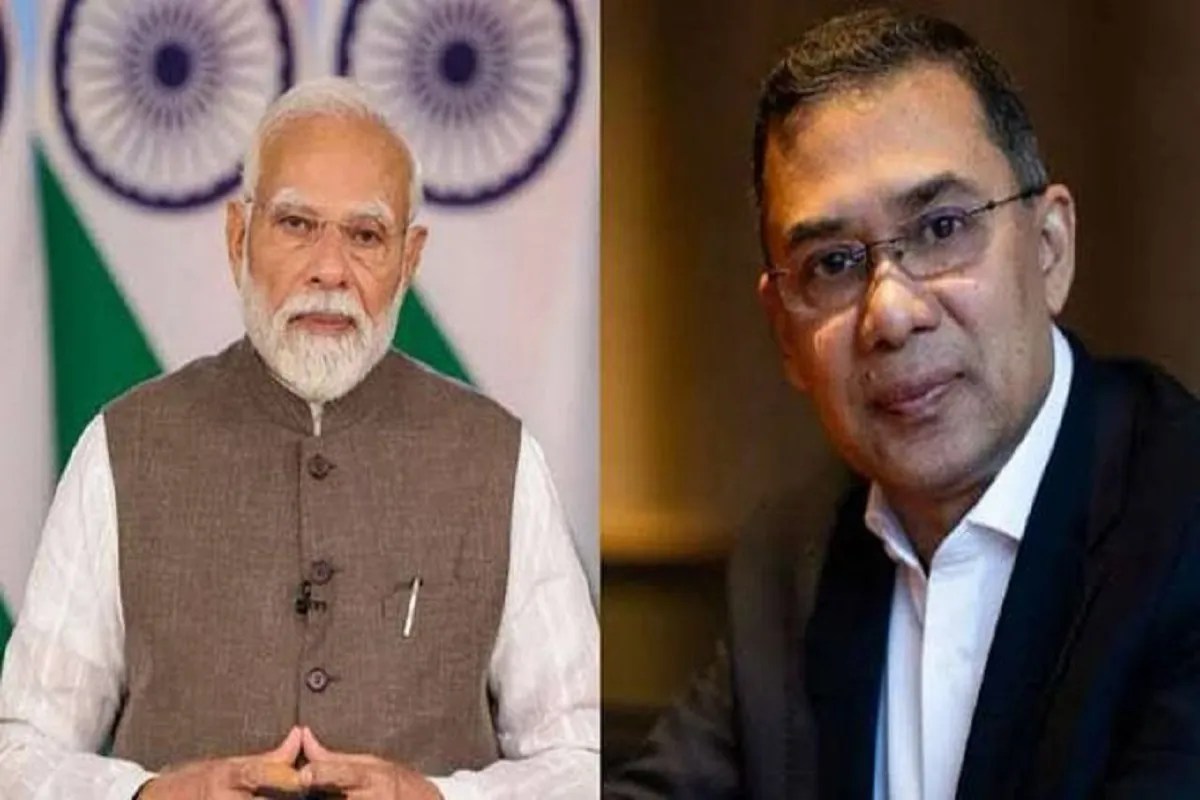
The restoration of full visa services by the Bangladeshi government for Indian nationals signifies a strategic recalibration rather than a return to the status quo. This development serves as a pressure release valve for bilateral interactions currently constrained by shifting internal political currents in Dhaka and regional security imperatives in New Delhi. Analyzing this event requires stripping away diplomatic rhetoric to examine the fundamental friction points that govern cross-border mobility and economic integration.
The Operational Logic of Visa Restrictions
Visa processing is rarely a purely administrative function in high-stakes geopolitics. It acts as a non-tariff barrier and a signaling mechanism. When a state restricts visa access, it effectively imposes a tax on interpersonal exchange, trade, and cross-border professional labor.
In the case of Bangladesh, the temporary suspension of visa services functioned as a bottleneck. By choking the flow of people, Dhaka created an artificial scarcity of bilateral engagement, which served several latent objectives:
- Domestic Signaling: Tightening entry requirements for foreign nationals during periods of internal transition is a standard method for a government to demonstrate control and sovereign autonomy to its domestic base.
- Leverage Calibration: By limiting the movement of Indian personnel, Bangladesh signaled its capacity to impose costs on Indian commercial and diplomatic interests, forcing New Delhi to acknowledge Dhaka’s agency in the partnership.
- Security Filtering: Periods of political instability often necessitate a higher threshold for entry. States typically utilize this as a mechanism to minimize external interference while domestic institutional consolidation occurs.
The resumption of these services indicates that the transactional costs of the suspension had begun to exceed the utility of the political signaling. Both nations require a degree of fluidity to maintain essential supply chains, particularly in logistics and service sectors that rely on human capital movement.
The Three Pillars of Bilateral Interdependence
To understand why this normalization is occurring, one must evaluate the structural dependencies that bind India and Bangladesh. These dependencies act as a gravitational pull, forcing alignment even when political tensions flare.
The Connectivity Matrix
India and Bangladesh share a complex geography defined by porous borders and intertwined river systems. Economic growth in the northeastern Indian states is contingent upon transit through Bangladesh. Conversely, Bangladesh requires access to the Indian market to fuel its export-oriented manufacturing base. Any prolonged restriction on visa services disrupts the maintenance of infrastructure projects, including power grids and rail links, which are vital for the economic security of both parties.
The Remittance and Service Flow
A significant volume of service-sector activity—ranging from healthcare tourism to technical consulting—relies on consistent access. Indian healthcare facilities have long been a primary destination for Bangladeshi citizens, creating a high-velocity flow of capital and patients. The cessation of visa services created a shock in this sector, with negative externalities for both the Indian private healthcare industry and the Bangladeshi public, which suddenly lost access to specialized diagnostic and treatment capacity.
The Security-Development Trade-off
Both nations operate under a shared security framework concerning cross-border insurgent activity and regional stability. This cooperation requires high-frequency communication between intelligence agencies and military bureaucracies. Visa restrictions complicate these channels, forcing reliance on slower, less secure digital communications. The normalization of visa status is a tactical necessity to restore the human-to-human coordination required for sustained counter-terrorism and border management.
Assessing the Friction Coefficient
The relationship operates on a variable friction coefficient. When bilateral trust is high, friction is minimal, and administrative processes—like visa issuance—are streamlined. When political narratives in Dhaka shift toward nationalist isolationism, or when New Delhi’s policy toward its neighbor is perceived as heavy-handed, the coefficient spikes, causing administrative delays.
The recent suspension should be viewed as a peak in the friction coefficient, likely triggered by a period of acute mistrust. The normalization is the result of the system attempting to return to an equilibrium state. However, the underlying drivers of the friction remain. These include:
- Political Volatility: The transition of power within Bangladesh creates uncertainty regarding long-term treaty commitments.
- Nationalist Sentiment: Public opinion in both countries is increasingly sensitive to perceived slights, making it difficult for leaders to engage in long-term, quiet diplomacy.
- External Influence: The presence of third-party regional powers seeking influence in the Bay of Bengal adds complexity, as both India and Bangladesh must balance their bilateral requirements against their external geopolitical alignments.
Tactical Consequences of Administrative Normalization
The reinstatement of visa services restores the baseline, but the operational environment has changed. Private firms and state institutions now factor in the "suspension risk" when planning long-term investments. This introduces a risk premium into bilateral economic activity.
For Indian corporations with existing assets or service agreements in Bangladesh, the focus must shift from expansion to resilience. This includes diversifying supply chains to ensure that personnel mobility constraints in one corridor do not paralyze operations. For institutions managing the migration flow, the focus is shifting toward digital verification and automated processing to insulate routine movement from political interference.
The Strategic Path Forward
The relationship is moving toward a model of "compartmentalized cooperation." Both sides are learning to separate operational necessities—such as trade facilitation, energy transit, and visa processing—from political disagreements.
The immediate strategic play for actors involved in this theater is to prioritize the institutionalization of movement. By moving toward e-visas, pre-cleared travel corridors, and institutionalized administrative protocols, the two nations can minimize the impact of political cycles on essential human movement. Reliance on political goodwill is a vulnerability; the construction of automated, rules-based mobility frameworks is the only mechanism that can effectively lower the structural friction currently hindering the partnership.
Future engagement should focus on the technical harmonization of border procedures. By treating the cross-border movement of people as a supply-chain optimization problem rather than a diplomatic negotiation, the parties can achieve a stability that transcends current political shifts.