The air in the control room is always too cold. It smells of ozone and stale coffee. Outside, the world moves on, unsuspecting. But in this room, miles from the nearest civilian center, the tension is a physical weight. It is the weight of a clock ticking toward an hour that no one wants to see arrive.
Consider a man standing in a quiet living room in Tehran. He is not a monster. He is a grandfather. He wants his granddaughter to have a clean kitchen, a stable job, a future that isn't scorched by the necessities of survival. He reads the headlines. He hears the rhetoric from across the ocean. When the American President speaks of Iran as a singular, existential danger, this man doesn't feel like a threat. He feels like a target.
This is the dissonance that defines our age.
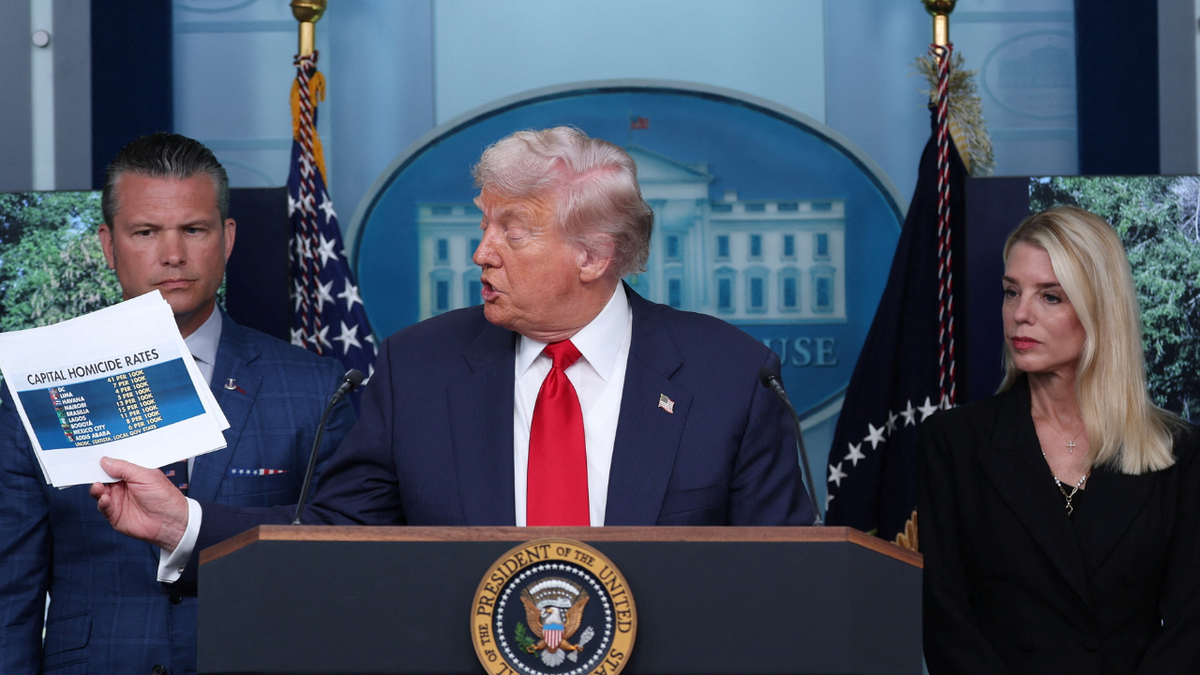
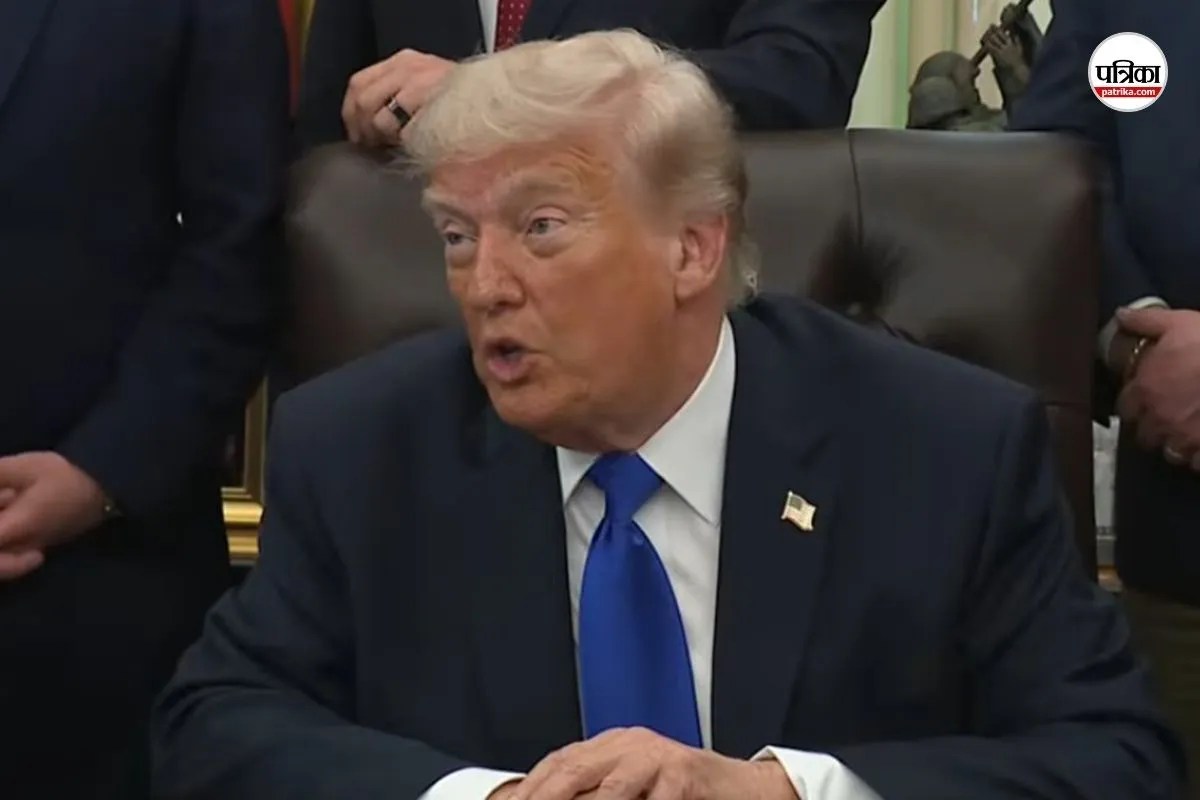
When Donald Trump declares that Tehran will never possess a nuclear weapon, he is not just speaking to a political entity. He is speaking to the geometry of fear. He is drawing a line in the sand with a heavy, unyielding hand. For the administration in Washington, the logic is binary. It is a calculation of risks where the variable is the potential for an absolute, irreversible catastrophe. They look at the enrichment centrifuges spinning in secret facilities, and they see not energy, but the architecture of a nightmare.
They argue that to allow a regime with such an expansive reach to harness the power of the atom is to fundamentally alter the stability of the entire international order.
But step back. Look at the history of these standoffs. It is a long, dusty road paved with broken promises and shattered treaties.
Imagine, for a moment, the perspective of a diplomat who has spent thirty years in the back channels of these negotiations. They have seen the same script played out in different languages, under different flags. They know that when a superpower defines another nation as an absolute threat, the space for nuance vanishes. It evaporates. The options narrow until there are only two: complete submission or total confrontation.
The American position is built upon a foundation of perceived necessity. The argument is that the proliferation of such destructive capacity in a region already defined by proxy conflicts and shifting alliances creates an environment where a single miscalculation could ignite an uncontainable firestorm. It is a game of high-stakes poker where the table is made of glass.
Yet, there is a profound, aching human cost to this rhetoric.
Every time a leader declares a nation a danger to the world, the shadows grow longer in the streets of that nation. The economic pressures—the sanctions, the severed ties, the isolation—do not hit the high command with equal force. They hit the baker. They hit the nurse. They hit the student who just wants to study physics for the sake of science, not for the sake of a warhead.
I remember talking to a source years ago, someone who worked on the periphery of the nuclear program in a different country, decades ago. They described the feeling of being trapped in a machine. They didn't wake up wanting to build a weapon. They woke up wanting to prove that their people were capable, that their nation mattered, that they weren't just a footnote in someone else’s history book. This desire for sovereignty, when twisted by the lens of global power politics, becomes a weaponized identity.
The President’s words are a promise to the American public that they will remain safe. That is his primary mandate. But the way he frames that safety—by externalizing the threat so completely—creates a cycle that is notoriously difficult to break.
The technical reality is chilling. The process of enriching uranium to the levels required for a weapon is a slow, methodical march. It requires thousands of centrifuges, miles of piping, and the singular focus of an entire engineering caste. It is a feat of industrial endurance. When Washington asserts that they will not let this happen, they are committing to an active, invasive, and constant oversight. They are essentially saying that the sovereignty of another nation is secondary to the safety of the global status quo.
Is this sustainable?
Look at the history of nuclear containment. It has never been about trust. It has always been about leverage. We exist in a state of suspended animation, where peace is maintained only because the cost of war remains theoretically higher than the cost of containment.
But what happens when the cost of containment becomes unbearable?
When the people in that quiet living room in Tehran decide they have nothing left to lose, the calculus changes. The fear that drives the American policy is the exact same fear that drives the defiance in Iran. They are two sides of the same cold, metallic coin. One fears the loss of dominance; the other fears the loss of existence.
There is an eerie silence that falls over the world when these lines are drawn. It is the silence of anticipation. We wait for the next move, the next test, the next sanction. We wait to see if the rhetoric will collapse into action, or if it will remain a ghost haunting the diplomatic corridors.
The truth is that we are all living in the shadow of this tension. Whether you are in a boardroom in New York or a marketplace in Isfahan, the decisions made in those fortified rooms impact the way you move through your day. They dictate the price of oil, the stability of the markets, the trajectory of international relations.
We are not merely observers. We are the ones who bear the weight of these choices. We are the ones who inherit the world that these leaders are building, block by block, wall by wall.
When the rhetoric is this sharp, the risk is not just the weapon. The risk is the hardening of hearts. It is the reduction of complex, vibrant cultures into nothing more than a strategic problem to be solved.
There is a way out, of course. There is always a way out. It requires the courage to sit across from a mirror and see the reflection of one's own fear. It requires the willingness to engage with the human reality that exists beneath the nuclear bravado. But such courage is rare in the high-stakes world of presidential politics. It is much easier to point to a distant horizon, call it a danger, and promise to turn the sky red to keep it at bay.
The sun sets on the desert, casting long, distorted shadows across the cooling sand. A line remains. It is etched into the earth by words spoken in a distant capital. And while the world continues to spin, the clock keeps ticking, counting down to a moment that has not yet arrived, but which we all feel, pulling at the corners of our collective sleep.
The danger is not just that someone will push a button. The danger is that we have become so comfortable with the threat of the button that we have forgotten how to reach for the hand of the one sitting across from us. The silence continues. The air remains cold. And the horizon waits for the next shift in the wind.