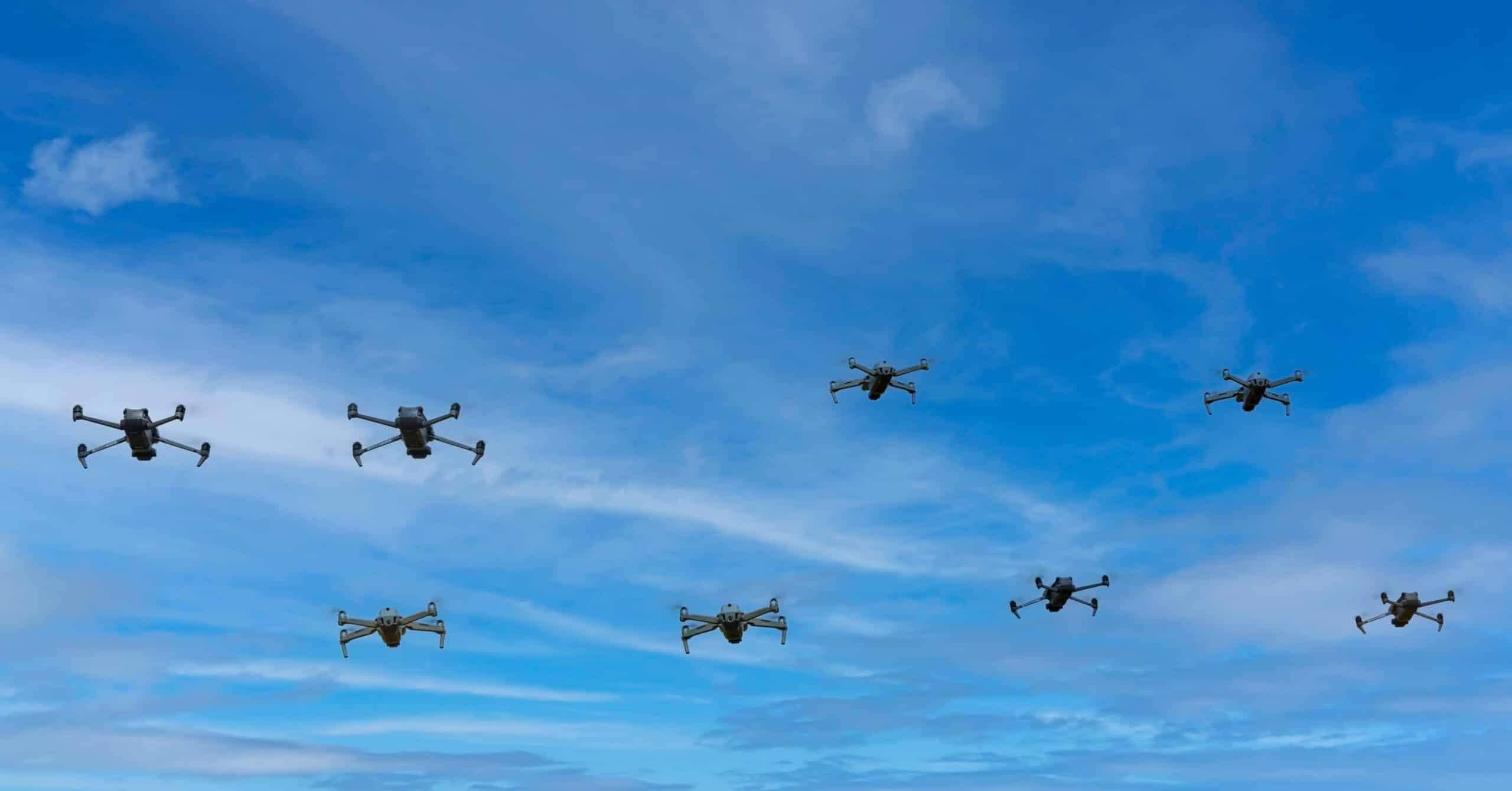
The strategic logic of Ukraine’s campaign against Russian oil refineries rests on a fundamental principle of asymmetric warfare: the exploitation of fixed-asset vulnerabilities to force a disproportionate economic and logistical pivot. While broad-spectrum sanctions targeted the financial plumbing of the Russian state, kinetic strikes on distillation towers target the physical chemistry of its war machine. The efficacy of this strategy is not measured by the immediate destruction of crude oil—of which Russia has a surplus—but by the degradation of the "downstream" conversion capacity required to turn that crude into the high-grade fuels necessary for modern maneuver warfare and domestic stability.
[Image of a crude oil distillation column diagram]
The Mechanics of Downstream Vulnerability
To understand why a drone with a 20-kilogram payload can threaten a multi-billion dollar industrial complex, one must analyze the Distillation Bottleneck. A refinery is not a single building but a sprawling network of specialized units. The most critical, and most difficult to replace, is the Atmospheric-Vacuum Distillation Unit (AVU).
The AVU serves as the primary separation stage. Because these units are often custom-engineered and rely on complex metallurgy to handle high-temperature corrosive fluids, they cannot be procured "off the shelf." In the context of current export controls, Russia’s ability to source the precision sensors, high-pressure pumps, and specialized catalysts required to repair these units is severely constrained. This creates a Replacement Lead-Time Lag. A strike that causes $50 million in physical damage can result in $1 billion in lost revenue and logistical friction due to the 12-to-24-month window required for specialized reconstruction.
The Triad of Economic Friction
The impact of refining interdiction manifests through three distinct economic levers:
- The Export-to-Domestic Shift: When a refinery is neutralized, the unrefined crude oil must go somewhere. Russia is forced to export more raw crude, often at a significant "Urals" discount, while simultaneously losing the higher margins associated with refined products like diesel and gasoline.
- Logistical Overload: Russia’s internal fuel distribution relies heavily on rail and pipeline networks designed for specific flow patterns. Knocking out a refinery in the western regions forces the state to transport fuel from Siberian or Far Eastern refineries. This increases the burden on the Russian Railways (RZhD), which are already strained by the military's demand for troop and equipment movement.
- Inflationary Feedback Loops: Diesel is the lifeblood of Russian agriculture and heavy industry. Supply contractions lead to price spikes. To prevent domestic unrest, the Kremlin must implement export bans—as seen in early 2024—which further starves the state of foreign currency reserves.
Quantifying the Strike Radius
The geography of Russian refining is a liability. Approximately 60% of Russia’s total refining capacity is located within 1,000 kilometers of the Ukrainian border, placing it within the operational range of long-range One-Way Attack (OWA) Unmanned Aerial Vehicles.
The strategy employs a Cost-Efficiency Ratio that favors the attacker by several orders of magnitude. A drone costing $30,000 to $100,000 can successfully disable a hydrocracker or distillation column valued in the hundreds of millions. Even a success rate of 10% ensures that the defensive "cost of protection"—in the form of redistributed S-400 or Pantsir air defense systems—is prohibitively high. Russia faces a "Protector’s Dilemma": pull air defense from the front lines to guard industrial assets or leave the economic engine of the state exposed.
Global Market Contortions and the Price Cap Paradox
A common critique of this strategy is that hitting Russian refineries will drive up global oil prices, potentially harming Ukraine's Western allies. This perspective ignores the Product vs. Crude Distinction.
When a Russian refinery stops functioning, Russia exports more crude oil to the global market because it cannot process it domestically. This increase in crude supply can actually exert downward pressure on global Brent or WTI benchmarks. The tightness is felt specifically in the "refined product" markets—diesel and gasoline.
The Western-led $60 price cap on Russian crude was designed to keep oil flowing while limiting revenue. However, the refinery strikes introduce a different variable: Physical Scarcity of Throughput. If Russia loses 15% of its refining capacity, it loses the ability to support its own industrial base, regardless of what the global price of a barrel happens to be. The impact is domestic and structural rather than purely fiscal.
Counter-Measures and Resilience Limitations
Russia has attempted to mitigate these strikes through "passive defense" and "logistical rerouting." Passive defenses include the installation of steel nets (slat armor) around critical infrastructure and the deployment of electronic warfare (EW) jammers.
The limitation of EW in this context is the Terminal Guidance Evolution. Modern OWA drones are increasingly using "Machine Vision" or terrain-matching algorithms for their final approach. These systems do not rely on GPS or external radio links, making them immune to traditional jamming. Once the drone is within the final 500 meters, it identifies the specific visual signature of a distillation tower and steers into it.
Logistical rerouting is similarly limited by the Fixed Infrastructure Constraint. Pipelines are static. If the "Tolyatti-Odessa" ammonia pipeline or specific refined-product spurs are damaged or the nodes they feed are destroyed, there is no "Plan B" that doesn't involve thousands of tanker trucks—an incredibly inefficient and vulnerable alternative.
The Petroleum-Military Nexus
The Russian military consumes approximately 3% to 5% of the country’s total fuel production under normal conditions. While a 15% reduction in national refining capacity does not immediately "dry up" the tanks on the front line, it triggers a Priority Reallocation Crisis.
The Ministry of Defense receives top-priority delivery, which means the 15% shortfall is absorbed entirely by the civilian and industrial sectors. This creates a ripple effect:
- Agricultural Delays: Fuel shortages during planting or harvest seasons reduce future food security and export earnings.
- Industrial Atrophy: Mining and manufacturing plants in the Urals face higher operational costs, reducing their competitiveness and tax contributions.
- Public Sentiment: While the Russian state controls the media, it cannot hide the price at the pump. Persistent fuel inflation is one of the few economic metrics that directly impacts the entire population simultaneously.
Externalities of the Long-Range Campaign
The intensification of these strikes has forced a re-evaluation of the "Global Energy Security" narrative. For two decades, the assumption was that energy security meant a steady flow of molecules. In the era of autonomous precision deep strikes, energy security now depends on Infrastructure Decentralization.
Russia’s energy complex is highly centralized—a legacy of Soviet industrial planning designed for scale, not resilience. This centralisation makes it a "Target-Rich Environment." Ukraine is effectively conducting a live-fire demonstration of the vulnerability of 20th-century industrial architecture to 21st-century decentralized technology.
Strategic Forecast and Operational Adjustment
The trajectory of this campaign suggests an impending Saturation Phase. As Ukraine scales the production of drones with 1,500km+ ranges, virtually every refinery in European Russia becomes a viable target.
The Russian response will likely involve:
- Increased Reliance on Belarus: Utilizing Belarusian refining capacity to fill the domestic gap, thereby increasing Minsk's leverage and risk profile.
- Cannibalization of Parts: Stripping less-efficient refineries to keep high-priority units operational, leading to a long-term decline in total industrial health.
- Aggressive Air Defense Relocation: Diverting high-end systems from the occupied territories to the Russian heartland, potentially opening gaps in the frontline screen that Ukrainian aviation or missiles can exploit.
The objective of the refinery campaign is not a "knockout blow" that ends the war tomorrow. It is a Strategic Attrition Play. By steadily increasing the cost of every liter of fuel produced in Russia, Ukraine is forcing the Kremlin to choose between the mobility of its army and the stability of its economy. In the calculus of a long war, the degradation of the adversary's conversion capacity is often more decisive than the capture of individual villages.
The most effective strategic path forward for the interdiction campaign lies in the Sequential Degradation of Secondary Processing Units. While distillation towers are the primary targets, striking vacuum distillation units and catalytic reformers—which produce high-octane components for aviation fuel—will disproportionately impact the Russian Air Force’s (VKS) operational tempo. Targeting the niche chemistry of the VKS fuel supply chain offers a higher "Combat Effectiveness Return on Investment" than broad strikes on general gasoline production. Focusing on the specialized lubricants and high-grade kerosene refining nodes will force the VKS into a logistical retreat, moving assets further from the front lines and reducing their time-on-station, thereby providing immediate relief to Ukrainian ground forces.