Israel's Iron Dome doesn't care about a $2,000 piece of plastic and plywood. That's the problem. While the world watches ballistic missiles arching through the stratosphere, a much more grounded, low-tech revolution is quietly dismantling the air superiority Israel has spent decades and billions of dollars perfecting. Hezbollah isn't trying to out-fly the Israeli Air Force. They're trying to bankrupt it and exhaust its sensors.
I’ve looked at the data from recent skirmishes along the Blue Line. It's clear that the sheer volume of "slow and low" aerial threats has created a blind spot in what was once thought to be an impenetrable defense. We’re talking about drones that sound like lawnmowers and look like hobbyist toys. Yet, they’re hitting sensitive military sites, command centers, and even private residences with startling frequency.
Israel’s scramble isn't just about shooting things down. It’s about a fundamental failure of high-tech systems to see low-tech enemies.
The Math of Asymmetric Warfare
The economics of this conflict are totally broken. When Hezbollah launches an Ababil-T or a Mirsad-1, they're risking almost nothing. These drones are often built with off-the-shelf parts, simple GPS guidance, and small explosive payloads. If one gets shot down, who cares? They have hundreds more.
Now look at the other side. Israel often responds with the Iron Dome’s Tamir interceptor. Each of those missiles costs roughly $50,000. If the drone is particularly fast or elusive, they might even scramble an F-15 or F-16. You're looking at thousands of dollars in jet fuel and pilot hours, plus the risk of a multimillion-dollar airframe, all to chase a drone that costs less than a used Honda.
This is the definition of a war of attrition. You don't have to destroy the Israeli Defense Forces (IDF) in a single battle. You just have to make the cost of defense so high that it becomes unsustainable. Hezbollah knows this. They're playing the long game. They’re forcing Israel to use up its stockpiles of interceptors on "junk" targets, potentially leaving them vulnerable if a larger, more sophisticated barrage follows.
Why Radar Cant See the Lawnmover in the Sky
You'd think a country that leads the world in cybersecurity and defense tech could spot a drone. It’s not that simple. Radar systems like those used in the Iron Dome or David’s Sling were designed to track rockets and missiles. Those things have predictable trajectories. They go up, they follow a ballistic arc, and they come down fast.
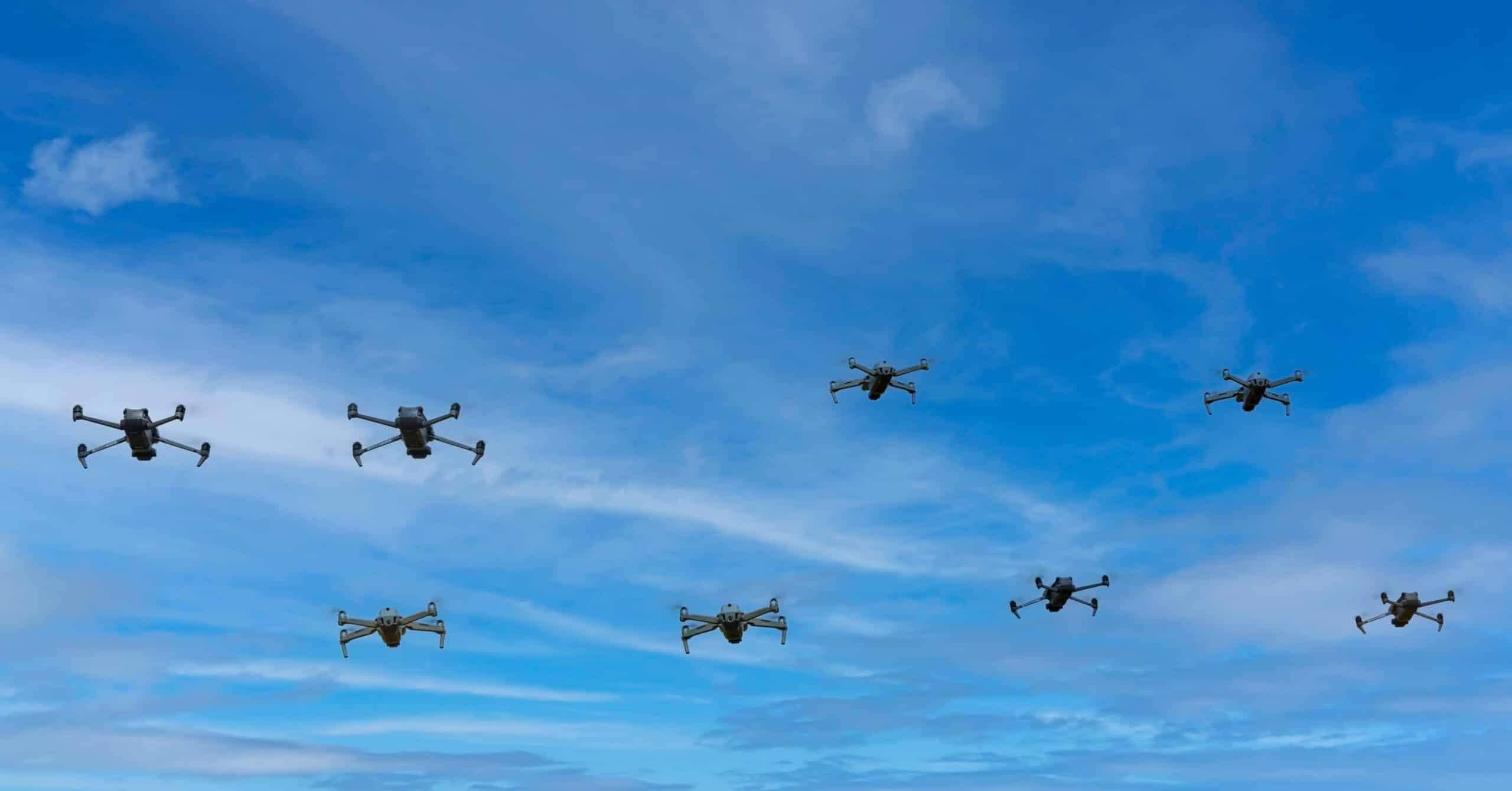
Drones are different. They fly low—often hugging the terrain or following valleys where radar signals get bounced around by hills and buildings. This is called "ground clutter." To a radar, a small drone moving at 60 miles per hour can look a lot like a flock of birds or even a large truck on a nearby highway.
The Problem of Low Thermal Signatures
- No Heat: Traditional heat-seeking missiles struggle because these small electric or gasoline engines don't put out much of a thermal signature compared to a jet engine.
- Slow Speed: Most automated systems are programmed to ignore slow-moving objects to prevent "false positives" from birds or wind-blown debris.
- Size Matters: The radar cross-section (RCS) of a carbon-fiber drone is tiny. It’s like trying to find a needle in a haystack while the haystack is moving.
[Image showing how radar waves struggle to detect small drones near the ground]
I've seen reports where Israeli citizens spotted drones with their own eyes before the military sirens even went off. That’s a massive psychological blow. When the "best defense in the world" can't tell you a bomb is hovering over your backyard, trust erodes fast.
Hezbollahs Evolution from Rockets to Intelligence
It's a mistake to think these drones are only for suicide missions. Hezbollah has effectively turned the sky over northern Israel into a 24/7 surveillance zone. The "Hoopoe" videos released by the group recently are a perfect example. They showed high-definition footage of the Haifa port, sensitive chemical plants, and Iron Dome batteries.
They didn't drop a single bomb during those flights. They didn't have to. The message was: "We see you, and you can't stop us from watching."
This intelligence gathering is arguably more dangerous than the explosive "kamikaze" variants. By mapping out the exact locations of IDF assets, Hezbollah can plan more effective rocket strikes. They’re using the drones to find the gaps in the sensor net. They fly one route, see if they get engaged, and if not, they mark that path as a "green lane" for future attacks.
The Scramble for New Solutions
The IDF is smart. They aren't just sitting there taking it. But they're currently in a transition period that is messy and dangerous. They’re bringing back older tech, like the Vulcan M163—a 20mm Gatling gun from the Cold War era. Why? Because bullets are cheaper than missiles. If you can spray a wall of lead into the air, you don't need a $50,000 guidance system to hit a slow drone.
They're also betting big on "Iron Beam." This is a high-energy laser weapon designed to zap drones out of the sky for about $2 per shot. It sounds like science fiction, and in many ways, it still is. Lasers don't work well in fog, rain, or heavy smoke. They require massive amounts of power and a perfectly clear line of sight. It’s a promising tool, but it's not the silver bullet everyone wants it to be.
Electronic Warfare is the Real Front Line
Most of the "kills" right now aren't kinetic. They’re electronic. Israel is jamming GPS signals across the entire northern region. If you open Google Maps in Haifa, it might tell you you’re in Cairo. This is a desperate attempt to confuse the navigation systems of Hezbollah’s drones.
But even this has a downside.
- It messes with civilian life, from shipping to Uber drivers.
- It forces Hezbollah to innovate.
- Newer drones are using "optical navigation," where the drone looks at the ground and compares it to a map, making GPS jamming useless.
We’re seeing a rapid-fire evolution of tech. Every time Israel builds a better jammer, Hezbollah’s Iranian backers provide a workaround. It’s a cycle that favors the side with the cheaper, more adaptable technology.
What This Means for Global Security
If you think this is just a Middle East problem, you haven't been paying attention to Ukraine. The battlefield there has become a massive laboratory for drone warfare. What Hezbollah is doing today, every non-state actor and small military will be doing tomorrow.
The era of total air dominance by expensive manned jets is ending. You don't need a billion-dollar air force to project power anymore. You just need a 3D printer, some basic electronics, and the will to use them. Israel is the "canary in the coal mine" for modern defense. They’re facing the first real-world test of how a high-tech society handles a swarm of low-tech gnats.
The current strategy of "intercept everything" is failing. The IDF will likely have to move toward a more localized, "point-defense" model where they only protect the most critical assets and accept that they can't stop every single drone. That’s a hard pill for any government to swallow, especially one that prides itself on the safety of its citizens.
Keep an eye on the deployment of "counter-drone drones"—small, fast interceptors designed to physically ram into intruders. This is where the tech is heading. It’s a literal dogfight between machines.
If you’re tracking this conflict, stop looking for the next big missile launch. Start looking at the flight paths of the small, slow drones. They’re the ones rewriting the rules of engagement in real-time. If Israel can't find a way to make the cost of defense equal to the cost of the attack, they’re going to find themselves winning every battle but losing the war of resources.
The next step for anyone following this is to monitor the integration of AI-driven optical sensors on the border. These are designed to "see" what radar misses. Whether they can be deployed fast enough to change the tide is the only question that matters right now.