The Civil-Military Coordination Centre (CMCC) was supposed to be the crown jewel of a new American era in the Middle East. Operating out of a fortified warehouse in Kiryat Gat, southern Israel, it served as the nervous system for President Donald Trump’s ambitious plan to "own" and "level" the Gaza Strip into a modern economic zone. But today, the lights are being dimmed. Sources within the diplomatic corps confirm the Trump administration is shuttering the flagship mission, folding its hollowed-out remains into a yet-to-exist International Stabilization Force (ISF).
This isn't just a bureaucratic reshuffle. It is a quiet admission that the "Board of Peace"—the president's hand-picked committee for Gaza—has hit a wall of reality that no amount of branding can overcome. While official statements describe the move as an "overhaul" or a "rebranding" into the International Gaza Support Centre, the numbers tell a different story. U.S. troop presence at the site is scheduled to plummet from 190 personnel to just 40. The mission to oversee a ceasefire and flood the strip with aid is effectively dead, strangled by a joint U.S.-Israeli war against Iran and a total breakdown in local security.
The Infrastructure of a Failed Dream
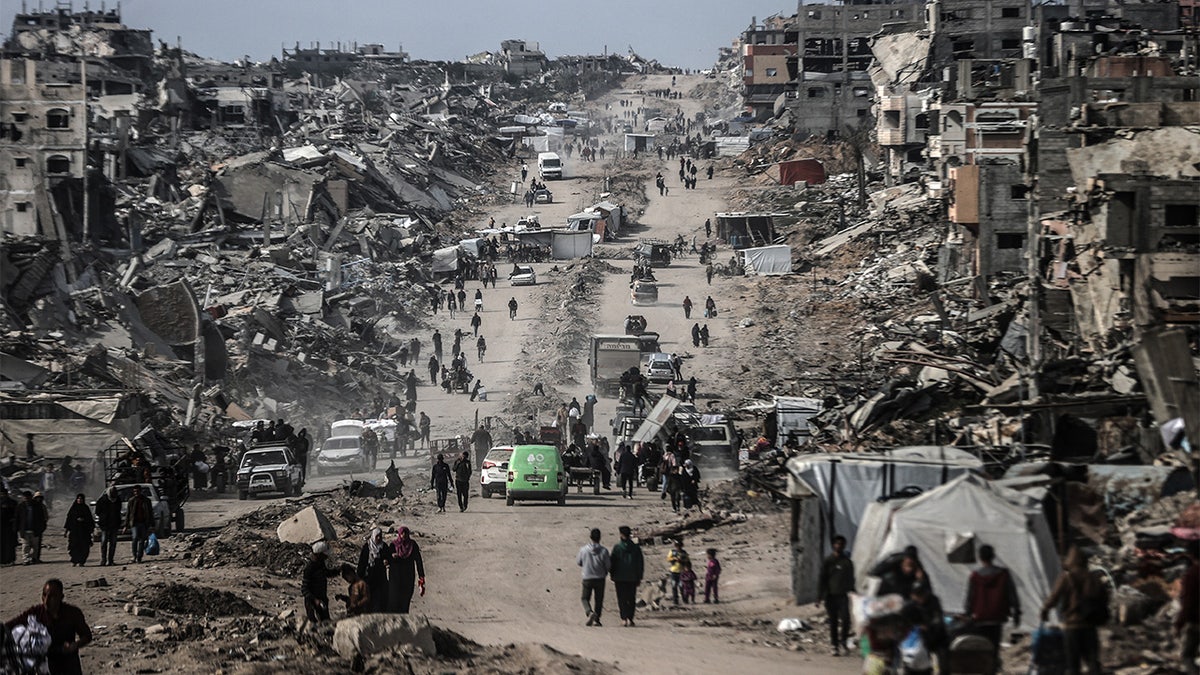
The CMCC was built on the premise that American logistics could succeed where decades of diplomacy failed. The plan was staggering in its scope. It involved clearing 50 million tonnes of debris—a task experts estimated would take 21 years—and replacing it with "unlimited jobs and housing."
The board relied on a private-sector model of conflict resolution. They treated Gaza like a distressed asset in a bankruptcy proceeding. However, the "takeover" ignored the fundamental friction of the ground war. Since the October truce, Israeli incursions have continued, and Hamas has maintained a shadow grip on the distribution networks.
By the time the U.S. launched its regional campaign against Tehran, the Gaza mission had already become a secondary priority. Washington’s allies, who were pressured to commit billions to the rebuilding fund, are now looking at an empty warehouse in Kiryat Gat and wondering where the money went.
Why the Board of Peace Stalled
The failure of the CMCC reveals a deeper disconnect between the administration’s rhetoric and the logistical requirements of a war zone. The Board of Peace, led by figures more familiar with real estate than urban warfare, underestimated the "dual-use" blockade.
Even at the height of the mission’s activity, basic reconstruction materials never made it past the border.
- Tent Poles: Banned under the suspicion they could be used as structural support for tunnels.
- Heavy Machinery: Blocked because of its potential for military fortification.
- Fuel: Severely restricted, leaving the CMCC’s own aid convoys idling at the gates.
The administration’s shift in focus toward the Iranian front provided a convenient exit strategy. By claiming the hostilities in Iran have "terminated" to avoid the 60-day War Powers Resolution deadline, the White House is clearing the deck of complicated humanitarian obligations. The Gaza mission was simply the first casualty of this pivot.
The International Stabilization Force Myth
Handing the keys to the ISF is a classic move in political optics. Major General Jasper Jeffers has been named the commander of this new force, but his "army" exists mostly on paper. While the U.S. insists its own troops will not set foot inside Gaza, it has failed to secure troop commitments from regional partners.
Arab nations have been clear: they will not provide the boots on the ground to police a "freedom zone" that remains under active blockade. Without those commitments, the rebranding of the CMCC is just a change of stationery for a failing enterprise.
The humanitarian cost of this stall is quantifiable. A "scorecard" released by Oxfam and Save the Children recently gave the Trump Gaza plan a 5 out of 26. It cited a "barely liveable" environment where aid levels remain stagnant despite the administration's promises of an "immediate" influx of goods.
The Regional Pivot
As the CMCC winds down, the administration is doubling down on a broader regional realignment. The strategy has shifted from rebuilding Gaza to isolating Iran. This requires a level of military cooperation with Israel that makes the "neutral" role of a humanitarian coordinator like the CMCC impossible to maintain.
The closure of the flagship mission signals that the era of "reconstruction through takeover" has ended before the first crane could even swing. The warehouse in Kiryat Gat, once a symbol of a radical new approach to the Palestinian question, is now a monument to the limits of transactional foreign policy.
The administration will continue to deny the mission is closing. They will point to the 40 remaining personnel and the new "Support Centre" logo. But for the two million people in Gaza waiting for the promised housing and jobs, the American exit is already a fait accompli. The "freedom zone" has been replaced by a familiar, grinding stalemate, now managed by a skeleton crew in a shrinking outpost.