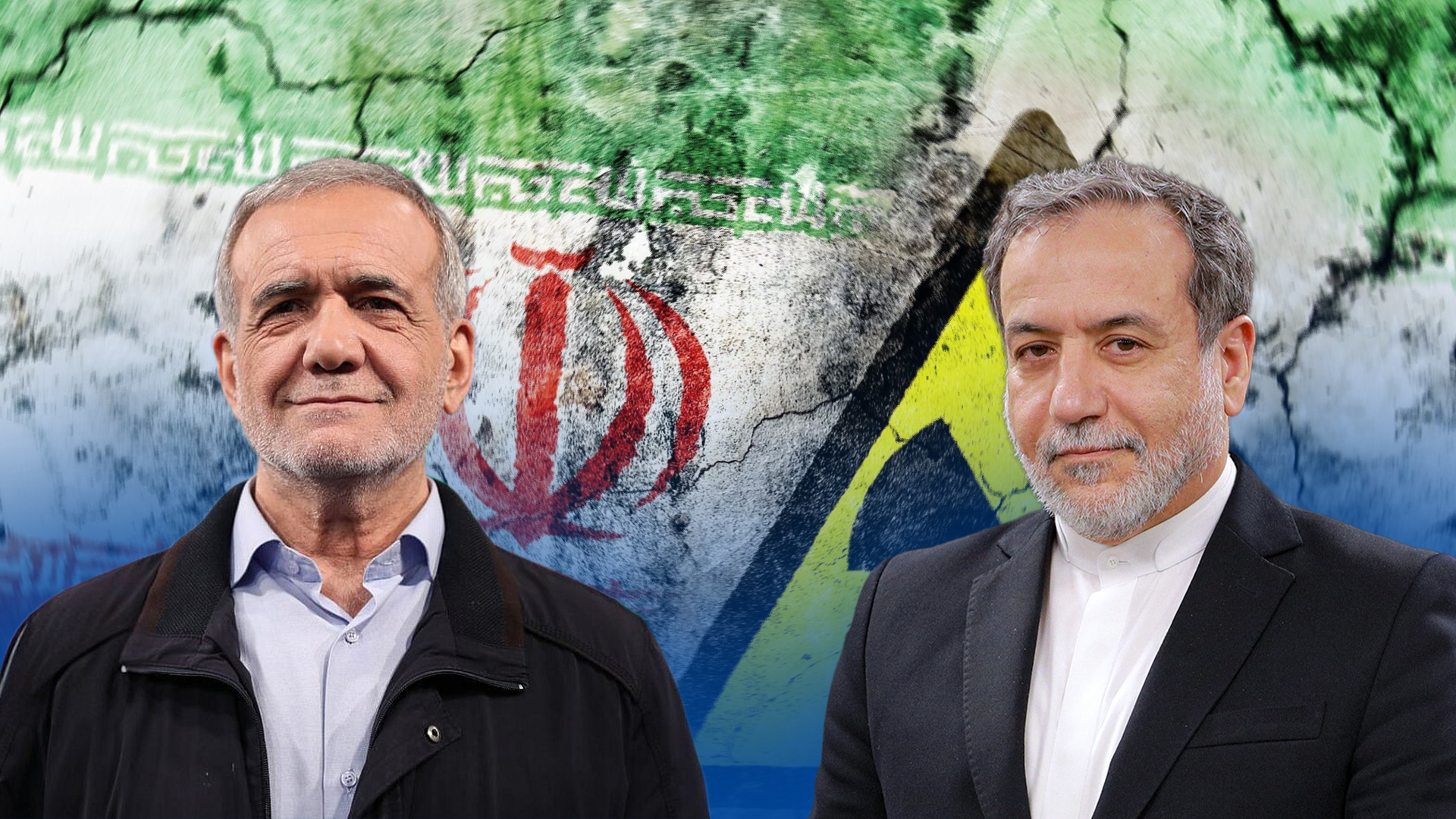
The fragile truce within Tehran’s halls of power is fracturing. Reports suggesting that President Masoud Pezeshkian is moving to sideline his own Foreign Minister, Abbas Araghchi, reveal a much deeper rot than a simple personnel dispute. This is not just about one man’s job. It is about an existential struggle for the steering wheel of Iranian diplomacy as the country teeters between total economic collapse and a full-scale regional war. At the heart of the friction is the Islamic Revolutionary Guard Corps (IRGC), an entity that views any diplomatic overture toward the West as a direct threat to its own shadow empire.
Pezeshkian campaigned on a platform of "re-engagement." He promised the Iranian public that he could breathe life back into the nuclear carcass, lift the crushing weight of sanctions, and move the country away from the brink. To do that, he needed Araghchi—a seasoned negotiator who knows the halls of Vienna and Geneva better than his own backyard. But the IRGC has spent decades building a "Resistance Axis" that thrives on friction, not settlement. If Araghchi is being pushed out, it is because he tried to bridge a gap that the hardline military establishment wants to keep wide open.
The Araghchi Dilemma
Abbas Araghchi was supposed to be the perfect compromise. He had the technical chops from the Zarif era but carried enough traditionalist credentials to satisfy the Supreme Leader, Ali Khamenei. However, the political gravity in Tehran has shifted. The IRGC no longer wants a seat at the table; they want to own the table.
Insiders suggest the tension reached a boiling point during recent backchannel communications involving Washington. While the Foreign Ministry attempted to signal a willingness to discuss regional de-escalation, the IRGC responded by doubling down on missile transfers and proxy activity. This created a schizophrenic foreign policy where the right hand offered a handshake while the left hand clenched a fist. Pezeshkian, caught in the middle, reportedly blames Araghchi for failing to manage the military’s interference. But in the Iranian system, blaming the Foreign Minister for the Guard’s behavior is like blaming a weather vane for the wind.
The IRGC Shadow Cabinet
To understand why a president would turn on his hand-picked diplomat, one must follow the money. The IRGC is not merely a military wing; it is a conglomerate. It controls ports, telecommunications, construction, and black-market oil sales. Sanctions are a burden to the Iranian people, but for certain elements within the Guard, they are a business model. A transparent, diplomatic settlement that brings Iran back into the global financial system would dismantle the opaque networks the IRGC uses to fund its operations and enrich its leadership.
Araghchi’s crime was likely his efficiency. If he were actually making progress in signaling a "freeze-for-freeze" or a limited nuclear understanding, he became a target. The reports of his impending ouster suggest that the "Deep State" in Tehran has successfully convinced Pezeshkian that Araghchi’s tilt toward Western engagement is a liability that invites domestic instability.
A President in a Corner
Masoud Pezeshkian is discovering the hard way that the Iranian presidency is an office of limited agency. He inherited a treasury that is effectively empty and a population that has lost all faith in the reformist promise. By even considering the removal of Araghchi, Pezeshkian is signaling a surrender. He is admitting that he cannot control the hardline elements and is instead choosing to sacrifice his best diplomatic asset to appease the generals.
This move would be a catastrophic miscalculation. Washington and Brussels view Araghchi as one of the few remaining "rational actors" within the Iranian bureaucracy. If he is replaced by a hardline loyalist—or even a weakened technocrat—the international community will read it as a sign that Tehran has closed the door on diplomacy for the foreseeable future. The leverage shifts from the diplomats to the generals, and the language shifts from protocols to projectiles.
The Washington Factor
The timing of this internal rift is particularly toxic. With the United States entering a high-stakes election cycle, the window for any meaningful diplomatic breakthrough is already closing. The Biden administration has shown little appetite for a major deal, and a potential return of a "Maximum Pressure" era looms large.
If Pezeshkian purges Araghchi now, he loses his primary channel to the West at the exact moment he needs it most. The IRGC argues that "looking East"—relying on China and Russia—is the only viable path. But Beijing and Moscow have proven to be fair-weather friends, happy to buy discounted Iranian oil but unwilling to provide the kind of systemic economic relief that would prevent a domestic uprising in Iran.
The Cost of Compliance
What happens if Araghchi goes? We should expect a tightening of the ideological belt. The Foreign Ministry would likely become an echo chamber for the IRGC’s regional ambitions. We would see a cessation of even the most basic "de-confliction" talks.
The Iranian public, meanwhile, watches this theater with a mixture of exhaustion and rage. They were told that this administration would be different. Instead, they see a president who appears to be taking orders from the very people who have spent years suppressing the middle class. The removal of a Foreign Minister might seem like a bureaucratic shuffle to an outsider, but to an Iranian citizen, it is a confirmation that the military-industrial complex has achieved total capture of the state.
Strategic Paralysis
This internal warfare creates a state of strategic paralysis. Iran cannot go to war because its economy is too fragile, but it cannot make peace because its ruling elite is too divided. This middle ground is the most dangerous place to be. It invites miscalculation. When there is no clear line of communication between the President’s office and the foreign policy executioners, the risk of a regional spark turning into a conflagration increases exponentially.
Araghchi’s potential exit is a symptom of a government that has lost its way. It is a government that is more afraid of its own internal rivals than it is of its external enemies. If Pezeshkian follows through with this purge, he won't be "fixing" his cabinet; he will be gutting his presidency. He will be left as a figurehead for a military junta that has no interest in the "re-engagement" he promised the voters.
The Mirage of Control
The IRGC’s "tilt" isn't a new phenomenon, but the boldness with which they are now operating suggests they no longer feel the need to maintain the veneer of civilian control. They have watched previous presidents attempt to negotiate and have successfully sabotaged every effort. By targeting Araghchi, they are sending a message to Pezeshkian: "You talk, but we act."
The tragedy of the Iranian political system is its inability to learn from the past. Every time a moderate or pragmatic voice gains a foothold, the security apparatus moves to amputate it. They view diplomacy as a sign of weakness rather than a tool of statecraft. In their worldview, survival is achieved through defiance and the projection of chaos.
No Exit Strategy
If the reports are accurate and the axe is falling on Araghchi, the international community must prepare for a much more volatile Iran. There will be no one left in Tehran with the authority to pick up the phone when the next crisis hits. The channels will be dark, the rhetoric will be scripted by the Guard’s propaganda wing, and the chance for a soft landing for the Iranian economy will vanish.
Pezeshkian might believe that sacrificing his Foreign Minister will buy him peace with the hardliners. He is wrong. It will only make them hungrier. Once they have cleared the Foreign Ministry of pragmatic voices, they will turn their sights on the rest of his cabinet. A president who cannot defend his own ministers is a president who has already lost the mandate to lead.
The real story here isn't a personnel change. It is the final collapse of the illusion that the Iranian presidency can chart a course independent of the military’s shadow. The world is watching a state consume itself from the inside out, leaving nothing behind but a hollowed-out shell directed by men who view the end of the world not as a catastrophe, but as an opportunity.