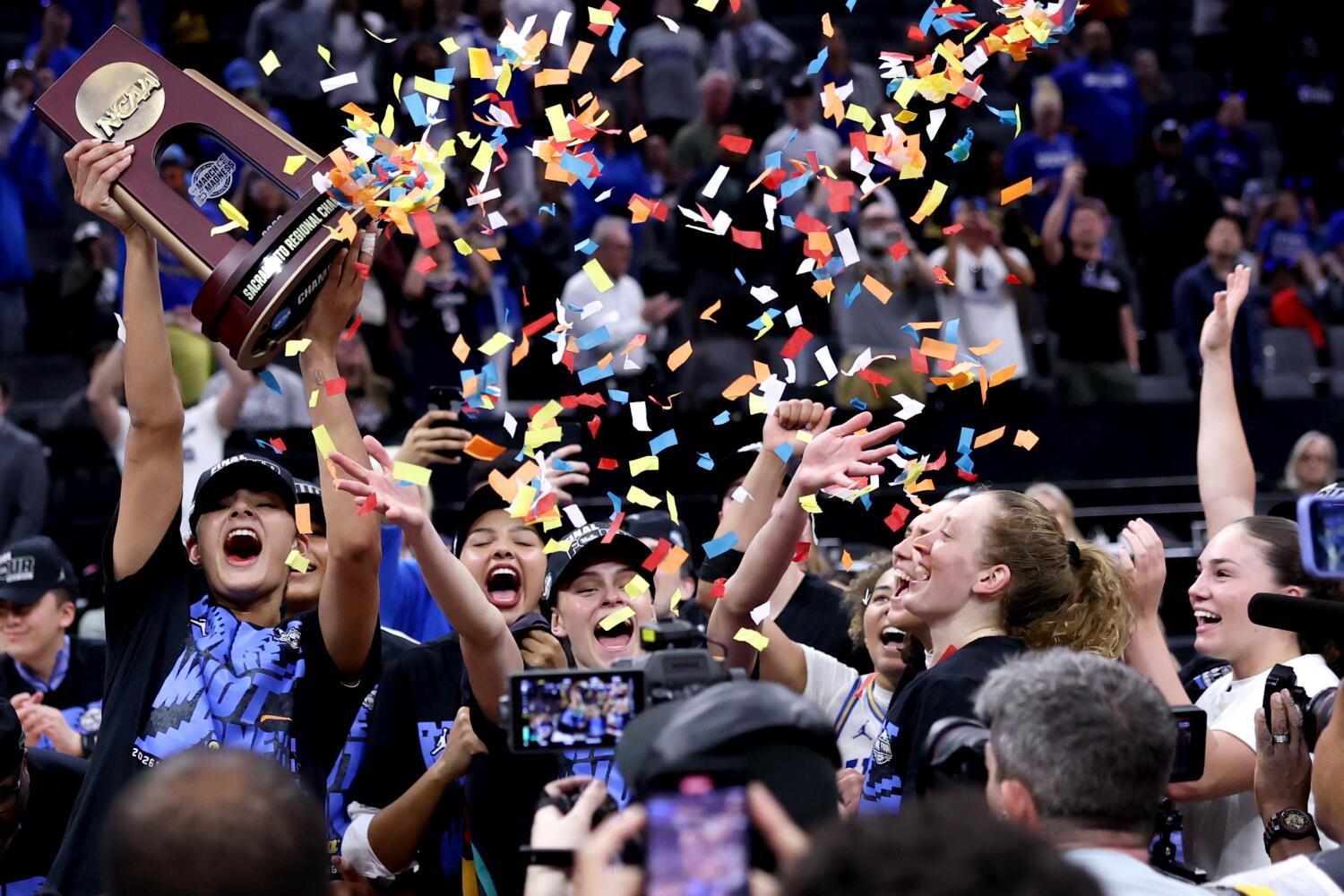
The UCLA women's basketball program has spent years being "good." They've been consistent. They’ve been talented. They’ve been a fixture in the rankings. But there's a massive difference between being a top-ten team in January and being the team that refuses to blink when the lights get blindingly bright in the Final Four. For the longest time, the Bruins felt like they were missing that specific brand of hardwood nastiness. That’s changed.
Watching this roster lately, it’s clear they’ve traded their "happy to be here" energy for something much more clinical. They aren't just winning games anymore. They're breaking opponents. It isn’t about flashy shooting or highlight-reel transitions, though they have plenty of that. It’s about a collective psychological shift. UCLA has finally proven they're tough enough to handle any pressure cooker the tournament throws at them.
Why Toughness Matters More Than Talent in March
Talent gets you to the dance. Toughness keeps you from getting sent home early. We’ve seen countless UCLA teams in the past that had the pedigree but lacked the "dog" required to survive a bad shooting night in the Elite Eight. This current group feels different because their floor has been raised by their defensive intensity.
Look at their recent defensive metrics. They aren't just contesting shots. They’re making life miserable for opposing guards before they even cross half-court. This isn't just about athletic ability. It’s about the mental stamina to stay locked in for 40 minutes. Most teams talk about culture. UCLA is currently living it through floor burns and bruised ribs.
When you look at the stats from their most high-stakes matchups this season, one thing jumps out. It’s the rebounding margin. They’re punishing teams on the glass. That’s a choice. It’s a physical statement that says, "You might be faster, but you won't outwork us." That’s the exact identity a team needs to survive a Final Four weekend where every possession feels like a heavyweight fight.
The Betts Factor and the Interior Revolution
Lauren Betts has changed the math for Cori Close. Before Betts arrived, UCLA often struggled with identity. Were they a finesse team? A fast-break team? Now, they have a literal and metaphorical anchor. Having a 6-foot-7 presence who can actually move and facilitate changes how every other player on the court operates.
But it’s not just about her height. It’s about the gravity she creates. Opposing coaches have to pick their poison. Do you double-team the post and leave the perimeter open? Or do you play straight up and watch Betts shoot 70 percent from the field? This creates a level of offensive confidence that the Bruins haven't had in a decade.
The supporting cast has stepped up because the pressure is off. You see guards like Kiki Rice playing with a level of freedom that only comes when you trust your frontline. Rice is no longer forced to bail out possessions with contested mid-rangers. She can probe, find the seam, and either finish or kick it out. This synergy—a word people use too often but rarely see in action—is what makes them a nightmare to scout.
Handling the Weight of the UCLA Legacy
Playing at UCLA isn't like playing at a mid-major. You're walking past wooden-era trophies every day. That pressure can either crush a player or forge them into something better. In previous years, it felt like the weight of the "four letters" was a burden. This year, it looks like a shield.
The toughness we’re seeing isn't just physical. It’s the ability to ignore the noise. In the era of NIL and social media, distractions are everywhere. This group seems remarkably insulated. They play for each other. You see it in the way they celebrate a teammate’s charge more than their own three-pointer. That’s rare.
Honestly, most people underestimated how much the move to the Big Ten would harden them. Traveling across time zones and playing in hostile, cold-weather gyms in the Midwest has given them a grit they wouldn't have developed in the old Pac-12. They’ve been battle-tested in ways that West Coast teams usually aren't until the second weekend of the tournament.
The Turning Point Nobody Talks About
Every championship-caliber team has a moment where they almost break. For UCLA, it wasn't a big win. It was a mid-season stretch where shots weren't falling and the defense looked porous. Instead of pointing fingers, they tightened the rotation and doubled down on their identity as a defensive-first squad.
That stretch proved they could win ugly. Winning when you're hot is easy. Anyone can look like a world-beater when the threes are dropping. But winning a 54-52 rock fight in a pressurized environment? That’s what defines a Final Four team. UCLA has shown they're perfectly comfortable winning ugly. In fact, they might even prefer it.
The Roadmap to a National Title
If UCLA wants to actually cut down the nets, they have to maintain this level of physical arrogance. They can't go back to being the "nice" team from Los Angeles. They need to keep hunting.
- Control the pace. Don't let track-meet teams dictate the flow.
- Feed the post early. Force the officials to make calls on Betts.
- Short memories. If a star guard goes 1-for-10 in the first half, she needs to take the eleventh shot without hesitation.
The path through the bracket is never easy. There are juggernauts out there with more "star power" on paper. But basketball isn't played on paper. It’s played in the gaps between the plays. It’s played in the scramble for a loose ball. It’s played in the fourth quarter when your lungs are burning and you have to box out a 220-pound center.
UCLA has the depth. They have the coaching. They finally have the mental toughness. They aren't just contenders anymore. They are the team that nobody wants to see on their side of the bracket. The Bruins have arrived, and they didn't bring any excuses with them.
Keep an eye on the turnover margins in their next three games. If they stay under 12 turnovers while forcing 18, the rest of the field is in serious trouble. Watch how they react to the first 10-0 run they give up. If they stay calm and execute the high-low set, you’re looking at the next national champion.