Stop calling it "adversity."
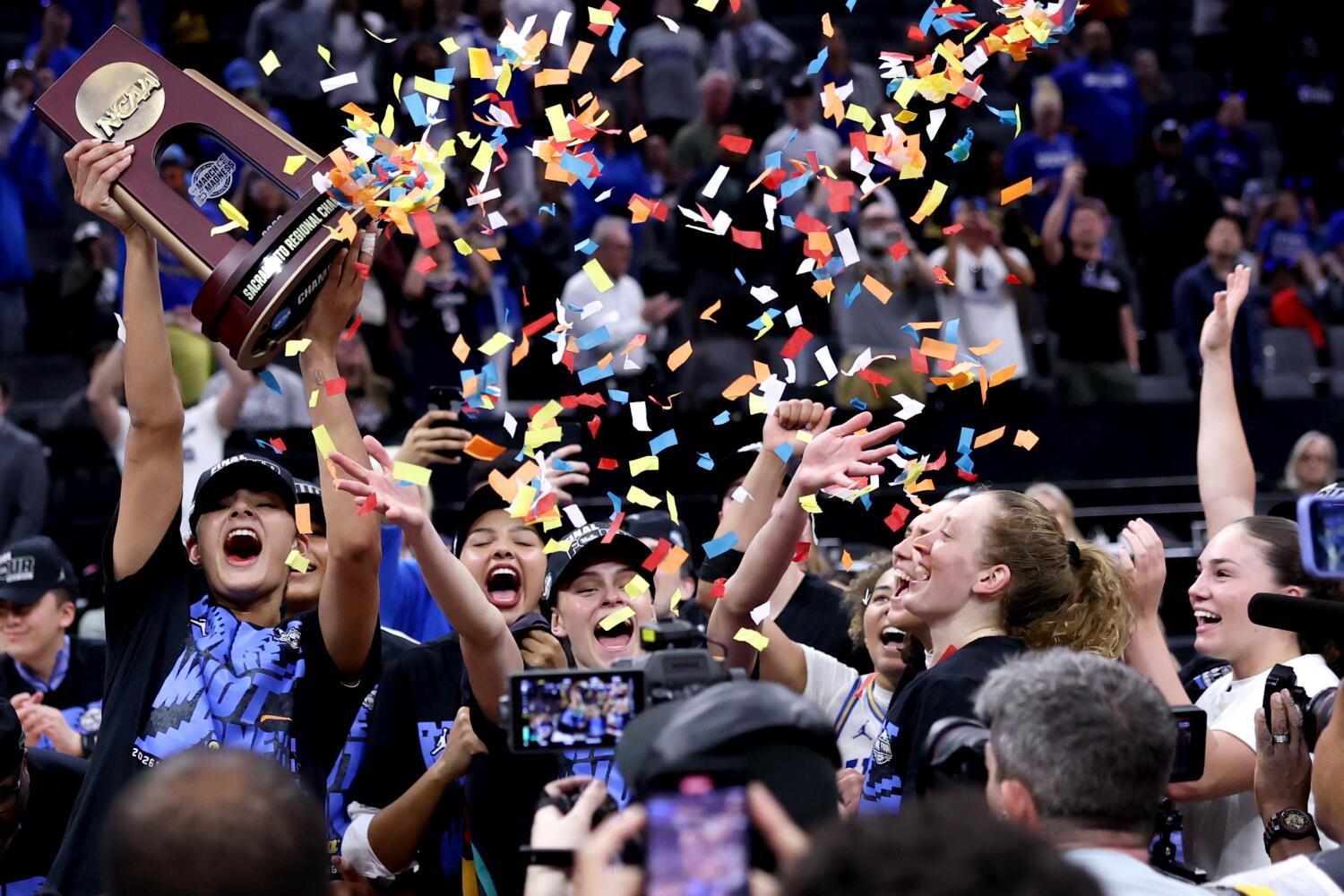
When UCLA pushed past Duke to secure another Final Four spot, the sports media machine immediately pivoted to its favorite, exhausted script: a story of "battling through," "heart," and "overcoming the odds." It’s a comfortable narrative. It sells jerseys. It makes for great pre-game montages. It is also entirely wrong.
What we saw on the court wasn't a triumph of the human spirit over impossible hurdles. It was the predictable result of structural superiority, a massive talent gap, and a coaching philosophy that treats "chaos" as a feature rather than a bug. If you’re still talking about UCLA’s "struggle," you’re missing the actual mechanics of why they win.
The Adversity Industrial Complex
In modern sports journalism, "adversity" has become a catch-all term for any situation where a favored team doesn't win by thirty points. If a star player gets into foul trouble, it’s adversity. If the shots aren't falling in the first quarter, it’s adversity.
This framing is an insult to the actual work being done. UCLA didn't beat Duke because they "wanted it more." They beat Duke because their roster construction is designed to absorb variance. When you have a rotation where the eighth player off the bench would start for 90% of the programs in the country, a "tough shooting night" isn't a crisis—it’s a statistical blip.
Duke didn't lose because they lacked grit. They lost because UCLA’s defensive scheme is built to exploit the specific technical limitations of the Blue Devils' backcourt. To call this "battling through" is to ignore the cold, hard reality of elite scouting and physical advantages.
Depth is Not a Miracle
The media loves to highlight how UCLA managed to win despite injuries or mid-game setbacks. Let’s look at the numbers.
When a "blue blood" program loses a starter, they replace them with a former five-star recruit. When a mid-major loses a starter, they replace them with a walk-on who is three inches shorter. Using the word "adversity" for UCLA is like saying a billionaire is "struggling" because their private jet has a delayed takeoff.
- The Talent Floor: UCLA’s "struggles" still happen at a talent level that Duke, for all its prestige, couldn't match in the paint.
- Physicality Metrics: In the second half, UCLA’s rebounding margin wasn't about "hustle." It was about a deliberate strength and conditioning program that ensures their players' $VO_2 \max$ and fast-twitch response times remain elite while the opponent wilts.
We need to stop romanticizing the grind. UCLA wins because they have better resources, better recruits, and a system that rewards aggression over traditional set-plays. That’s not a fairy tale; it’s an assembly line.
Why Duke Never Had a Chance
The "close game" narrative is a lie. If you watched the game with the sound off, you saw a Duke team that was red-lining just to stay within five points. They were playing at their absolute ceiling, while UCLA was playing in third gear.
Duke’s strategy relied on high-variance three-point shooting. When those shots go in, the scoreboard looks competitive. When they don't, the structural flaws of the team are exposed. UCLA didn't "overcome" Duke’s lead; they simply waited for the math to even out.
I've seen this play out a hundred times in high-stakes tournaments. The "scrappy" team keeps it close for thirty minutes, the announcers start screaming about an upset, and then the deeper, more athletic team goes on an 8-0 run in ninety seconds. That’s not "clutch" performance. That is the inevitable gravity of a superior roster.
The Coaching Fallacy
We love to credit coaches with "adjusting" during the break. "Coach told us to lock in," a player will say in the post-game interview.
In reality, the adjustments are rarely about "heart." They are about geometry. UCLA shifted their defensive hedge by six inches to force Duke's primary ball-handler into his weak hand. That’s the "secret sauce." It’s not a locker room speech. It’s a technical correction.
The obsession with the psychological state of the players—the "will to win"—distracts us from the actual basketball being played. UCLA’s coaching staff didn't "inspire" a comeback. They identified a flaw in Duke’s transition defense and hammered it until it broke.
The Danger of the Underdog Narrative
By framing UCLA as a team "battling adversity," we ignore the widening gap in women's college basketball. There is a top-tier "gentry" of four or five programs that operate on a different planet than everyone else.
When we pretend these teams are underdogs or "scrappy survivors," we fail to hold them to the standard they’ve actually set. UCLA shouldn't be celebrated for "surviving" Duke. With that roster, anything less than a dominant win is actually an underperformance.
Why You’re Asking the Wrong Questions
People ask: "How did UCLA find the mental toughness to come back?"
The honest answer: They didn't "find" anything. They stayed the course because their average possession is worth more points than Duke's average possession.
People ask: "Is this the most resilient UCLA team we've seen?"
The honest answer: Resilience is a luxury of the elite. It’s easy to be "resilient" when you know your bench is deeper than the opponent's starting lineup.
The Cost of the Win
Let’s be brutally honest about the downsides of this dominance. The "consensus" view is that this win is great for the sport because it sets up a heavyweight Final Four.
The contrarian truth? It’s boring.
The predictability of the "blue blood" ascent to the Final Four isn't a sign of a healthy sport; it’s a sign of a closed ecosystem. UCLA reaching the Final Four isn't a miracle. It’s the expected ROI on a massive institutional investment.
When we dress up institutional power as "adversity," we stop being analysts and start being PR agents. UCLA is a juggernaut. They are the "Goliath" in every single matchup they face until they hit South Carolina.
Stop looking for the "heart" in the box score. Look at the recruiting rankings, the NIL valuations, and the wingspan measurements.
UCLA didn't "survive" Duke. They processed them.
The Final Four isn't a reward for their struggle; it’s the inevitable destination for a program that has rigged the game in its favor through sheer talent accumulation. If you want a story about grit, go watch a mid-major fight for a tournament bid. If you want to see a professional-grade execution of a superior business model, watch UCLA.
Just don't call it an underdog story.