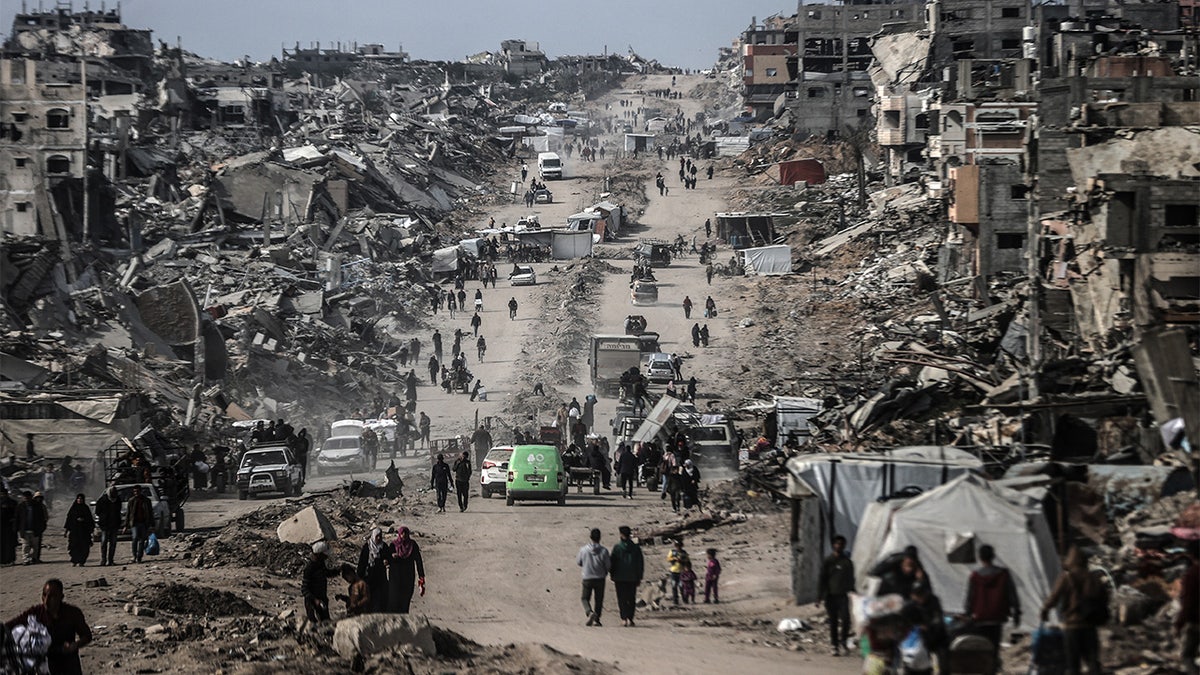
Donald Trump thought he could break Iran with a hammer. Instead, he’s found himself pinned in a corner where the exits are disappearing. After weeks of direct kinetic conflict in 2026, the "Maximum Pressure" campaign has hit a wall that no one in the White House seemingly planned for. The goal was to force a better nuclear deal and stop regional "aggression." Right now, the U.S. has neither.
You've gotta look at the numbers to see how badly the math is failing. Before the 2020 escalation and the subsequent 2026 strikes, Iran’s nuclear breakout time was measured in months or years. Today, analysts at the Institute for Science and International Security suggest that window has basically closed. By pushing Tehran into a total war mindset, the U.S. hasn't stopped the centrifuges. It's just removed the last incentives for Iran to keep them spinning slowly.
The economic trap Trump didn't see coming
Trump’s political brand is built on the economy. It's his greatest strength and his most obvious "pressure point." Iran knows this. By targeting the Strait of Hormuz, Tehran hasn't just flicked a switch on global oil; they’ve effectively put a leash on the U.S. presidency.
Global oil prices have surged past $100 a barrel. Gas prices at home are spiking just as election season heats up. The International Monetary Fund is already sounding the alarm on a global recession risk. It’s a brutal irony: Trump went to war to project strength, but the resulting energy shock makes him look vulnerable to domestic voters who care more about the price of a gallon of gas than a regime change in the Middle East.
The myth of the quick win
There’s this idea in Washington that if you hit a "theocratic" regime hard enough, the people will rise up or the leaders will fold. It’s a mistake experts have made for forty years. Iran uses a "mosaic defense"—a decentralized, messy, and stubborn military strategy designed specifically to outlast a superpower's patience.
Tehran isn't trying to win a dogfight against U.S. jets. They’re trying to make the war so expensive and annoying that the U.S. begs for an off-ramp. And honestly? It’s working. Trump is now reportedly "racing" to secure a diplomatic deal. When you start a war and then immediately scramble for a phone call to end it, you're not the one in the driver's seat.
Allies are keeping their distance
In 2015, the U.S. had a coalition. In 2026, it’s basically just the U.S. and Israel. Our traditional European allies aren't just skeptical; they're frustrated. They see this as a self-inflicted wound. By tearing up the JCPOA and leaning into unilateral strikes, the U.S. has isolated itself more than it has isolated Iran.
Russia and China are watching this play out with a lot of interest. Every day the U.S. is bogged down in the Persian Gulf is a day it isn't focusing on the Pacific or Eastern Europe. For Moscow and Beijing, an overextended America is a gift. They're happy to let Trump burn political and military capital on a stalemate that doesn't have a clear "victory" condition.
The nuclear reality check
Let’s be real about the nuclear program. Iran has already mastered the knowledge of 60% enrichment. You can’t bomb knowledge out of someone’s head. Even if the U.S. flattens every visible facility at Natanz or Fordow, the "breakout" capability remains in the minds of Iranian scientists and in hidden, hardened sites.
- Iran's stockpile of highly enriched uranium is at an all-time high.
- Monitoring by the IAEA is at a historic low.
- The "snapback" sanctions Trump tried to trigger years ago haven't stopped the technical progress.
What happens when the pressure breaks
The risk here isn't just a "worse deal." The risk is a fragmented Iran or a regime that feels it has nothing left to lose. If the central command in Tehran weakens, you don't get a Jeffersonian democracy. You get autonomous IRGC units and proxies in Lebanon, Yemen, and Iraq acting on their own. That’s a nightmare for regional stability.
Trump wanted to prove he’s the ultimate dealmaker by showing he’s a "war president" when pushed. But a deal requires leverage. If your opponent knows you're desperate to lower gas prices and get out of a quagmire before November, your leverage is gone.
If you're following this, stop looking at the battlefield maps and start looking at the oil tickers and the polling data. That's where the real war is being lost. The "Maximum Pressure" era is ending not with a bang or a new treaty, but with a quiet, expensive realization that the hammer didn't work.
If you're looking for a way to hedge against this volatility, keep a close eye on energy markets and gold. The "geopolitical risk premium" isn't going away anytime soon, and the U.S. is likely to accept a deal that looks a lot like the one Trump walked away from—just with a much higher price tag in blood and billions.