Commercial shipping companies now find themselves caught between a geographic necessity and a financial firing squad. The U.S. Treasury Department and the State Department have issued a blunt ultimatum to the global maritime industry: stop paying transit fees to Iranian-controlled entities or face total exclusion from the Western financial system. This isn't just a regulatory warning. It is an aggressive expansion of the economic "maximum pressure" campaign, targeting the mundane administrative costs of moving cargo through the world's most sensitive chokepoint.
For decades, paying "toll fees" or maritime service charges to local authorities was considered a standard cost of doing business. However, Washington now asserts that these payments, often routed through the Ports and Maritime Organization (PMO) of Iran or various front companies, directly fund the Islamic Revolutionary Guard Corps (IRGC). By labeling these routine payments as "material support" for a designated terrorist organization, the U.S. has effectively turned every shipping ledger into a potential criminal indictment. For an alternative perspective, check out: this related article.
The Strait of Hormuz is a narrow passage where roughly 20% of the world’s liquid petroleum passes daily. There is no viable detour. If you operate a tanker or a container ship, you are essentially forced to interact with the entities that control the local waters. The U.S. government is now betting that by criminalizing the "paperwork" of shipping, they can choke off a vital revenue stream for Tehran that has remained largely invisible to the public eye until now.
The Invisible Pipeline of Revolutionary Capital
To understand why a simple transit fee has become a national security threat, one must look at the IRGC’s grip on the Iranian economy. The IRGC is not just a military branch; it is a conglomerate that owns construction firms, telecommunications companies, and, crucially, port infrastructure. Similar analysis regarding this has been published by The Motley Fool.
When a vessel enters certain Iranian-controlled waters or requires pilotage and tug services, the fees are paid to the PMO. Investigative leads suggest that the PMO functions as a clearinghouse, skimming vast percentages of these hard-currency payments to fund proxy operations across the Middle East. Shipping firms have historically argued that these payments are mandatory under international maritime law and local port regulations. They claim they are not "supporting" a regime, but rather "complying" with the rules of the road.
Washington is no longer accepting that excuse. The logic is simple and brutal. If you put dollars into a system that hands them to the IRGC, you are an accomplice. The U.S. Treasury’s Office of Foreign Assets Control (OFAC) has been clear: "compliance" is not a defense if the recipient is a sanctioned entity. This puts shipping executives in a specialized type of hell. If they don't pay, their ships might be seized or denied passage by Iranian patrols. If they do pay, they lose access to U.S. banks, insurance markets, and international trade.
The Mechanics of the Financial Squeeze
The enforcement mechanism here relies on the dominance of the U.S. dollar in maritime insurance. Almost every major commercial vessel is insured through the International Group of P&I Clubs. These clubs rely on the U.S. financial system to process claims and maintain liquidity.
The Secondary Sanctions Hammer
Unlike primary sanctions, which only apply to U.S. citizens or companies, secondary sanctions target foreign entities. If a Greek-owned ship, flying a Marshall Islands flag, pays a $50,000 fee to an Iranian port authority, that Greek company can be blacklisted.
- Asset Freezing: Any property the company owns within U.S. jurisdiction can be seized.
- Banking Bans: No U.S. bank can facilitate a transaction for that company, effectively ending its ability to trade globally.
- Reputational Contagion: Once a firm is flagged, other "clean" companies will refuse to charter their vessels to avoid being dragged into the net.
This creates a ripple effect. Large shipping conglomerates like Maersk or MSC have already moved to insulate themselves, but the industry is massive and fragmented. Thousands of smaller "tramp" steamers and mid-sized operators operate in a gray zone, often using complex webs of shell companies to hide the ultimate destination of their payments. The U.S. is now signaling that it will start piercing that corporate veil with more frequency and aggression.
The Impossible Choice for Ship Captains
Imagine you are a captain of a VLCC (Very Large Crude Carrier) carrying $100 million worth of oil. As you approach the Strait, you are contacted by Iranian authorities demanding "environmental fees" or "security transit tolls."
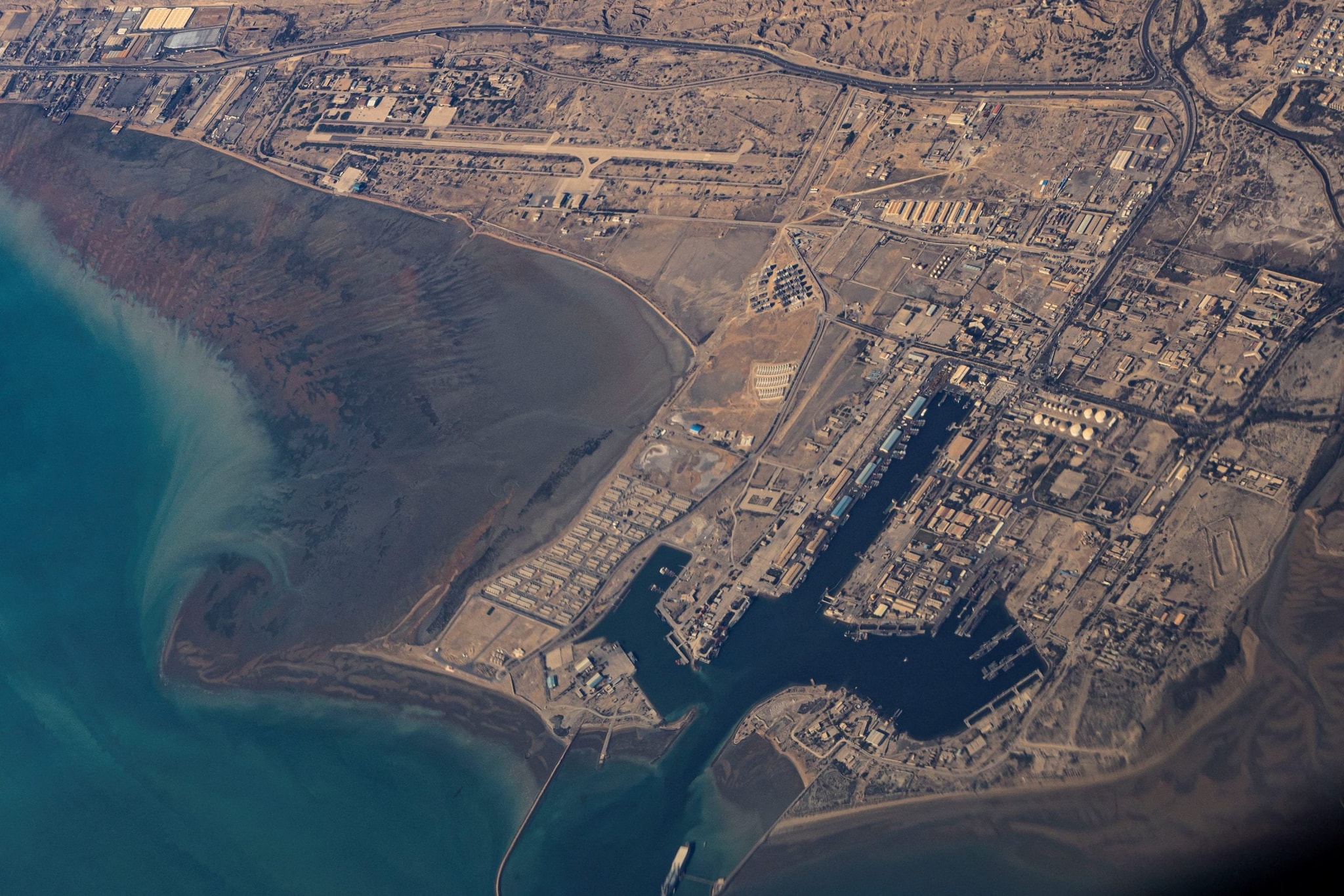
If you refuse, you risk being boarded by the IRGC Navy, as has happened dozens of times over the last few years. The ship is diverted to Bandar Abbas, the crew is detained, and the cargo becomes a pawn in a geopolitical chess match. For a shipping company, a ship sitting idle in a hostile port for three months is a financial catastrophe that can lead to bankruptcy.
On the other hand, if you pay the $25,000 fee via a third-party money changer in Dubai to satisfy the Iranian demand, a forensic accountant at OFAC might spot the transaction six months later. Suddenly, your entire fleet is banned from U.S. ports. The U.S. government’s stance is that companies should simply refuse to trade in the region if they cannot guarantee their money isn't reaching the IRGC. For the global energy market, that "solution" is a recipe for a price shock that would dwarf previous crises.
The Shell Game and the Middleman Problem
The way these payments actually happen is rarely through a direct wire transfer from a Western bank to Tehran. Instead, a sophisticated network of middlemen facilitates the "clean" movement of "dirty" money.
A shipping agent in a neutral port might charge a vessel an inflated "administrative fee." That agent then transfers a portion of that fee to a trading company in a third country, which then settles the debt with the Iranian authorities through a hawala system or by trading physical commodities.
Washington’s latest warning is a direct shot at these intermediaries. They are putting the "know your customer" (KYC) burden squarely on the shipping companies. It is no longer enough to know who you are paying; you must now prove you know who they are paying. This is an almost impossible standard for many smaller firms to meet.
Historical Precedent and the Failure of Diplomacy
We have seen this movie before, but the stakes are higher now. During the "Tanker War" of the 1980s, the threat was physical—mines and missiles. Today, the threat is digital and fiscal. The transition from physical warfare to economic warfare has made the battlefield invisible, but no less volatile.
Critics of this policy argue that it weaponizes the global financial infrastructure in a way that encourages "de-dollarization." If shipping companies find the U.S. rules too onerous, they may eventually seek alternative payment systems, such as China’s CIPS (Cross-Border Interbank Payment System). This would diminish the very power the U.S. is currently using to enforce these sanctions.
However, within the halls of the State Department, the prevailing view is that the IRGC's regional influence is tied directly to its cash flow. If you cut the cash, you cut the influence. The collateral damage to the shipping industry is seen as a necessary cost of a broader security objective.
The Insurance Deadlock
Perhaps the most significant overlooked factor is the role of maritime insurers. If a ship is sanctioned, its insurance is automatically voided. A ship without insurance cannot enter any major port in the world.
Insurance providers are now requiring "Sanction Limitation and Exclusion Clauses" in every contract. These clauses state that the insurer will not cover any claim if the payment would expose them to U.S. sanctions. This means that if a ship pays a toll to Iran and then gets into an accident, the owner is on the hook for every penny. In the world of maritime law, where a single oil spill can cost billions, this is the ultimate deterrent.
The Strategy of Forced Divergence
The U.S. is essentially trying to create a two-tiered shipping world. In one tier, you have the "compliant" fleet that avoids Iran entirely or risks the physical consequences of non-payment. In the other tier, you have the "dark fleet"—ships that operate entirely outside Western oversight, often with lapsed insurance, spoofed GPS signals, and questionable maintenance records.
By forcing more companies into this binary choice, the U.S. is intentionally making the Iranian trade more expensive, more dangerous, and less efficient. They are not trying to stop the payments entirely—they know that is impossible. They are trying to raise the "cost of doing business" to a level that becomes unsustainable for the Iranian regime's financiers.
What Ship Owners Must Do Now
To survive this regulatory environment, shipping firms are having to overhaul their entire legal departments. The days of letting a local port agent handle the "details" are over.
1. Enhanced Due Diligence (EDD)
Every transaction involving the Persian Gulf now requires a deep-dive audit of the recipient. If the port authority has any links to the IRGC-controlled construction giants, the payment must be blocked.
2. Physical Resistance Training
Companies are increasingly having to train crews on how to handle "aggressive solicitation" of fees at sea. This includes protocols for reporting attempted extortions to international maritime monitors immediately to create a paper trail of non-compliance.
3. Direct Engagement with OFAC
Smart operators are proactively seeking "comfort letters" or specific licenses from the U.S. Treasury before engaging in transactions that might even tangentially touch Iranian interests. However, these licenses are notoriously difficult to obtain and often come with strings attached that make the underlying business deal unprofitable.
The Strait of Hormuz remains a geographic reality that cannot be ignored. But as Washington tightens the noose, the "cost of passage" is no longer just a line item on a spreadsheet. It is a gamble with the very existence of the companies that keep global trade moving. The U.S. has made it clear: they would rather see the gears of global commerce grind than see a single dollar reach the IRGC's coffers.
The era of the "routine" maritime payment is dead. In its place is a high-stakes game of financial survival where the rules are written in Washington and enforced across the globe. For shipping firms, the message is simple: find a way to navigate without paying the toll, or prepare to be sunk by the U.S. Treasury.
Every wire transfer is now a potential landmine. The industry must decide if the risk of transit is worth the price of total financial exile. There is no middle ground left. Operating in the Strait of Hormuz has become an exercise in extreme liability management, and the margin for error has vanished. Shipping companies that fail to adapt to this new reality won't just face fines; they will find themselves wiped off the map of global commerce.