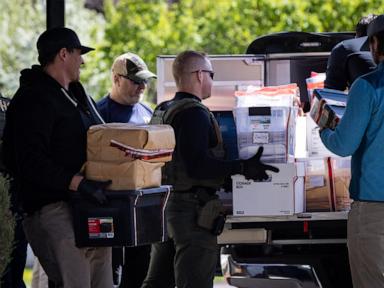
The FBI just kicked in more doors in Minnesota. The headlines are predictable. They scream about "fraud," "taxpayer betrayal," and "children’s programs in peril." They treat these raids like a sudden fever breaking. They aren't. They are a symptom of a terminal illness in how we design public systems.
Everyone is obsessed with the criminals. They want to talk about the luxury cars bought with meal program money or the shell companies created overnight. That’s the easy part. It’s the lazy consensus. If you focus on the scammers, you miss the architecture that invited them in, handed them the keys, and left the vault open for three years. In similar developments, read about: The Brutal Evolution of the Heather Fowlie Investigation.
The real scandal isn't that people stole. The real scandal is that the system was built to be stolen from, and the "solutions" being proposed will only make things worse for the people who actually need help.
The Myth of the Sophisticated Scammer
Read the charging documents from the Feeding Our Future fallout or the latest round of warrants. You won't find Ocean’s Eleven. You’ll find people filling out spreadsheets with names from "randomnamegenerator.com." You’ll find reimbursement requests for 5,000 meals a day at a storefront that doesn't have a kitchen. Reuters has also covered this fascinating topic in extensive detail.
This isn't "sophisticated fraud." It’s administrative negligence masquerading as "low-barrier access."
For years, the industry standard for government programs has shifted toward removing friction. In the private sector, friction is a conversion killer. In the public sector, friction is a security feature. When Minnesota—and the federal government—decided that "speed of delivery" was the only metric that mattered during the pandemic, they didn't just cut red tape. They cut the nerves.
I’ve watched organizations burn through millions in grant funding because the reporting requirements were essentially "tell us you did it, and we’ll believe you." When you create a system based on "attestation" rather than "verification," you aren't being compassionate. You’re being reckless. You are signal-jamming the very data needed to prove the program works.
The Trust Gap is a Design Flaw
The common argument is that we need more "oversight." That sounds great in a press release. In reality, it usually means adding six more layers of middle management at the Minnesota Department of Education or the DHS.
Adding more bureaucrats to watch the paperwork doesn't stop fraud. It just makes the fraud more expensive to process.
The problem is the Check-Box Economy. We have created a massive industry of nonprofits that exist solely to act as pass-through entities. They take a 10% to 15% administrative fee to "monitor" sub-recipients. But they don't actually monitor. They check boxes. They verify that a form was submitted, not that a child was fed.
If the prime contractor makes money regardless of whether the food reaches a plate, why would they ever blow the whistle? Their incentives are perfectly aligned with the fraudsters. High volume equals high fees. Silence is literally golden.
Why "More Regulation" Will Kill the Good Actors
Here is the counter-intuitive truth that nobody in St. Paul wants to admit: The crackdown following these raids will hurt the innocent far more than the guilty.
When a massive fraud case hits the news, the knee-jerk reaction is to "tighten the screws." This translates to 50-page application forms, weekly audits, and "site visits" that feel like depositions.
Who can survive that?
- Large, corporate-style nonprofits with massive legal departments.
- The professional scammers who have already figured out how to forge the new documents.
Who gets crushed?
The small, community-based kitchen in North Minneapolis that actually knows the families they serve but doesn't have a full-time compliance officer to navigate 400 pages of federal CFR code.
We are effectively privatizing the social safety net into the hands of "Big Nonprofit." We are trade-offing local knowledge for bureaucratic compliance. We are ensuring that the next time a crisis hits, the only people left standing will be the ones who are best at paperwork, not the ones who are best at service.
The Data Delusion
We are told that "enhanced data analytics" will save us. "We’ll use AI to flag suspicious patterns," they say.
I’ve seen these systems in action. They are reactive, not proactive. They flag the fraud six months after the money has been wired to a bank in Dubai. Data is a rearview mirror. If your system allows for "pay-and-chase"—where the government pays out the claim first and asks questions later—you have already lost.
In the world of fintech, we have "Know Your Customer" (KYC) laws. They are brutal. They are invasive. And they work. Yet, in the world of federal meal programs, we barely have "Know Your Vendor."
If you want to stop the raids, you have to stop the "pay-and-chase" model entirely.
The Uncomfortable Solution: Bring Back the Friction
Nobody wants to hear this, but we need to make it harder to get the money.
We need to stop treating every new nonprofit like a trusted partner from day one. We need a "probationary funding" model. You don't get $5 million in your first year. You get $50,000. You prove the outcomes. You show the receipts. You get audited before the next check clears, not three years later when the FBI is at the door.
Yes, this means some programs will start slower. Yes, it means fewer "impressive" numbers to tout in the first quarter. But it also means the money actually reaches the people it was intended for.
The current "trust but verify" model is actually "pay and pray." It’s an insult to the taxpayers, but more importantly, it’s a theft from the vulnerable. Every dollar that went into a scammer’s pocket in Minnesota was a meal that didn't go to a hungry kid.
The End of the "Nonprofit Industrial Complex"
The Minnesota raids should be a wake-up call, but not for the reasons you think. They shouldn't just be a call for more police. They should be a call for the total dismantling of the pass-through model of governance.
If the state cannot directly verify where the money is going, the state shouldn't be sending the money. Outsourcing the "oversight" to third-party nonprofits who have a financial interest in ignoring red flags is a recipe for the exact chaos we are seeing.
We have turned "doing good" into a high-volume, low-margin business where the only way to win is to ignore the details. The scammers didn't break the system. They just read the manual.
Stop looking for "bad apples." The orchard is designed to produce them. Until we change the incentives—until we prioritize verification over volume and local results over bureaucratic box-checking—the FBI will never run out of doors to kick in.
The raids aren't the solution. They are the white flag.