The United States Department of Justice has stripped away the veneer of legitimacy from one of Mexico’s most prominent political figures. By leveling formal accusations against Rubén Rocha Moya, the Governor of Sinaloa, federal prosecutors are no longer just chasing gunmen in the scrubland of the Sierra Madre. They are targeting the administrative architecture that allows the Los Chapitos faction of the Sinaloa Cartel to operate with the efficiency of a multinational corporation. This isn't a simple case of a local official taking a bribe to look the other way. This is a detailed allegation of a high-level partnership where the machinery of the state was reportedly used to facilitate the movement of fentanyl and the elimination of political rivals.
For years, the sons of Joaquín "El Chapo" Guzmán—Iván Archivaldo Guzmán Salazar and Jesús Alfredo Guzmán Salazar—have fought to consolidate power following their father's extradition. The U.S. indictment suggests they didn't do it alone. By allegedly securing the cooperation of Rocha Moya, the "Chapitos" gained more than just a friendly governor. They gained a strategic shield. This relationship represents a fundamental shift in how organized crime interacts with the Mexican state, moving from a parasitic existence to a symbiotic one where the line between the cartel and the cabinet becomes impossible to find. If you liked this post, you should look at: this related article.
The July Meeting That Cracked the Foundation
The narrative changed forever on July 25, 2024. On that day, Ismael "El Mayo" Zambada, the legendary and elusive co-founder of the Sinaloa Cartel, was lured into a trap and flown to a regional airport near El Paso, Texas. The fallout was immediate. While early reports suggested a simple betrayal by Joaquín Guzmán López, the deeper investigation reveals a darker coordination involving the highest levels of the Sinaloa state government.
Zambada later released a letter through his lawyers claiming he was ambushed while expecting to attend a meeting with Governor Rocha Moya and Héctor Melesio Cuén Ojeda, a former mayor and political heavyweight. Zambada’s account suggests he was there to mediate a dispute between the two politicians. Instead, he was kidnapped, and Cuén was murdered. While Rocha Moya has vehemently denied being present—claiming he was in Los Angeles on a family vacation—U.S. investigators have scrutinized the flight logs and cell tower data that paint a different picture. For another look on this development, see the recent update from The Washington Post.
The murder of Cuén was initially framed by state authorities as a botched gas station robbery. They even released a grainy video to support the claim. Federal investigators in Mexico and the U.S. quickly dismantled that story, proving the video was staged and the crime scene had been scrubbed. This level of forensic manipulation requires more than a few dirty cops. It requires a command structure that starts at the top of the state hierarchy.
Logistics of a Captured State
To understand why the U.S. is pursuing a sitting governor, one must look at the logistics of the fentanyl trade. Sinaloa is the global headquarters for synthetic opioid production. The precursors arrive at the ports of Mazatlán and Lázaro Cárdenas, traveling through mountain passes and coastal highways that are under the nominal control of state police.
When a governor aligns with a specific cartel faction, the "plumbing" of the drug trade changes. Roadblocks disappear for certain convoys while tightening around others. Intelligence gathered by state agencies is shared with cartel enforcers. Most importantly, the legal system is weaponized. If the Chapitos want a rival removed or a warehouse protected, a "captured" governor can provide the legal paperwork or the police escort to make it happen without a shot being fired. This is the "how" of modern narco-politics. It is less about the "silver or lead" ultimatum and more about integrated business operations.
The Institutionalization of Corruption
We often talk about corruption as a series of individual choices. That is a mistake. In Sinaloa, the U.S. argues that corruption is the institution itself. The Los Chapitos faction has invested heavily in the political process because it is cheaper than fighting the military. By funding campaigns and ensuring "correct" appointments to the state's security apparatus, they have built a buffer zone that makes federal intervention nearly impossible.
Rocha Moya represents the Morena party, the dominant political force in Mexico. This complicates the diplomatic friction between Washington and Mexico City. The U.S. is essentially accusing a key ally of President Claudia Sheinbaum’s movement of being on the payroll of the world's most dangerous drug traffickers. This puts the Mexican presidency in an impossible position: defend a governor and look complicit, or cut him loose and risk a political civil war within the party.
The Fentanyl Factor and U.S. Pressure
The catalyst for this aggressive pursuit isn't just the arrest of "El Mayo." It is the mounting body count in American cities. Fentanyl is now the leading cause of death for Americans aged 18 to 45. The political pressure on the U.S. Department of Justice to produce results has reached a fever pitch. Traditional methods of arresting "kingpins" have failed to stop the flow of drugs. The new strategy is to go after the enablers—the bankers, the chemical suppliers, and the politicians.
By targeting Rocha Moya, the U.S. is sending a message to every governor in Mexico. The message is simple: your office will not protect you from a federal indictment in the Northern District of Illinois or the Southern District of New York. The era of the "untouchable" Mexican politician is being systematically dismantled by American prosecutors who are tired of watching the same cycle of violence and export repeat itself.
The Civil War Within the Cartel
The betrayal of "El Mayo" Zambada has triggered a bloody internal conflict in Sinaloa. The "Mayiza" (those loyal to Zambada) are now at open war with the "Chapitos." This isn't just a battle for territory; it’s a battle for survival. Because the state government is seen as being firmly in the pocket of the Chapitos, the Mayiza have turned their guns on state symbols as well.
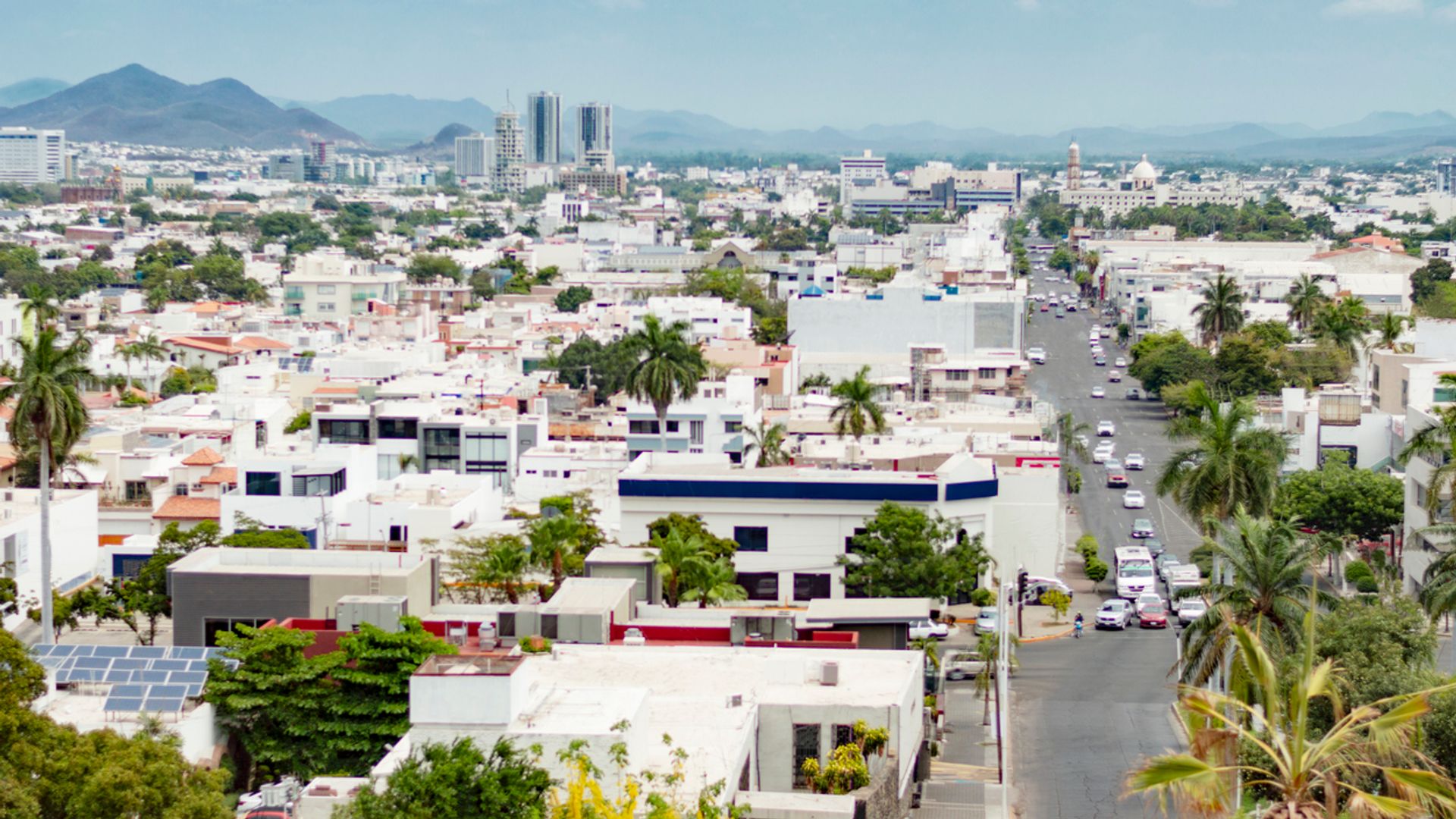
Culiacán, the state capital, has been paralyzed by "narcobloqueos"—burning trucks blocking main arteries. Schools have closed. Businesses have shuttered. The Governor’s inability to restore order is not just a failure of policy; it is a symptom of his alleged bias. When the police only intervene to protect one side of a gang war, the civilian population is left in a vacuum of authority.
The Evidence Trail
Federal agents have focused on a few key areas to build their case:
- Financial Records: Tracking the flow of "dark money" into campaign coffers and shell companies linked to state officials.
- Electronic Surveillance: Intercepted communications that allegedly show state officials coordinating with Chapitos lieutenants.
- Witness Testimony: Cooperation from high-level cartel members who have "flipped" and are providing details on the specific prices paid for political favors.
The defense maintains that these accusations are based on the testimony of criminals looking for reduced sentences. This is a standard rebuttal. However, the sheer volume of corroborating evidence—from the botched Cuén investigation to the suspicious timing of the Governor's California trip—makes the "coincidence" defense increasingly difficult to sustain.
The Failure of "Hugs Not Bullets"
The accusations against Rocha Moya are the final nail in the coffin for the "Abrazos, no balazos" (Hugs, not bullets) policy. The idea that social programs alone could weaken the cartels ignored the reality that the cartels have already bought the seats at the table. While the federal government talked about peace, the Chapitos were allegedly busy buying the governorship.
The U.S. move to name Rocha Moya is a vote of no confidence in Mexico's internal ability to police its own leaders. It signals a return to a more confrontational era of bilateral relations. If the Mexican government refuses to investigate its own governors, the U.S. will do it for them, using the Long Arm of the Law to reach across the border.
The implications for the Sheinbaum administration are dire. If she continues to shield Rocha Moya, she risks sanctions or the withholding of security cooperation funds. If she moves against him, she acknowledges that the "transformation" of Mexican politics has been infiltrated by the very elements it promised to eradicate.
The streets of Culiacán remain empty as the sun sets. The citizens know what the politicians refuse to admit. The government doesn't just work alongside the cartel. In the eyes of the U.S. justice system, the government has become the cartel’s most valuable department. There is no easy way to untangle this knot. You cannot simply arrest a governor and expect the system to heal. The rot is not in the individual; it is in the foundation.
As the U.S. prepares its next round of indictments, the question isn't whether Rocha Moya will fall. The question is how many other governors are currently looking at their own phones, wondering if their names are on the next file. The boundary between the palace and the safehouse has vanished.
The war on drugs has moved indoors. It is being fought with subpoenas and bank records rather than just helicopters and high-caliber rifles. For the people of Sinaloa, this shift provides little comfort. They are still caught between a cartel that wants their loyalty and a government that has allegedly already sold its own. The "Chapitos" have proven that in the modern era, the most powerful weapon isn't a gold-plated AK-47. It is a signed decree from a governor's office.