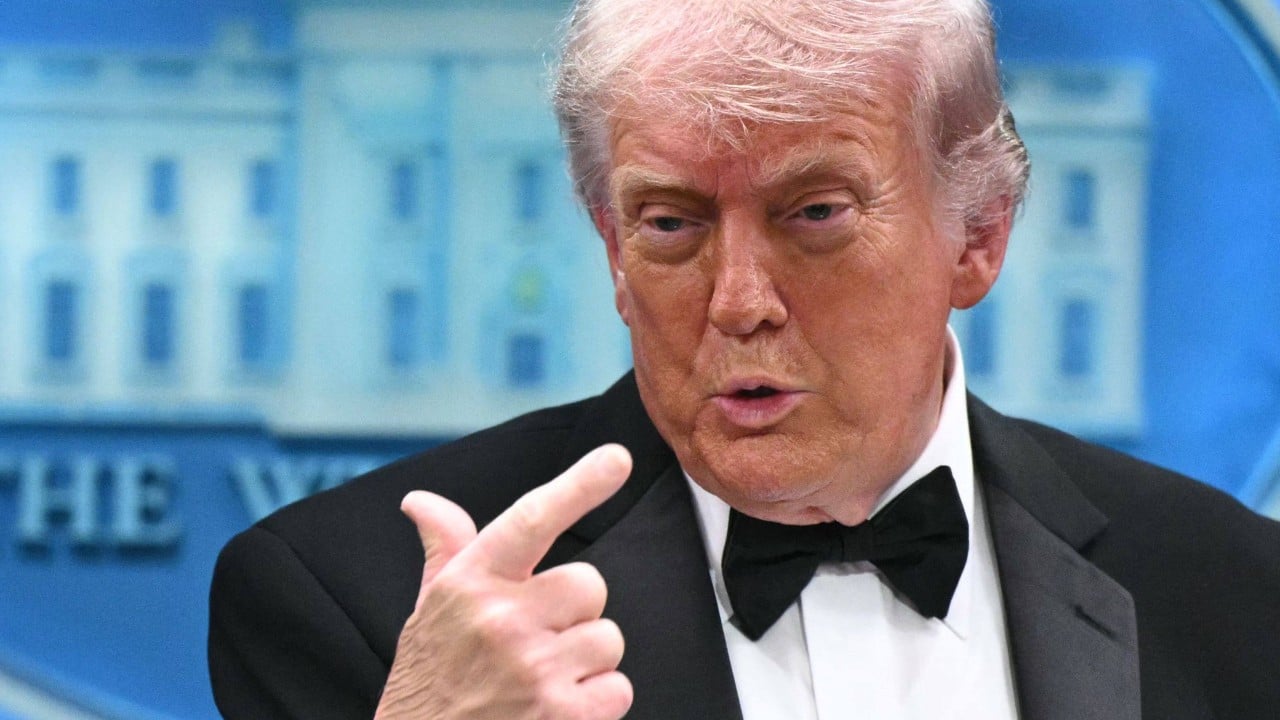
The stability of the North Atlantic security architecture relies on a delicate alignment between fiscal contribution and diplomatic cohesion. When the Chancellor of Germany, Friedrich Merz, utilizes rhetoric that intersects with the domestic political sensibilities of a U.S. administration—specifically regarding sensitive files like Iranian trade or energy policy—the resulting friction creates a measurable risk of troop repositioning. This is not merely a matter of bruised egos; it is an exercise in the reallocation of high-value strategic assets based on a cost-benefit analysis of the alliance itself.
The current tension centers on a specific feedback loop: German diplomatic positioning on Middle Eastern affairs acting as a catalyst for a U.S. reassessment of its forward-deployed presence. To understand the gravity of a potential troop withdrawal, one must deconstruct the functional utility of the 35,000 U.S. personnel stationed in Germany through three primary lenses.
The Triad of Functional Utility
U.S. forces in Germany do not serve as a passive shield for Berlin. They function as a logistics and command hub for global power projection.
- The Logistics Node (Ramstein and Landstuhl): Germany hosts the primary transit point for operations in the Middle East and Africa. Ramstein Air Base is the central nervous system for U.S. Air Forces in Europe (USAFE). Any reduction in footprint forces a recalculation of transit times and medical evacuation routes, increasing the operational cost of every mission in the Southern Hemisphere.
- The Command Architecture (EUCOM and AFRICOM): Stuttgart serves as the headquarters for both U.S. European Command and U.S. Africa Command. Relocating these commands involves more than moving personnel; it requires the reconstruction of hardened, secure communication infrastructures that have been optimized over seven decades.
- The Deterrence Multiplier: The physical presence of the 2nd Cavalry Regiment and various aviation brigades acts as a "tripwire" mechanism. By reducing this presence, the U.S. shifts the burden of conventional deterrence onto the Bundeswehr, which currently faces significant readiness gaps in its heavy armor and mechanized infantry divisions.
The Mechanics of the Merz Iran Variable
The friction point originates in the divergent approaches to the Iranian "Maximum Pressure" campaign. Chancellor Merz’s administration operates under a framework of "Strategic Autonomy," which often necessitates maintaining open channels with Tehran to secure energy stability and regional de-escalation. From a Washington perspective—particularly under an administration focused on transactional diplomacy—this is viewed as a breach of the "burden-sharing" compact.
The U.S. administration views troop presence as a "security product" for which the host nation pays via two currencies: direct financial support and diplomatic alignment. When Merz issues statements perceived as "humiliating" or contradictory to U.S. interests in the Middle East, he devalues the diplomatic currency of the relationship. The logic of the Trump administration is then triggered: if the host nation does not provide diplomatic alignment, the U.S. must reduce its "investment" (personnel and hardware) to rebalance the ledger.
The Economic Distortion of Troop Withdrawal
A withdrawal is often discussed in ideological terms, but the economic impact on the German "Mittelstand" in regions like Rhineland-Palatinate and Bavaria is quantifiable. The U.S. military presence contributes billions of Euros annually to the local German economy through:
- Direct Employment: Thousands of German nationals are employed as civilian contractors on U.S. installations.
- Local Procurement: Bases source utilities, construction, and services from local German firms.
- Consumer Spending: The discretionary income of 35,000 service members and their families supports regional retail and real estate markets.
If the U.S. executes a pivot to Poland or a total withdrawal of certain brigades, the sudden removal of this capital creates a regional recessionary shock. For Merz, the political risk is that his "tough on D.C." stance leads to localized economic collapses in his own backyard, creating a domestic political vulnerability that the opposition can exploit.
The Pivot to Poland: A Zero-Sum Game
The threat of moving troops from Germany to Poland is the primary leverage tool used by the U.S. executive branch. This strategy relies on the "Competition for Protection" framework. By signaling that Poland is a more "grateful" or "aligned" partner—largely due to Warsaw’s willingness to spend over 4% of its GDP on defense and its uncompromising stance on regional threats—the U.S. creates a market where European nations compete for American presence.
The technical limitation of this pivot is infrastructure. While Poland is eager to host more troops, it lacks the deep-water ports, massive specialized airfields, and integrated rail-to-base logistics that Germany has perfected since 1945. A shift to Poland increases the "Friction Coefficient" of U.S. military movements in Eastern Europe, even if it achieves the political goal of penalizing the Merz administration.
Structural Bottlenecks in U.S. Decision Making
It is a common fallacy to assume the U.S. President can unilaterally vacate Germany overnight. Several structural constraints act as a "stabilizer" on the relationship:
- Congressional Oversight: The National Defense Authorization Act (NDAA) frequently contains provisions that limit the use of funds for troop withdrawals below certain thresholds unless specific security certifications are met.
- NATO Integration: U.S. troops in Germany are deeply integrated into NATO’s "VJTF" (Very High Readiness Joint Task Force). Pulling them out without a multi-year plan creates a vacuum in NATO’s defensive posture that the U.S. Joint Chiefs of Staff would likely oppose due to the "Capability Gap" it would create.
- Sunk Cost Realities: The U.S. has invested billions in permanent structures in Germany. Abandoning these for temporary facilities in more "politically aligned" countries represents a fiscal inefficiency that is difficult to justify to a budget-conscious Congress.
The Strategic Reconciliation Requirement
For the Merz administration to mitigate the risk of a troop drawdown, it must move beyond rhetorical rebuttals and engage in a "Value Re-Alignment" strategy. This does not require total submission to U.S. Middle East policy, but it does require a recalibration of how German contributions are marketed.
- The 2% Floor as a Baseline, Not a Ceiling: Germany’s commitment to the 2% GDP defense spending target must be demonstrated through "Hard Hardware" procurement (e.g., F-35s, heavy-lift helicopters) rather than just personnel costs or administrative bloat.
- Infrastructure as a Service: Germany can counter the "withdrawal" narrative by offering to fund the modernization of U.S. bases on German soil, effectively lowering the U.S. taxpayer's "Cost of Carry" for the overseas presence.
- Diplomatic De-escalation: Merz must find a "Third Way" on Iran that acknowledges U.S. security concerns while protecting European trade interests. This involves using the E3 (France, Germany, UK) framework to present a unified European front, making it harder for the U.S. to single out Germany for "punishment."
The looming threat of a U.S. withdrawal from Germany is a symptom of an alliance transitioning from "Values-Based" to "Transaction-Based." In this environment, every diplomatic statement has a price tag attached. If Merz continues to prioritize domestic signaling over transatlantic alignment, the result will be a permanent shift in the European security map—one where Germany becomes a peripheral logistics tail rather than the central engine of Western defense. The strategic play for Berlin is to transform the U.S. presence from a "gift" into an "indispensable partnership" by making the cost of leaving higher than the political benefit of staying.


