The drone strikes on the Fujairah oil hub have shattered more than just storage tanks. They have exposed a fundamental flaw in how the world moves energy. For decades, the United Arab Emirates has marketed Fujairah as the ultimate insurance policy against Iranian threats to close the Strait of Hormuz. By piping crude across the desert to this Indian Ocean port, the UAE promised a way to bypass the world’s most dangerous chokepoint. That promise now looks dangerously thin. The recent wave of aerial incursions proves that moving the exit point does not eliminate the target; it merely changes the coordinates of the strike zone.
This is not a localized skirmish. It is a structural failure of modern maritime security. Fujairah sits at the intersection of global trade, acting as the third-largest bunkering hub on the planet. When drones—often low-cost, off-the-shelf technology modified for precision—can penetrate the airspace of a high-tech Gulf state, the cost-to-damage ratio shifts entirely in favor of the aggressor. We are witnessing the democratization of disruption.
The Geography of Vulnerability
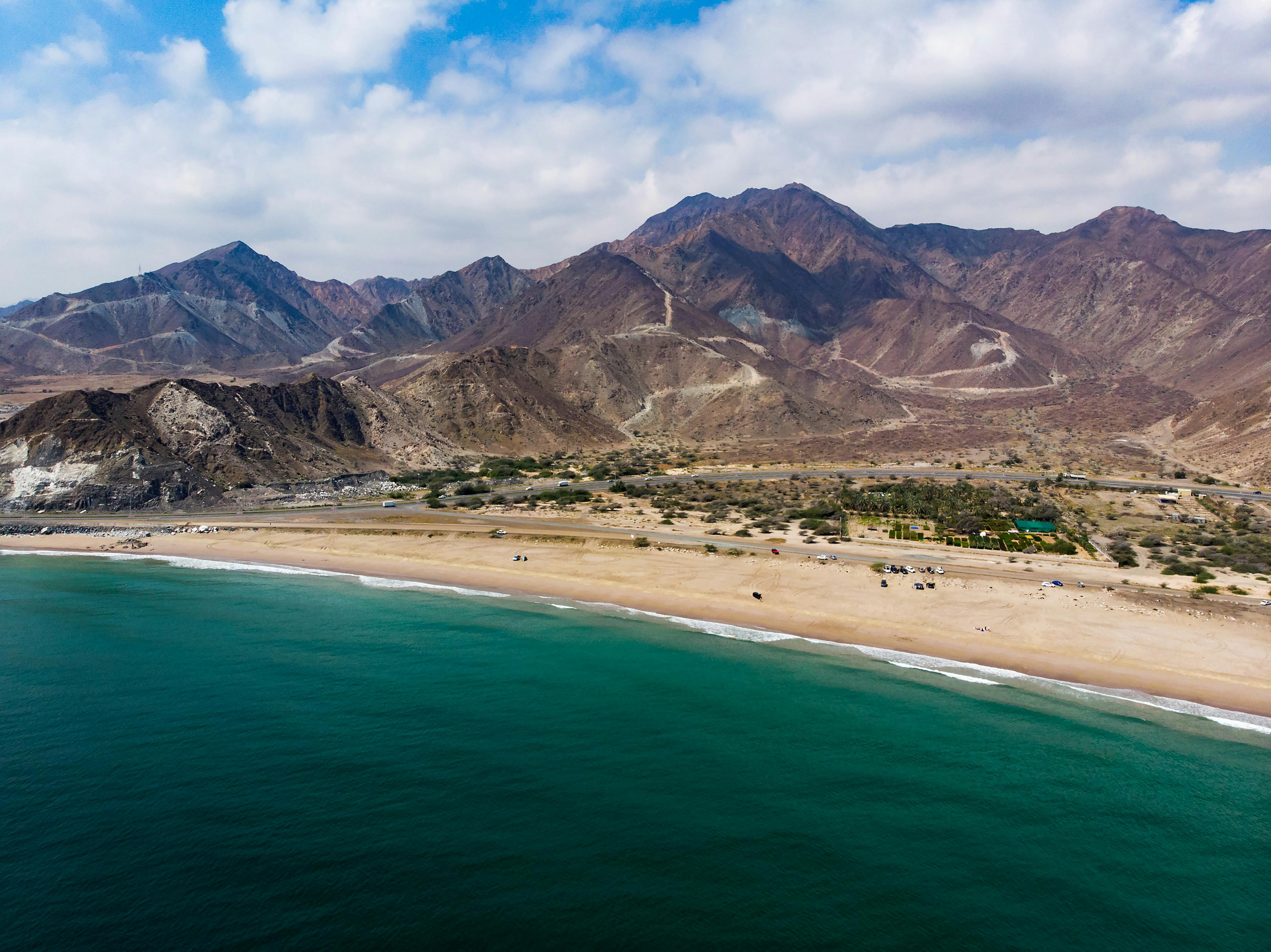
The strategic logic behind Fujairah was always centered on the Strait of Hormuz. About a fifth of the world’s daily oil consumption passes through that narrow strip of water. To mitigate the risk of a naval blockade, the Habshan-Fujairah pipeline was built to carry 1.5 million barrels per day directly to the Gulf of Oman.
The problem is that fixed infrastructure is a sitting duck for asymmetric warfare. While the UAE has invested billions in Patriot missile batteries and advanced radar systems, these tools were designed to intercept ballistic missiles and fighter jets. They struggle with "low and slow" threats. Small, autonomous drones hugging the coastline are difficult to track and even harder to neutralize without risking significant collateral damage in a densely packed industrial zone.
Market analysts have long treated Fujairah as a "safe" zone. That classification is now obsolete. The shift in risk profile means that insurance premiums for tankers docking at Fujairah are no longer calculated based on the stability of the UAE, but on the regional reach of proxy militias. If the "bypass" is just as vulnerable as the "chokepoint," the entire economic justification for these multi-billion dollar pipelines begins to erode.
The Economics of a Five Thousand Dollar Threat
We must look at the math of modern sabotage. A single suicide drone can be assembled for less than $5,000. In contrast, the interceptor missiles used to shot them down can cost upwards of $2 million per unit. This is an economic war of attrition that the defenders are currently losing.
Even a "failed" attack—one where the drone is intercepted or misses its mark—is a victory for the attacker. Why? Because the mere presence of a drone in the airspace triggers a cascade of costly reactions. Port operations halt. Tankers are ordered to sea. Global oil prices spike on the news. The psychological impact on the shipping industry creates a "risk tax" that consumers eventually pay at the pump.
The Invisible Logistics Chain
Most discussions about Fujairah focus on the oil itself, but the real crisis lies in the service industry. Fujairah is a pit stop. Ships come here for fuel, food, crew changes, and repairs.
- Bunkering: If the fuel farms are targeted, the global shipping fleet loses its primary refueling station in the Middle East.
- Supply Lines: Small support vessels that ferry supplies to tankers are soft targets that cannot be protected by missile umbrellas.
- Insurance: War risk premiums are not static. A sustained campaign of "nuisance" attacks can make it financially unviable for smaller operators to call at the port.
The Myth of the Iron Dome in the Desert
There is a common misconception that high-tech defense spending equates to total security. The UAE is one of the most sophisticated military powers in the region, yet no defense system is 100% effective against a swarm. If twenty drones are launched simultaneously from different directions, two or three will likely get through.
In the world of oil trading, two or three hits are all it takes to cause a catastrophe. An oil terminal is a high-pressure environment filled with volatile chemicals. A single strike on a manifold or a pumping station can shut down the entire facility for months. Unlike a warehouse or an office building, you cannot simply "patch" a specialized refinery component. These are long-lead-time items that must be custom-manufactured and shipped globally.
The attackers know this. They aren't aiming for the thick-walled storage tanks; they are aiming for the "connective tissue"—the pipes, the valves, and the power substations that keep the oil moving.
The Geopolitical Chessboard
This isn't just about the UAE and its immediate neighbors. The attacks are a message to the global energy market. By hitting Fujairah, the attackers are demonstrating that no corner of the Arabian Peninsula is out of reach.
For years, Western intelligence agencies have tracked the "Drone Crescent," a geographic arc where unmanned aerial vehicle (UAV) technology has been distributed to non-state actors. This technology has leveled the playing field. A group that cannot afford a navy or an air force can now project power across borders with chilling efficiency.
The Role of Intelligence Failures
We have to ask how these drones are reaching their targets undetected. It suggests a gap in regional surveillance or, more likely, a saturation of the environment. The Gulf of Oman is one of the most crowded waterways in the world. Distinguishing a lethal drone from a civilian craft or even a large bird on radar is a technical nightmare that hasn't been solved.
Furthermore, there is the issue of "launch point" ambiguity. Drones can be launched from the decks of seemingly innocent fishing dhows or from mobile trailers hidden in rugged coastal terrain. This plausible deniability is the ultimate weapon. Without a clear "smoking gun" pointing to a specific state actor, the international community struggles to form a unified diplomatic or military response.
Redefining Energy Resilience
The industry needs to stop pretending that larger fences and more missiles are the answer. True resilience requires a total rethink of how we store and move energy.
The centralized model of Fujairah—where millions of barrels are concentrated in a small geographic footprint—is a relic of 20th-century thinking. It is efficient for business but disastrous for security. We are moving toward an era where "distributed" infrastructure might be the only way to survive.
This could mean smaller, more numerous off-shore loading buoys rather than massive central piers. It could mean moving storage deep underground or diversifying exit points even further. But these solutions are expensive and take decades to implement. In the short term, the industry is stuck with the geography it has.
The Coming Shakeout in Shipping
Ship owners are starting to vote with their rudders. We are seeing an increase in "direct transit" where vessels bypass the Gulf entirely if they can help it, opting to refuel in Singapore or even the Mediterranean despite the higher costs.
The "Fujairah Discount"—the competitive pricing that made the port so attractive—is being eaten alive by the "Conflict Premium." If this trend continues, the UAE's dream of becoming the undisputed gateway to the East will face a brutal market correction.
Investors in energy infrastructure need to look past the glossy brochures of regional stability and look at the satellite imagery of the surrounding hills. The threat is not coming from over the horizon; it is already here, hovering just above the radar line, waiting for the right moment to dive.
Security is no longer a one-time capital expenditure. It is a continuous, failing battle against an enemy that gets smarter and cheaper every single day. The tanks in Fujairah might be made of steel, but the system they support is made of glass.
Analyze your supply chain for single points of failure. If your entire operation relies on a single chokepoint—even one designed to bypass another—you aren't prepared; you're just lucky.