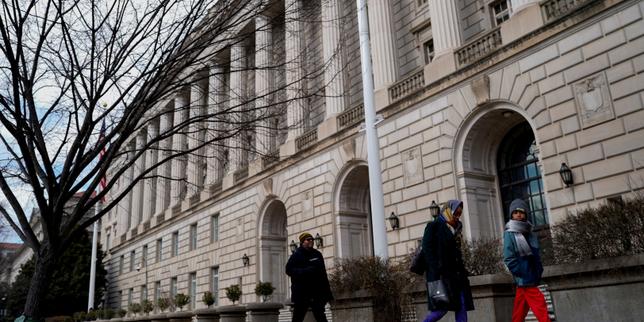
Privacy laws usually feel like abstract bureaucratic shields until they actually stop a government overreach in its tracks. A federal appeals court just ruled that the Internal Revenue Service broke federal law by handing sensitive taxpayer records over to immigration enforcement.
If you thought your tax returns were safe from immigration cops, you had good reason to think so. Federal statute 26 U.S.C. Section 6103 has long protected tax data like an impenetrable vault. Yet, a massive data-sharing pact between the Treasury Department and the Department of Homeland Security tried to bypass those walls. The D.C. Circuit Court of Appeals stepped in, blocking the IRS from sharing private addresses and identities en masse with U.S. Immigration and Customs Enforcement.
The arrangement started when DHS handed over roughly 1.28 million names, demanding that the tax agency cross-reference its confidential databases to locate people. Taxpayer rights advocates immediately sounded alarms. If people believe filing taxes will trigger deportation proceedings, compliance collapses. Why report your income if the agency you report it to acts as an informant for immigration enforcement?
The Legal Breakdown of the Ruling
The court didn't just issue a temporary slap on the wrist. A unanimous three-judge panel found that the data-sharing agreement violated clear legal restrictions. Under federal law, the IRS can only share taxpayer information with other law enforcement agencies under very narrow conditions. ICE had to provide a specific reason indicating each person's involvement in an active criminal case.
They didn't do that. Instead, they sent over massive lists hoping for automated matches, often without providing complete addresses or proper criminal justification. The judges saw right through the strategy. Disclosing tens of thousands of taxpayer addresses without meeting statutory thresholds is illegal, plain and simple.
Public trust in tax administration hangs by a thread under normal circumstances. When millions of households file their returns, they trust that the information stays inside the tax ecosystem. Turning tax authorities into an arm of immigration enforcement destroys that foundational contract.
Why This Matters for Tax Compliance
People often forget that the tax system relies almost entirely on voluntary compliance. The IRS doesn't have the manpower to audit everyone, so they rely on people telling the truth.
When you compromise taxpayer confidentiality, you invite disaster. Undocumented immigrants and mixed-status families contribute billions in federal, state, and local taxes every year. Many use Individual Taxpayer Identification Numbers to pay what they owe. If filing taxes becomes an immediate security risk, millions will simply stop filing.
The immediate result of this ruling means the government cannot use confidential tax records as a backdoor surveillance tool for immigration tracking. Privacy advocates won a massive victory, but the underlying tensions aren't going away. Future administrations will likely try to find new loopholes to merge federal databases.
Watch how federal agencies respond to this decision in the coming months. The fight over data privacy and federal overreach is far from finished. Protect your documentation, stay informed about your rights, and don't assume bureaucratic lines cannot be crossed without a fight.