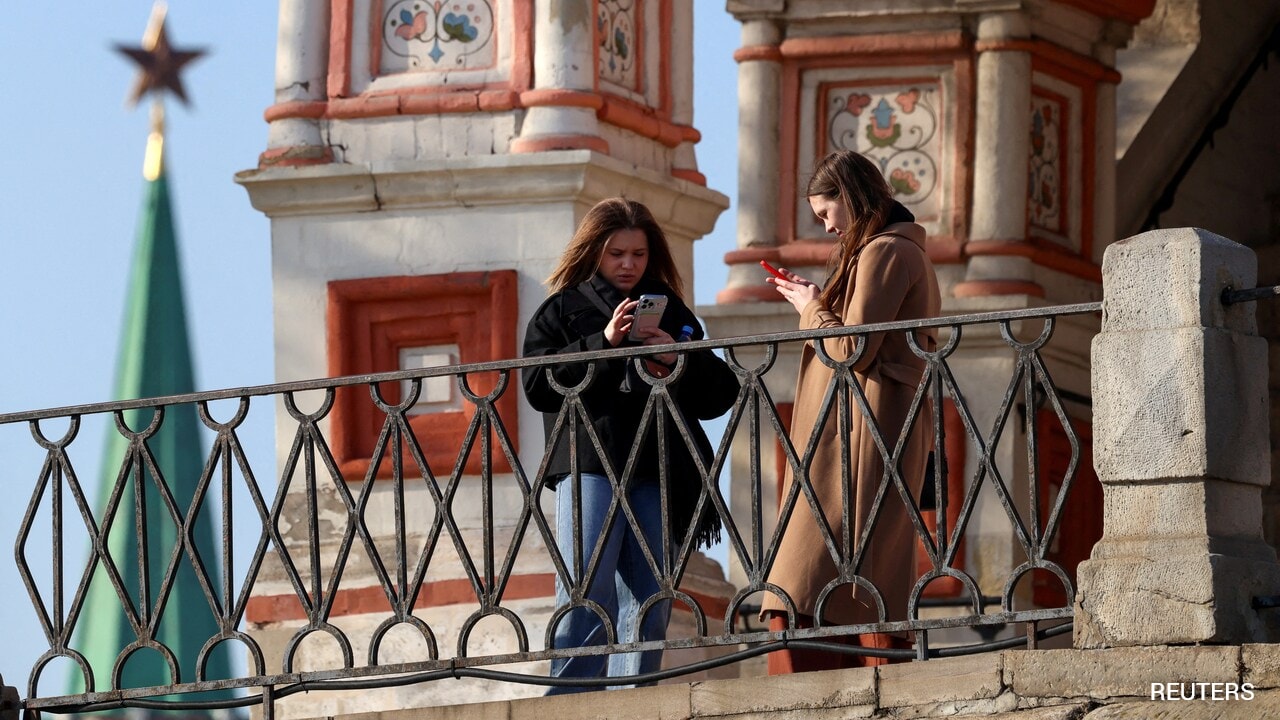
You log into a cozy Moscow cafe, look for the free Wi-Fi, and open your phone. You want to send a quick text to a friend in Germany. But you can't. WhatsApp is blocked. You open your virtual private network app, wait a couple of seconds for the connection to clear through an Icelandic server, and send the message. Then you want to buy a train ticket home on the Russian Railways app. It won't load. Why? Because the state transit system automatically bars anyone using data-obscuring tools.
So you flip the toggle, turn off your foreign digital connection, buy the ticket, and pick up a completely different smartphone sitting on the table. This second phone is where your work life lives. It runs MAX, the state-mandated super-app. You check your corporate messages under the watchful eye of government servers, then tuck both devices back into your bag. Recently making headlines recently: The Cosmic Scale Illusion and How Hubble Found the Collapsing Core of Abell 3192.
This isn't a sci-fi movie. It's daily life in Russia right now.
The Reality of the Dual Phone Strategy
The Kremlin is pushing harder than ever for total digital sovereignty. They want to seal off the country from foreign information networks. But instead of falling in line, ordinary citizens, tech-savvy teenagers, and even loyal government bureaucrats are adapting. They've built an entire parallel system based on a simple hack: carrying two phones and a rotating list of subscription software. Further information on this are detailed by Engadget.
The numbers show exactly how massive this resistance is. The Russian daily newspaper Kommersant reported that in March alone, there were 9.2 million downloads of the five most popular virtual private networks from the Google Play store. That is a massive 14-fold increase compared to the same month last year.
People aren't giving up their access to the global internet. They're just getting better at hiding it.
The strategy is clunky but effective. Device number one is your window to the outside world. It holds your forbidden platforms, your encrypted chats, and your foreign news apps. It stays permanently tethered to encrypted servers, routing data through Paris, Reykjavik, or Warsaw.
Device number two is your compliance phone. It's the one you show to your employer, your university, or a border guard. It runs the state-backed infrastructure. It contains nothing that could trigger an investigation.
The Meteoric Rise of MAX
To understand why people are carrying two devices, you have to understand MAX. Launched by the tech giant VK, MAX is the Kremlin's answer to Western messaging services. It grew from a modest user base to over 85 million daily active users.
Since late 2025, the state has mandated that MAX must be pre-installed on every single new smart device sold within the country. It is modeled directly after China's WeChat. The goal is to merge your entire life into one single, easily monitored interface. Chats, banking, tax payments, government services, and grocery shopping all happen inside this one digital ecosystem.
For the state, it's a dream. For the user, it's a tracking nightmare.
The security setup behind MAX is incredibly invasive. Human Rights Watch and various threat intelligence firms have noted that the app integrates directly with SORM-3, Russia's deep-packet inspection system. SORM doesn't just look at who you are calling. It collects, searches, and stores long-term internet traffic and metadata.
Because of this, people treat MAX like a digital biohazard.
I've heard reports of corporate workers and lower-level state officials who take their MAX-mandated second phones and physically rip out the internal microphones or cover the camera lenses with heavy tape. They worry that the FSB can remotely activate the hardware. Even if you aren't doing anything illegal, nobody wants the state reading their shopping lists or listening to their dinner conversations.
A Failed Attempt at Total Control
The massive push to block the global web is backfiring in a very public way. The state communications regulator, Roskomnadzor, has been slowing down connections and blocking IP addresses constantly. The FSB has even ordered telecom companies to completely shut down mobile data for days at a time in specific border regions, using the excuse of stopping Ukrainian drone navigation.
But this heavy-handed approach is breaking the country's actual economy.
When you block massive swathes of the internet to stop a messaging app, you also accidentally crash banking apps, online payment gateways, food delivery services, and e-commerce platforms. Digital Budget, a Moscow-based consultancy, pointed out that many online shoppers simply refuse to disable their security tools just to open a product page. If the page doesn't load immediately because of a state firewall or a VPN conflict, the user just closes the tab. Retailers are losing millions.
This digital friction is bleeding into public morale. The state pollster VTsIOM showed a clear drop in Vladimir Putin's approval ratings, sliding from over 75% down to the mid-60s. People are tired of the constant inconveniences, the rising prices, and the feeling of being locked in a digital cage.
VPN Usage Growth in Russia (Levada Center Data)
2022: 23% of the population
2026: 36% of the population
The independent Levada Center pollster found that well over a third of the entire country now openly admits to using data-tunnelling software. That number jumps significantly when you look at younger demographics in major cities like Moscow and St. Petersburg.
The Hypocrisy of the Elite
The funniest part of this entire situation is that the people making the rules don't follow them.
While state workers are forced onto MAX, top-tier government officials keep their iPhones. Kirill Dmitriev, a special envoy, posts regularly on X, a platform that has been officially banned inside Russia for years. To do that, he has to use the exact same encryption tools his government is trying to outlaw.
The Kremlin wanted to crack down further by forcing mobile carriers to charge massive fees to anyone using more than 15 gigabytes of international data per month. The goal was to price normal citizens out of using foreign servers. But the government had to quiet down and postpone the plan because they realized it would cause chaos among their own staff and businesses before the upcoming parliamentary elections.
How to Protect Your Own Footprint
If you ever find yourself navigating a heavily restricted digital environment, you can't rely on basic, free tools anymore. The cat-and-mouse game has evolved. Simple apps from the app store get blocked within days.
Here is what actually works if you need to maintain privacy under heavy state surveillance:
- Ditch the commercial services: Major corporate commercial providers are easy targets for state firewalls. The addresses of their servers are public knowledge. Security agencies block them in batches.
- Build a private shadow server: Tech-savvy users are now renting cheap, private virtual servers in neutral countries and installing open-source protocols like ShadowSocks, VLESS, or Amnezia. Because these servers only have one or two users, they don't trigger the automated blocking systems.
- Isolate your data: Never mix your personal life with state-mandated software. If a school or job forces you to install a monitored app, put it on a cheap, wiped, secondary device. Keep your primary accounts, your banking, and your international contacts on a completely clean phone that never touches local state networks without heavy encryption.
- Use local mesh apps: For hyper-local communication when the mobile internet gets completely shut down by security forces, use bluetooth-based mesh networks like Briar. They don't need a cell tower or an internet service provider to send text messages across a short distance.
The Kremlin's digital wall is high, but it's full of holes. As long as people are willing to swap devices, purchase private server space, and toggle their settings twenty times a day, total information isolation remains an impossible goal.