The Trillionaire Mirage
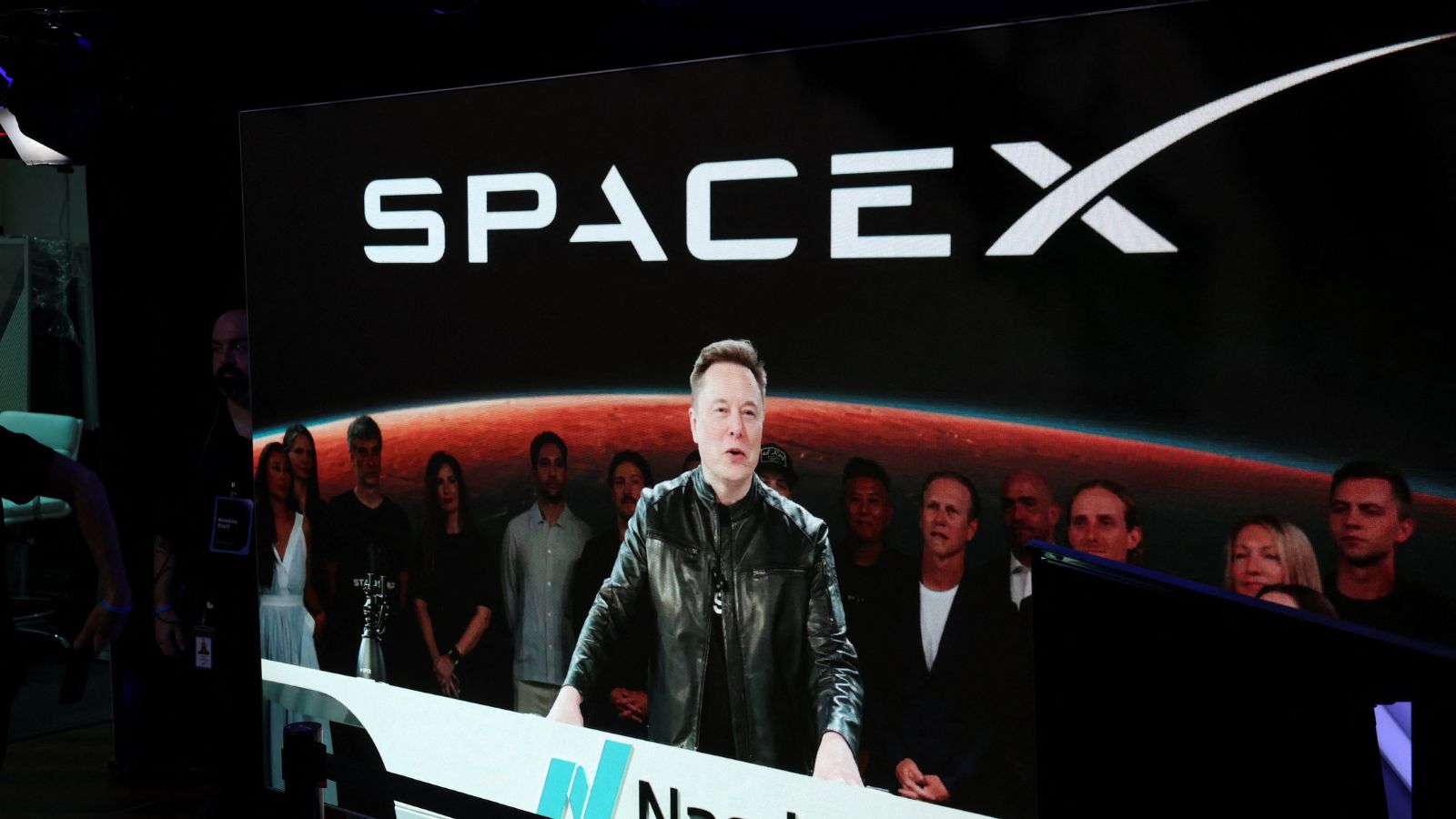
The financial media is currently choking on its own excitement. They are staring at a theoretical valuation spreadsheet, watching a ticker symbol that does not exist in the public domain, and declaring Elon Musk the world’s first trillionaire because of a speculative SpaceX public offering.
It is a comforting narrative for people who analyze markets using nothing but a calculator and a sense of wonder. It is also entirely wrong. If you liked this post, you should look at: this related article.
Valuing a aerospace giant on paper is not the same as having liquid wealth, and taking SpaceX public would be the quickest way to kill the very mission that makes the company valuable. The lazy consensus states that a massive initial public offering is the ultimate victory lap for a private tech titan. In reality, an IPO for an enterprise built on generational, high-risk infrastructure is an existential trap.
Wall Street operates on ninety-day cycles. Mars requires thirty-year horizons. Forcing those two realities into the same room does not create wealth; it destroys the capacity for long-term risk. For another angle on this event, refer to the latest update from Engadget.
The Liquidity Myth and the Problem with Paper Wealth
When commentators throw around the word "trillionaire," they confuse market capitalization with spendable capital. I have spent two decades watching founders look wealthy on a Bloomberg terminal while struggling to secure the cash required to pivot their businesses during a downturn.
Let us break down the mechanics of this supposed trillion-dollar valuation.
- The Float Fallacy: A company’s valuation during an funding round or an initial public offering is set by the marginal price of the shares traded. If an investor buys 0.1% of a company for $1 billion, the company is technically worth $1 trillion. But try dumping 40% of that stock on the open market to fund a city on another planet. The price collapses long before the second tranche hits the ledger.
- The Collateral Trap: Critics argue Musk can just borrow against his equity. They forget that major investment banks have strict concentration risk limits. No compliance department on Wall Street is going to authorize a $200 billion loan backed solely by volatile aerospace equity that has no historical public precedent.
- The Tax Choke Point: Converting paper billions into actual capital requires liquidation. Liquidating stock triggers capital gains taxes that instantly erode the theoretical net worth.
The idea that a trillion-dollar valuation makes an individual omnipotent is a fantasy designed for headline clicks. True power in industrial tech belongs to those who control the cash flow, not those who boast the highest un-realized capital gains on a volatile equity tracker.
Why a SpaceX Public Offering Destroys the Mission
The public markets are a meat grinder for capital-intensive companies. Look at the traditional defense contractors or legacy automotive firms. They spend more time managing earnings guidance and appeasing institutional index funds than they do executing radical engineering overhauls.
The Tyranny of Quarterly Earnings
If SpaceX lists on the New York Stock Exchange, every single Starship test flight that ends in a fiery, intentional detonation will be treated as a financial catastrophe by retail investors and algorithmic short-sellers.
Private Development Strategy:
Fail Fast -> Collect Data -> Iterate Rapidly -> Succeed

Public Market Reality:
Anomalous Event -> Stock Drops 15% -> Shareholder Lawsuit -> Innovation Halts
In a private setting, an explosion over the Gulf of Mexico is an expensive engineering lesson. In the public market, it is a material event that triggers a flurry of class-action lawsuits from law firms specializing in securities fraud. The pressure to protect the stock price inevitably forces management to slow down, reduce risk, and adopt the exact same bureaucratic paralysis that allowed SpaceX to lap United Launch Alliance and Arianespace in the first place.
The Starlink Misdirection
The counter-argument often raised is that Starlink, the satellite internet division, will be spun off to satisfy the market's hunger for predictable, recurring subscription revenue.
This plan misses the structural reality of how the broader business operates. Starlink is the internal cash cow designed to subsidize the development of the heavy launch infrastructure. Separating them via an IPO satisfies short-term investment banking fees but starves the primary deep-space exploration initiative of its most reliable engine of domestic capital generation.
Dismantling the Capital Allocation Illusion
People Also Ask: Won't an IPO lower the cost of capital?
This is a textbook corporate finance response that fails in the real world. SpaceX does not suffer from a capital scarcity problem. Sovereign wealth funds, massive private equity vehicles, and ultra-high-net-worth individuals are practically breaking down the doors in Hawthorne to get a piece of every private secondary round.
Going public to raise capital only makes sense when the private markets dry up. Right now, private capital is abundant for monopolies. SpaceX holds an effective monopoly on Western launch capacity. It does not need the public; the public needs it.
People Also Ask: Doesn't a higher valuation protect the company from economic downturns?
No. A high valuation in a public market makes you a giant target. Ask any mega-cap technology firm that has watched its valuation swing by $300 billion in a single week based on a slight miss in guidance or a change in Federal Reserve interest rate policy.
Private companies can weather macroeconomic storms by quietly adjusting internal valuations and issuing structured debt to long-term partners who do not mark their portfolios to market every second of the trading day.
The Hidden Risk of Employee Equity Bleed
There is a dark side to this valuation inflation that nobody inside the financial press wants to discuss: employee compensation.
SpaceX attracts top-tier engineering talent from MIT, Stanford, and NASA by offering a combination of mission-driven work and private stock options that regularly increase in value via structured liquidity events.
| Metric | Private Equity Model | Public Equity Model |
|---|---|---|
| Volatility | Low (Controlled pricing windows) | High (Daily market fluctuations) |
| Talent Retention | High (Tied to milestone execution) | Low (Engineers leave when stock dips) |
| Focus | Product iteration and hardware | Portfolio value and exercise windows |
When a company goes public, its stock price becomes a public report card on the employee’s personal net worth. When the market enters a cyclical downturn, talent starts looking for the exits because their compensation packages are tied to a macro environment they cannot control. Maintaining a private structure keeps the focus entirely on the engineering roadmap rather than the daily movements of the S&P 500.
Stop Measuring Space Operations with Software Metrics
The fundamental mistake the consensus view makes is treating a hardware-heavy, capital-intensive aerospace company like a software-as-a-service (SaaS) business.
A software company can scale to a trillion-dollar valuation because its marginal cost of replication is zero. A new user requires no new factories, no raw titanium, and no regulatory approval from the Federal Aviation Administration.
SpaceX requires physical infrastructure. It requires launch pads, massive manufacturing facilities, thousands of tons of propellant, and a massive supply chain vulnerable to geopolitical instability. Applying software multiples to this operational model creates a valuation bubble that cannot be sustained under the scrutiny of public auditing standards.
If this IPO happens under the terms the media is currently salivating over, it will not mark the beginning of a golden era of space commercialization. It will mark the moment financial engineering officially took precedence over actual aerospace engineering.
Stop cheering for the theoretical trillionaire. Start worrying about the structural compromise required to create him.