Dirt gets under your fingernails. It stays there for days, no matter how hard you scrub with a stiff-bristled brush.
Most people forget that. They look at a map, draw a neat red border around a block of green, and call it property. They see acreage as a bank account with grass. But when you walk a piece of land every single day for decades, it stops being dirt. It becomes a member of the family. It holds the ghosts of your grandfather's sweat, the exact spot where your dog chased a rabbit in the autumn of ninety-four, and the quiet kitchen table conversations that shaped who you became.
Margaret knew that better than anyone.
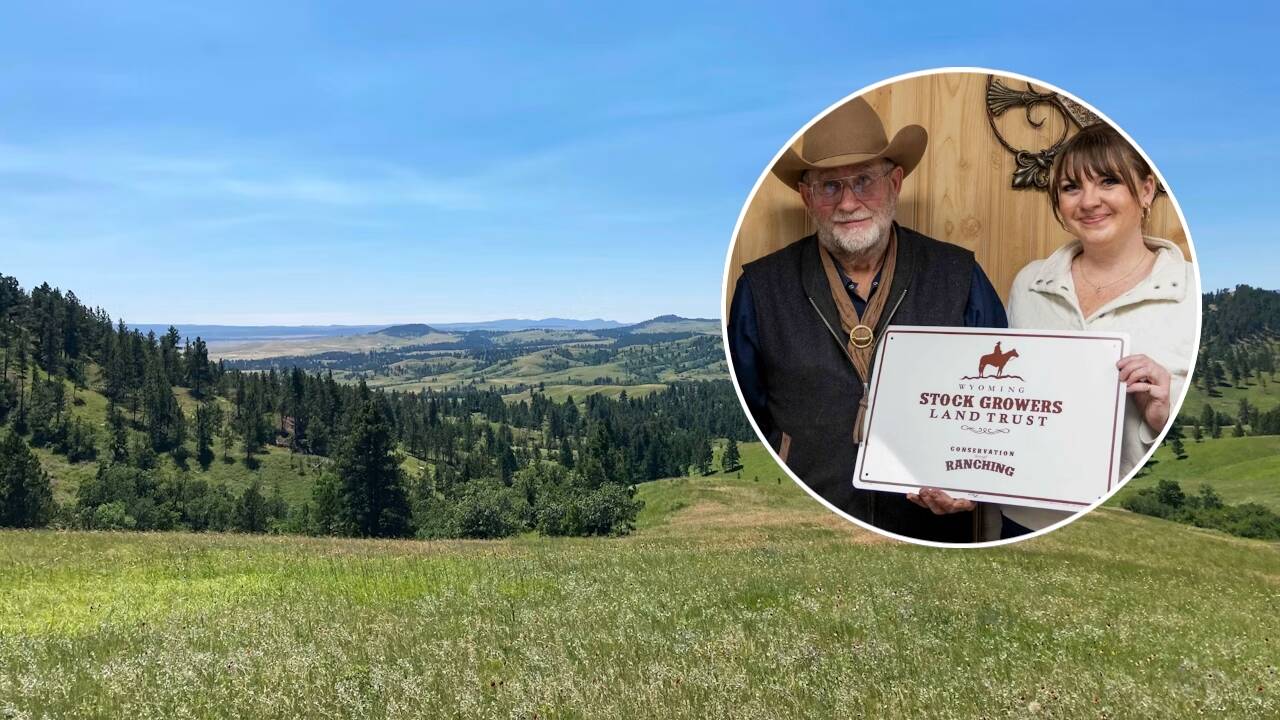
She sat by the window in the house her father built, watching the wind ripple through the tall grama grass of the ranch. Her hands were thin now, translucent as onion skin, shaped by seventy years of hauling irrigation pipe, pulling calves from cold mud, and mending barbed wire against the winter bite. Outside, twenty-five hundred and six acres of open sky and rolling earth stretched toward the horizon.
It was worth millions on paper. Developers had been circling for years like hawks over a dry carcass. They offered numbers that made your head spin, promises of asphalt, subdivisions, and neatly manicured lawns where native sagebrush used to thrive. They talked about growth. They talked about progress.
Margaret just watched the hawks.
She knew what progress looked like in a valley like this. It looked like concrete choking the creek beds. It looked like streetlights washing out the stars. It looked like a way of life evaporating into thin air.
(Note: While Margaret is a composite figure drawn from the lived experiences of generational ranchers facing identical pressures, her situation mirrors the exact legal and emotional reality of the historic conservation agreement that recently locked in protection for precisely 2,506 acres.)
Her breath was shallow. The cancer was winning. Every inhale felt like drawing broken glass into her chest. But her mind was as sharp as a freshly whetted butcher knife.
She turned to her daughter, Sarah, who was holding a lukewarm cup of black coffee.
"Don't sell," Margaret whispered. Her voice was like dry leaves scraping across concrete.
"I won't, Mom," Sarah said, her voice cracking.
"Promise me," Margaret said, fixing her with a gaze that brooked no argument. "Promise me they won't pave the creek."
Promises made to the dying are heavy things. They anchor you to the earth. They demand sacrifice.
Protecting twenty-five hundred and six acres isn't as simple as signing a piece of paper and walking away. It requires wading through a bureaucratic swamp of easements, land trusts, appraisals, and legal jargon designed to wear down even the most stubborn spirits. It means choosing a permanent, legally binding restriction on your own financial future to ensure the coyotes, the mule deer, and the red-tailed hawks keep their home.
Most families break. The inheritance taxes alone are a guillotine waiting to drop. When a rancher dies, the state often demands a ransom in taxes that forces the living to sell off the land just to pay the government. It is a cruel math. You love the land to death, and then the tax code kills it for you.
Unless you fight back with a conservation easement.
An easement is a peculiar legal creature. It strips away the right to subdivide and develop, freezing the landscape in its natural, working state forever. You keep the title. You keep the cattle on the hills. You keep the right to live in the old homestead. But you give up the jackpot. You slam the door shut on strip malls and luxury estates.
Forever is a terrifying word. Forever means your grandchildren cannot cash out when times get hard. Forever means you are binding the hands of the unborn to protect a view, a watershed, a sanctuary.
Sarah didn't hesitate. She looked at her mother, looked out at the vast, stubborn expanse of the ranch, and understood the assignment.
The paperwork took fourteen months. Fourteen months of endless phone calls with land trust attorneys, soil conservationists, and tax assessors who looked at Sarah like she had lost her mind. Why leave millions on the table? Why lock up an asset that could buy an island in the Caribbean?
Because some things cannot be bought back once you pave them over.
Water doesn't care about real estate trends. When you pave over the recharge zones of an aquifer, the wells run dry. When you break up a continuous migration corridor, the herds splinter and vanish. The twenty-five hundred and six acres of Margaret’s ranch aren't just an isolated island of nature; they are a vital stitch in a massive, fragile ecological quilt that spans the entire western range.
If you cut this thread, the whole pattern starts to unravel.
Think about the Great Plains as a sponge. For thousands of years, deep-rooted native grasses captured torrential downpours, sinking the moisture deep into the subterranean veins of the earth, filtering it slowly back into the rivers. Concrete doesn't drink. Concrete vomits water straight into storm drains, turning gentle creeks into raging, destructive torrents.
When Margaret’s ranch was officially locked into its conservation status, nothing dramatic happened on the surface. No marching bands. No ribbon cuttings.
A red-tailed hawk dropped out of the thermal, diving into the brush. A calf wobbled on spindly legs behind its mother. The wind kept whispering through the sage.
That was the victory. The utter, beautiful lack of change.
We live in an era obsessed with the new. We worship disruption. We build apps that connect us to everything while disconnecting us from the dirt beneath our feet. We act as if the earth is an infinite resource, a disposable wrapper to be tossed aside when we are done with it.
We forget that we are temporary. The land is what stays.
When you stand on a ridge like the one Margaret watched from her window, the illusion of human dominance shatters. You realize how small you are. You realize that your time here is just a brief blink between generations.
Sarah walks those fences now. Alone.
She carries wire cutters in her back pocket and a heavy wooden mallet to drive loose fence posts back into the stubborn clay. Her hands are calloused, just like her mother’s were. Sometimes, when the wind comes howling down from the peaks, carrying the scent of pine and impending snow, she stops and looks out over the valley.
Not a single roof is glinting in the sun where there shouldn't be one. No asphalt scars the ancient migration paths. The deer still cross the creek at dusk, stepping cautiously into the amber light.
The developers moved on to easier targets elsewhere, leaving this small pocket of the world to heal, to breathe, to simply exist.
Margaret isn't here to see the spring melt bring the wildflowers back up through the dark, rich soil, but her signature is on every single blade of grass. It is written in ink, bound by law, and sealed by a daughter who knew that some promises are worth more than gold.
The sun dips below the western ridge, painting the sky in shades of bruised purple and burning copper. Night rushes in across the plains, silent and vast, swallowing the horizon whole. Out in the dark, a coyote barks, and the land answers back.