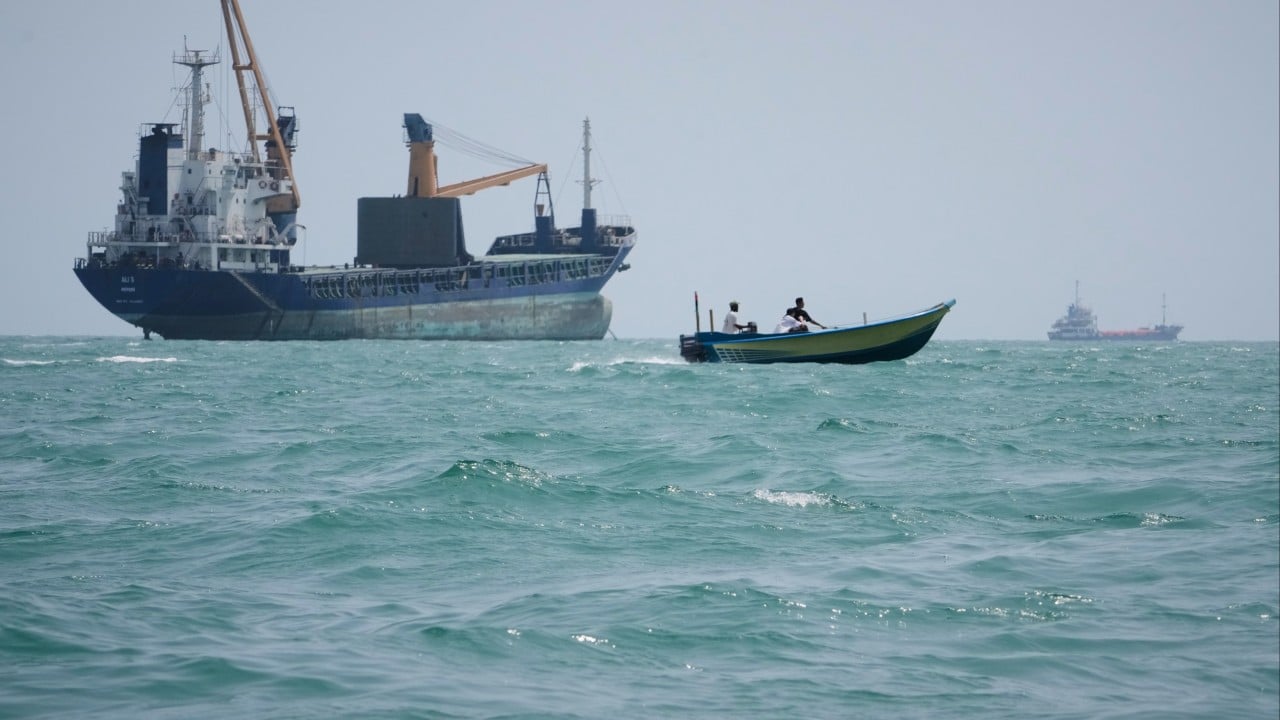
The convergence of maritime migration events and public demonstrations in coastal municipalities exposes systemic friction points across municipal resource allocation, information propagation, and social friction management. When an influx of small boat arrivals intersects with organized nationalist demonstrations in a location like Portsmouth, the resulting kinetic friction is rarely spontaneous. It represents the terminal output of a multi-tiered logistical chain failure involving central government processing bottlenecks, local civil infrastructure strain, and the rapid mobilization capabilities of ideological networks operating through digital channels.
Understanding this dynamic requires abandoning surface-level moral narratives in favor of structural mechanics. The incident in Portsmouth serves as a case study in how localized civic stress transforms into widespread public unrest when operational transparency from state authorities collapses.
The Information Vacuum and Mobilization Velocity
A primary driver of rapid escalation during localized migration friction points is the information vacuum that precedes official government communication. When unverified reports of small boat arrivals or migrant housing placements circulate within a community, a predictable sequence of events unfolds.
The Propagation Phase
Local social media channels act as high-velocity vectors for unverified logistical data. Rumors regarding the scale of arrivals, the specific municipal costs, and the duration of stays are amplified without baseline verification. Because institutional information channels move slowly due to bureaucratic clearance protocols, a temporal gap opens between rumor creation and official response.
The Radicalization of Uncertainty
In the absence of factual clarity, community anxiety shifts toward defensive posture mobilization. Far-right activist networks monitor these informational gaps specifically to deploy pre-scripted agitation frameworks. Their objective is not to debate policy, but to capitalize on existing local infrastructure anxieties—such as housing waitlists, general practitioner capacity, and municipal budget deficits—by tethering them directly to the visible arrival of asylum seekers.
The Physical Convergence
Digital coordination platforms allow decentralized groups to mass in specific geographic bottlenecks within hours. In Portsmouth, the choice of location was dictated by maritime landing geography and perceived vulnerabilities in local security protocols. The convergence relies on speed to overwhelm local municipal response thresholds before law enforcement can establish perimeter control or traffic management corridors.
The Municipal Resource Cost Function
Public demonstrations against migrant placements do not emerge purely from ideological abstraction; they are frequently underpinned by genuine anxieties regarding municipal fiscal capacity, even when those anxieties are weaponized by extremist groups. The structural mechanics of local resource allocation create a zero-sum perception among residents.
Central government agencies typically contract third-party providers to manage contingency accommodation in coastal towns. This process bypasses local municipal planning committees, stripping elected local officials of oversight capacity.
- The immediate financial impact on local council budgets includes emergency service deployment, traffic management, and municipal clean-up costs, which are rarely offset immediately by central government emergency funds.
- Public services such as primary care clinics and emergency departments absorb additional patient volume without a corresponding expansion in capital infrastructure or operational funding, breeding localized resentment.
- The perception of preferential treatment regarding housing placement exacerbates existing socio-economic vulnerabilities among domestic populations experiencing housing insecurity.
When extremist groups insert themselves into this environment, they map ideological grievances directly onto these tangible municipal pain points. The protest becomes a proxy outlet for structural frustrations with state-level administrative incompetence.
Law Enforcement Mechanics and Escalation Dynamics
Managing the friction between far-right demonstrators and counter-protesters presents a complex operational challenge for local police forces. The strategic objective for law enforcement is not ideological arbitration, but kinetic containment and the preservation of public safety within strict resource constraints.
Tactical Bottlenecks
Police commanders face immediate personnel shortages when dealing with simultaneous, highly mobile crowds. Unlike static infrastructure defense, managing shifting protest lines requires high volumes of public order-trained officers, whose deployment involves complex logistical coordination and high per-hour operational costs.
Polarization Amplification
The presence of opposing ideological factions creates a dual-pressure environment. Law enforcement must maintain a physical buffer zone to prevent kinetic violence. However, the physical architecture of this containment—barricades, riot gear, and vehicle cordons—often amplifies public anxiety, transforming a civic space into an operational theater of conflict.
The Feedback Loop of Confrontation
Every physical clash or aggressive verbal exchange captured on mobile devices feeds back into the digital mobilization ecosystem. For far-right organizers, footage of police confrontation is weaponized to validate narratives of state bias or systemic persecution, accelerating recruitment and sympathy loops across wider national networks.
Strategic Interventions for Municipal Resilience
Mitigating future flashpoints in coastal logistics hubs requires a departure from reactive policing toward predictive structural management.
Information Velocity Parity
Municipal authorities and central government departments must establish rapid-response communication channels that outpace social media speculation. Publishing verified, granular data regarding accommodation numbers, processing timelines, and direct financial compensations to local councils within hours of an event neutralizes the vacuum exploited by agitators.Infrastructure Impact Mitigation
Central authorities must automatically trigger ring-fenced funding allocations for local health and education infrastructure alongside any contingency accommodation contract. Demonstrating immediate, tangible financial compensation to the affected municipality short-circuits the narrative that local populations are bearing an unmitigated structural burden.Decentralized Monitoring and Friction Mapping
Intelligence agencies and local authorities must transition from monitoring broad ideological labels to tracking localized logistical friction points. By identifying which neighborhoods experience the highest structural strain, resources can be directed toward proactive community engagement and structural support before digital mobilization reaches critical mass.
The friction observed in Portsmouth is a predictable output of administrative opacity intersecting with targeted political exploitation. Resolving the underlying instability demands structural transparency, proactive fiscal support for impacted municipalities, and the systematic reduction of the information vacuums that allow extremist networks to dictate the terms of public discourse.