The coffee in the mug on the bridge of a bulk carrier is always cold by the time the strait comes into view.
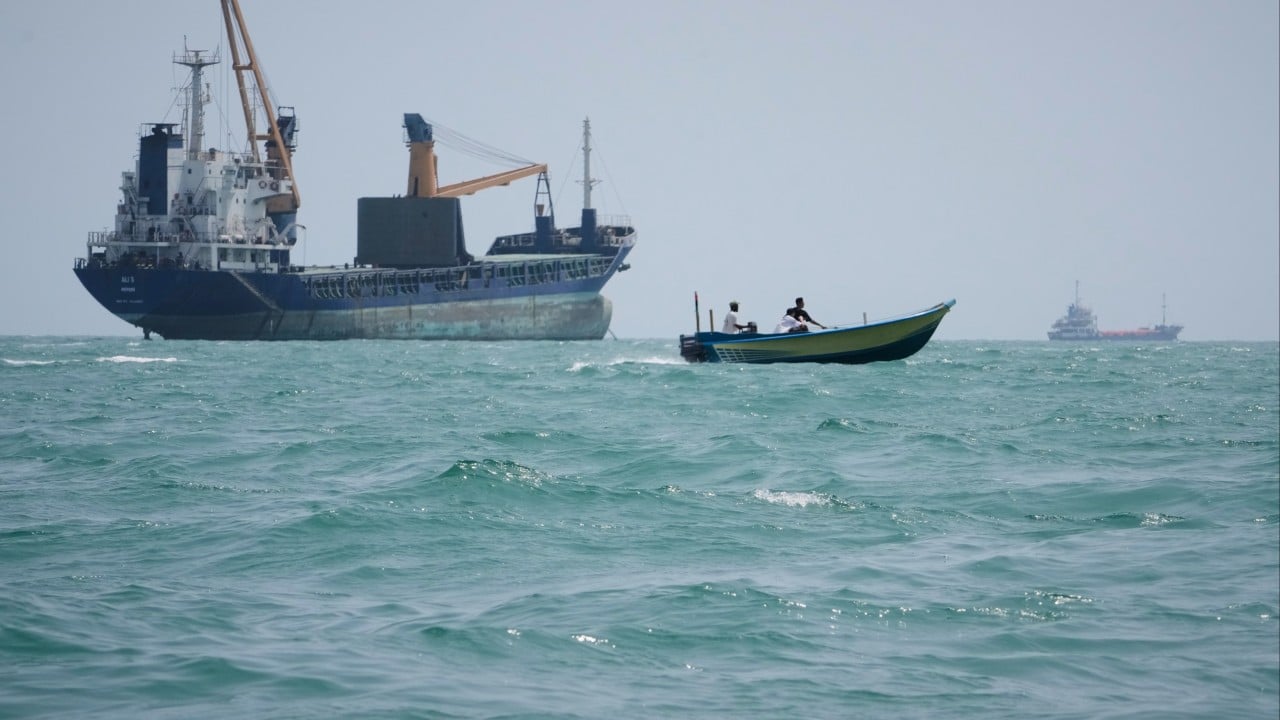
You do not drink it for the taste. You drink it because the warmth against your palms is the only familiar thing left in a corridor of water that narrows until the shores of two worlds feel close enough to touch, yet hostile enough to burn. Every captain who has ever steered a quarter-mile-long leviathan through the Strait of Hormuz knows the feeling in the pit of their stomach. It is a quiet, steady pressure. It is the weight of twenty million barrels of oil resting on a knife edge, and the sudden, jarring realization that twenty-one miles of blue water can shrink until it feels like the eye of a needle.
Now, that needle is about to be threaded with steel.
Reports from regional security chiefs indicate that a declaration is coming. A prohibited zone. A line drawn across the shipping lanes where the heartbeat of global energy either pulses or flatlines.
To understand what this means, you have to forget the dry bulletins and the stock market tickers. You have to stand on the wing of a bridge at three in the morning, smelling the thick, heavy air of the Persian Gulf, watching the radar screen peppered with green blips. Some of those blips are supertankers carrying the fuel that keeps factories humming halfway across the planet. Others are gray hulls, moving with an eerie, calculated purpose.
For months, the friction in these waters has been rising. It is an old story told in a new language of drones, electronic jamming, and shadowed patrols. But a declared prohibited zone is different. It shifts the invisible boundaries of anxiety into hard, administrative law. It transforms a tense neighborhood into a closed room.
Consider what happens next.
A tanker rounds the Musandam Peninsula. The horizon is hazy, smeared with the dust of the desert and the salt spray of the gulf. The VHF radio crackles. A voice—calm, accented, absolute—broadcasts a warning. The ship is entering waters deemed restricted. The coordinates shift. The margin for error vanishes.
Suddenly, the mathematics of global trade become brutally personal for a twenty-six-year-old third mate holding a pair of binoculars on the starboard wing.
This is the hidden cost of geopolitics. We talk about oil prices as if they are numbers generated by an algorithm in New York or London. We treat supply chains like abstract veins on a medical chart. But every shock in Hormuz is felt first by human hands. It is felt by the Filipino engine cadet wondering if his contract will be extended or if his ship will be turned around. It is felt by the insurance underwriters in dusty rooms who watch the risk premiums spike like a fever chart, quietly rewriting the cost of everything from a tank of gas to a loaf of bread in a city ten thousand miles away.
We have been here before, of course. History in the gulf is written in recurring loops of escalation and de-escalation. Tanker wars of the past echo in the sonar pulses of the present. Yet each iteration carries a sharper edge because our modern world is faster, more brittle, and far less forgiving of interruption.
When a security chief announces a prohibited zone, they are not just drawing a line on a map. They are testing the structural integrity of a globalized economy that assumes, against all evidence, that the water will always remain open.
It never does. Not entirely.
The strait has always belonged to those who can close it. That is the fundamental reality that sits beneath the diplomatic maneuvering. Geography has dealt the Middle East a choke point, and human ambition has turned that choke point into the ultimate geopolitical lever. Every missile test, every warning broadcast, every positioning of fast-attack craft is a punctuation mark in an ongoing conversation about power.
And the rest of us watch from the shore. Or worse, we don't watch at all until the bill arrives at the pump.
We scroll past the headlines between weather reports and sports scores, immune to the distant drumbeat of crisis. We forget that our morning commute, our heating bills, our very ability to move goods across oceans depends on the nerve of men and women navigating a narrow channel where the margin between peace and catastrophe is measured in yards.
The declaration is coming. The lines will be drawn. And as the gray hulls move into position against the pale desert dawn, the water will look just as calm as it always has. But beneath the surface, the current is shifting. And everyone is holding their breath to see who blinks first.