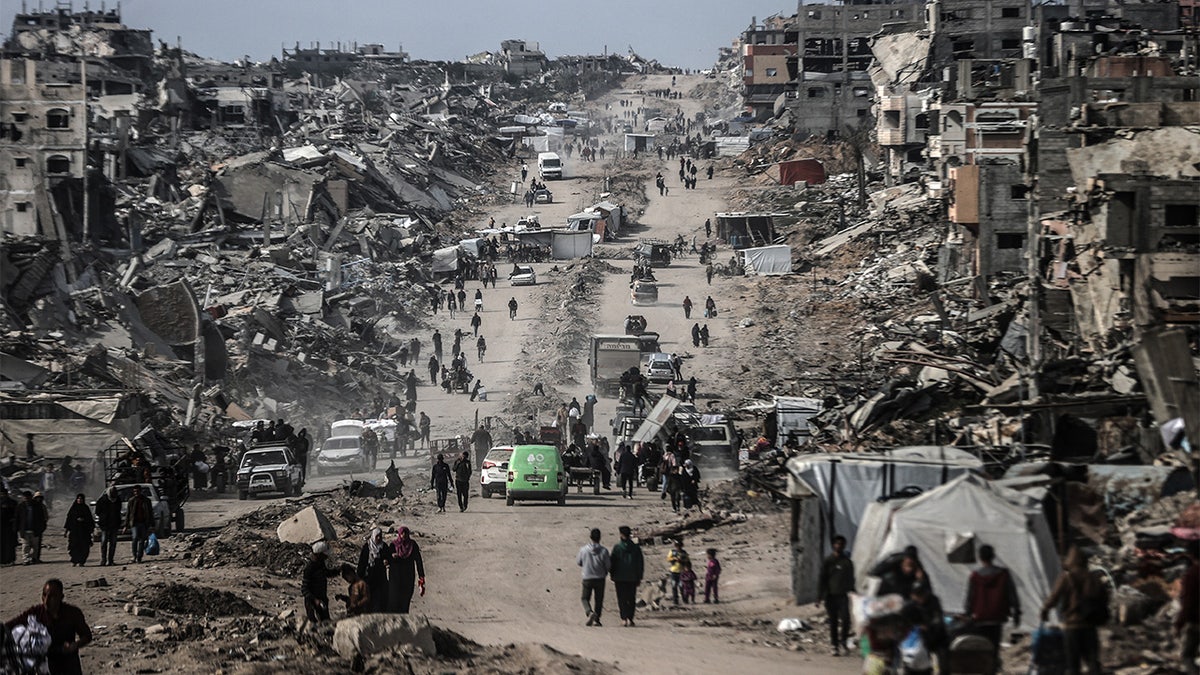
The tactical encroachment on Kostiantynivka represents a fundamental shift from maneuvering for territory to the systematic degradation of the Donetsk logistical spine. This is not merely a battle for a municipal center; it is an exercise in geographic strangulation. Kostiantynivka serves as the central node of a transit triangle connecting the remaining Ukrainian strongholds of Kramatorsk and Sloviansk to the north and the Pokrovsk front to the west. The loss of this node would effectively terminate the coherent defense of the Donbas by fragmenting the theater into isolated pockets of resistance.
The Tri-Axis Methodology of Encirclement
The current offensive operations against Kostiantynivka do not follow a linear frontal assault pattern. Instead, the tactical approach relies on a Force-Multiplier Framework designed to exploit three specific geographic vulnerabilities:
- The Canal Constraint: Utilizing the Siverskyi Donets-Donbas Canal as a natural defensive line has reached its limit of utility. As forces breach the eastern banks, the canal transforms from a protective barrier into a logistical bottleneck for the defender, forcing supply lines into narrow, predictable corridors.
- Elevated Fire Control: Seizing the high ground surrounding the city—specifically the heights near Chasiv Yar—enables "fire control." This does not require physical presence on every road; it requires the ability to strike any moving vehicle with Tube Artillery or First-Person View (FPV) drones.
- The Urban Squeeze: By pushing into the outskirts, the offensive forces transition the engagement from a war of movement to a war of attrition within industrial zones. These zones, while defensible, consume manpower at a rate that is unsustainable for a force facing a recruitment deficit.
The Logistical Cost Function of Defense
Maintaining a presence in Kostiantynivka is governed by a Resource Exhaustion Variable. For every kilometer the frontline moves closer to the city center, the cost of resupply increases exponentially. This is driven by the transition from "Green Zone" logistics (using heavy trucks and established depots) to "Grey Zone" logistics (utilizing small, unarmored vehicles or manual carry-in).
The "Last Mile" problem in this theater is defined by the density of Electronic Warfare (EW) and the persistence of loitering munitions. When the outskirts are contested, the safety of the T0504 highway—the main artery from Pokrovsk—is compromised. If the T0504 is severed or placed under consistent fire control, the defender must rely on secondary unpaved roads. During the autumn "Rasputitsa" (mud season) or heavy winter freezes, these secondary routes fail, creating a logistical vacuum.
Structural Vulnerabilities in the Defensive Line
- Fixed Fortification Decay: Concrete fortifications are highly effective against traditional shelling but vulnerable to precision glide bombs (KABs). The kinetic energy and explosive yield of 500kg to 1500kg munitions can bypass the structural integrity of standard bunkers.
- Acoustic and Thermal Signatures: Modern reconnaissance-strike complexes (RSC) use thermal imaging to identify heat blooms from generators and vehicle engines. In an urban outskirt setting, hiding these signatures is nearly impossible, leading to the rapid destruction of command-and-control (C2) hubs.
- Personnel Rotation Attrition: The most dangerous phase for a defending unit is the rotation of troops. In Kostiantynivka, the proximity of the fighting to the city’s residential edges means rotation points are within the range of standard 120mm mortars, significantly increasing "transit casualties" before troops even reach the zero-line.
The Mechanism of Fire Control and Supply Interdiction
To understand the threat to Kostiantynivka, one must analyze the Kill Chain Efficiency. The integration of Orlan-10 reconnaissance drones with Krasnopol laser-guided projectiles has reduced the "sensor-to-shooter" cycle to under three minutes.
The battle for the outskirts is essentially a battle for the H20 Highway. This road represents the primary north-south vector for the Ukrainian military. If the offensive forces establish a permanent presence within 5km of this road, the entire Sloviansk-Kramatorsk-Kostiantynivka agglomeration becomes a "fire pocket." At this range, even non-guided Grad rockets achieve a level of saturation that makes the road unusable for heavy logistics.
The Attrition Ratio Fallacy
A common analytical error is focusing on the "Exchange Ratio"—how many soldiers one side loses compared to the other. In the siege of a stronghold like Kostiantynivka, the Relative Attrition Rate is more critical. Even if the defender achieves a 3:1 kill ratio, they may still be losing the battle if their replacement rate is lower than the 1 in that ratio.
The "outskirts phase" is designed to force the defender to commit their strategic reserves. Once these reserves are fixed in the urban ruins of the outskirts, they cannot be used for counter-attacks or to plug gaps elsewhere on the front. This is the Fixing Force Principle: use a portion of your strength to pin down the entirety of the enemy's strength in a location of your choosing.
The Engineering Challenge of Urban Encroachment
Kostiantynivka is characterized by its Soviet-era industrial architecture. These structures—factories, rail yards, and reinforced basements—provide significant protection. However, they also create a Structural Entrapment Risk.
As fighting moves from the outskirts into the city proper:
- The use of thermobaric weapons (such as the TOS-1A) becomes more effective. These weapons use the confined spaces of urban outskirts to maximize the pressure wave, killing personnel even inside reinforced shelters.
- The reliance on "Micro-Forts" (individual houses converted into bunkers) leads to a fragmented defense. Once the perimeter is breached, these micro-forts can be bypassed and isolated, leading to the "Salami Slicing" of the defensive line.
Strategic Forecast and Operational Imperatives
The battle for Kostiantynivka is entering a terminal phase of peripheral attrition. The objective of the offensive is not a rapid breakthrough—which would be costly and risky—but a Mechanical Envelopment. By seizing the heights and the industrial outskirts, the offensive forces are effectively turning the city into a liability for the Ukrainian command.
The critical threshold will be the suppression of Ukrainian EW assets within the city. Once the "Electronic Umbrella" is compromised, the density of FPV strikes on the remaining supply routes will make the defense untenable.
The strategic recommendation for the defending force is a transition from Positional Defense to Mobile Delay. Holding every meter of the outskirts results in the incineration of high-value infantry units that will be required for the eventual defense of the Kramatorsk heights. The focus must shift from holding "The Line" to maintaining "The Corridor." If the ability to withdraw under fire is lost, Kostiantynivka will transition from a stronghold to a mass-casualty trap. The operational priority must be the hardening of the western supply lines and the establishment of a secondary "Fall-Back Tier" that does not rely on the urban infrastructure currently being systematically leveled by heavy aviation.
The degradation of Kostiantynivka’s outskirts is the precursor to a wider collapse of the Donetsk central front unless the logistical cost of the offensive can be made to exceed the strategic value of the node—an outcome that currently lacks the necessary data points for a high-probability forecast.