The air in Kabul usually carries the scent of diesel exhaust and baked dust. But on that Tuesday, the atmosphere changed. It thickened with the metallic tang of melting iron and something far more primal. The smell of scorched fabric and skin.
In the Puli Charkhi district, there was a place that didn't look like much from the outside. To the rest of the city, it was a drug rehabilitation center—a functional, gray necessity in a country grappling with an opium crisis that spans generations. To the men inside, it was the only wall standing between them and the gutter. It was where they went to stop shaking. It was where they went to remember their own names.
Then the sky fell.
A sudden, deafening roar tore through the quiet of the ward. This wasn’t the slow, grinding misery of withdrawal. This was immediate. Explosive. The building didn't just break; it seemed to exhale fire.
The Anatomy of a Second
Survivors describe the moment not as a sound, but as a physical weight. The pressure wave hits first, slamming the oxygen out of your lungs before the heat even registers. For those trapped in the dormitory wings, the world turned orange.
"Everything was burning," one man recounted, his voice a dry rasp. "People were burning."
He wasn't speaking in metaphors. He saw his friends, men he had shared bread and whispered struggles with just an hour prior, transformed into human torches. They stumbled through the smoke, reaching for exits that were blocked by debris or wreathed in chemical flames.
The strike targeted a facility meant for healing. Whether by error or chilling intent, the result remained the same: the most vulnerable population in the city was suddenly at the center of a furnace. These were men already fighting a war within their own nervous systems. Now, they were fighting a literal fire with bare hands and bare feet.
The Invisible Stakes of the Addiction Crisis
To understand why this strike is more than just another headline about collateral damage, you have to understand the sheer scale of what these rehab centers represent. Afghanistan is the world's primary source of opium. For decades, the flow of white powder out of the country has been documented in every major newspaper. What is less discussed is the pool of addiction that collects at the source.
Millions of Afghans are caught in the cycle of use. It is a quiet, devastating epidemic that hollows out families. The rehab centers, often underfunded and overcrowded, are the only thin line of defense. When a bomb hits a rehab center, it doesn't just destroy a building. It destroys the very idea of recovery for everyone watching.
Imagine the psychological wreckage. If you are a person struggling with substance abuse, the world is already a terrifying, judgmental place. You finally find a sanctuary. You finally commit to the grueling process of getting clean. And then, while you are at your weakest, the roof caves in.
The Chaos on the Ground
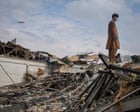
The aftermath was a desperate, uncoordinated scramble. Emergency vehicles in Kabul are often delayed by checkpoints and gridlock. By the time help arrived, the survivors had already dragged dozens of charred bodies into the courtyard.
Eyewitnesses spoke of a haunting silence that followed the initial screams. In the wake of such intense heat, the air feels thin, exhausted. People stood around the wreckage with ash-covered faces, their eyes wide and glassy. They looked like ghosts haunting their own lives.
One witness, a local resident who rushed toward the smoke instead of away from it, described seeing a man crawling through the dirt. The man wasn't asking for a doctor. He was just repeating the names of the people who had been in the bed next to him. He was performing a roll call for the dead.
The numbers reported by officials—initial counts of deaths and injuries—always feel sterile. They don't capture the smell of the smoke. They don't capture the way a plastic chair melts into a puddle that looks like a Rorschach blot.
Why the Location Mattered
The center was located in an area that has seen frequent friction. In the complex geopolitical chess match that defines modern Afghanistan, geography is destiny. But for the patients, there was no "side" to be on. They were men in pajamas. They were men whose biggest daily goal was to eat a meal without vomiting.
When we talk about "strikes," the language used is often clinical. We talk about "precision," "targets," and "objectives." But there is no precision in a fire. There is no strategic objective met by burning a man who is trying to learn how to live without a needle.
The tragedy in Kabul isn't just about the lives lost in that specific hour. It’s about the ripple effect. Every person who was considering seeking help will now think twice. Every family who hoped their son might come home sober now sees the rehab center not as a place of hope, but as a bullseye.
The Weight of the Aftermath
Night fell over the ruins of the clinic, but the heat lingered in the stones. Workers sifted through the blackened remains of personal belongings—a stray shoe, a charred notebook, a prayer mat. These are the artifacts of people who were trying to restart their lives.
The international community often looks at these events through a lens of policy and high-level blame. Who pulled the trigger? What was the intelligence? These are valid questions. But they are secondary to the reality on the dirt floor of the Puli Charkhi district.
The reality is that a group of people who had already lost almost everything to a chemical demon just lost their lives to a physical one.
The fire eventually went out. The smoke cleared, drifting over the mountains that ring the city. But for the survivors, the burning hasn't stopped. It has just moved inside. They carry the image of the orange ward and the sound of the roar with them. They are left to wonder if there is any place truly safe, or if the world is simply a series of rooms waiting to ignite.
The charred walls of the rehab center stand as a jagged silhouette against the Kabul skyline. They serve as a grim reminder that in the crossfire of conflict, the people most likely to get hit are the ones who were already down on their knees.