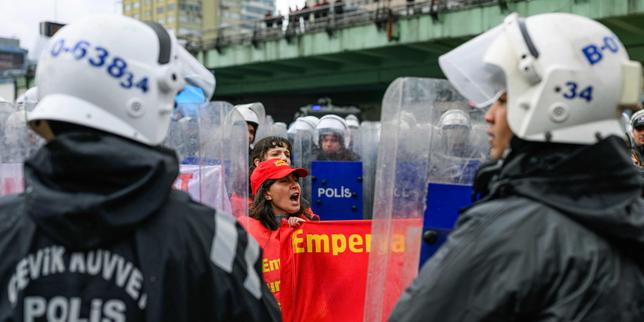
The iron gates of the Turkish justice system swung open this week for nearly 600 people. After a tense standoff on May 1st that saw Istanbul’s streets transformed into a labyrinth of police barriers and tear gas, the authorities finally blinked. They released 576 protesters who had been swept up in a massive security operation designed to keep Taksim Square empty.
If you think this is just another routine arrest-and-release cycle in Turkish politics, you’re missing the bigger picture. This wasn't just about crowd control. It was a calculated display of state power that ended in a quiet legal retreat. The reality on the ground in Istanbul shows a widening gap between what the law says and how the streets are managed.
People want to know if these releases mean the government is softening its stance. They don't. The mass detention served its purpose the moment it prevented the march. Once the symbolic date of May 1st passed, holding hundreds of students, union members, and activists became a logistical and PR headache the interior ministry didn't want to deal with.
The Battle for Taksim Square
Taksim isn't just a patch of pavement. It’s the soul of Turkish protest culture. Since the 1977 massacre where dozens died during Labor Day celebrations, the square has been a focal point for every major social movement in the country. For the current administration, controlling Taksim is about controlling the narrative of the city.
This year, the crackdown was surgical. The governor’s office didn't just ban the march; they paralyzed the city. They shut down metro stations. They blocked the Galata Bridge. They turned the historic peninsula into a ghost town. When protesters tried to break through the cordons in Sarachane, the police didn't hesitate.
I’ve seen these tactics evolve over a decade. It used to be about dispersing crowds. Now, it’s about pre-emptive immobilization. You can’t protest if you can’t even reach the neighborhood. The 576 people arrested were mostly picked up near the barricades or in side streets of Besiktas and Sisli. They weren't criminals. They were citizens trying to exercise a right that the Turkish Constitutional Court has actually upheld.
Why the Legal System Backed Down
The release of nearly 600 people in one go happens for a very specific reason. Turkish prosecutors often realize that "resistance to police" or "violating the law on demonstrations" is incredibly hard to prove in bulk when the arrests are made indiscriminately.
Most of these detainees were held in gymnasiums or on buses because the station cells were overflowing. When the paperwork started hitting the desks of the judges, the evidence was thin. Video footage often showed people simply standing near a police line. Under the current legal climate, it’s easier for the state to release them with "judicial control" — which often means they have to report to a police station weekly — than to try and build 576 individual criminal cases.
It’s a "catch and release" strategy. The goal is to intimidate, not necessarily to incarcerate long-term. You spend 48 hours in a cold room with no phone, and you might think twice about showing up next year. That’s the psychology at play here.
The Constitutional Paradox
Here is the part most international outlets gloss over. The Turkish Constitutional Court (AYM) ruled last year that the ban on May Day celebrations in Taksim Square is a violation of the right to assembly. In a healthy democracy, that would be the end of the story. The police would step aside.
But in Turkey, the local governor’s office and the Interior Ministry often treat the high court’s rulings as suggestions rather than mandates. They cite "security concerns" as a blanket excuse to override the constitution. When you see 576 people getting arrested for doing something the highest court said they could do, you’re witnessing a breakdown in the hierarchy of law.
This creates a bizarre situation for the lawyers. Groups like the Contemporary Lawyers Association (CHD) spent the last few days running between security directorates. They weren't just fighting for bail; they were arguing that the arrests shouldn't have happened in the first place because the underlying ban was illegal.
Living in a City of Barricades
For the average Istanbulite, May 1st has become a day of forced hibernation. The economic cost is staggering. Think about the thousands of shops, cafes, and tourist spots in Beyoglu that had to shut down because the government decided to park water cannons on every corner.
The security theater doesn't just affect the activists. It affects the guy trying to deliver bread and the tourist who just wants to see the Hagia Sophia. We’ve reached a point where the state is willing to halt the pulse of its largest city to prevent a few thousand people from holding banners in a specific square.
The release of the protesters is a relief for their families, but it doesn't fix the underlying tension. The city remains on edge. Every time a group of more than ten people gathers, the yellow "Police" tape comes out.
What Happens to the Released Protesters Now
Don't assume these 576 people are completely in the clear. While they aren't behind bars, many are still facing active investigations.
- Judicial Control: Many have been slapped with travel bans.
- Administrative Records: Their names are now in a database that might flag them during future job interviews or passport renewals.
- Pending Trials: Prosecutors can take months to decide whether to turn an arrest into a full indictment.
The message is clear. You’re free for now, but we’re watching.
If you want to support the legal defense of those still facing charges, keep an eye on the bulletins from the Istanbul Bar Association. They provide the most accurate updates on which detainees are still being held and what specific charges are being leveled.
The next step for anyone concerned about civil liberties in Turkey is to watch the upcoming court dates for the organizers. Those trials will determine if the Constitutional Court's word actually carries weight in 2026 or if the street-level bans have become the new permanent law of the land. Stop waiting for a shift in rhetoric and start watching the court dockets. That's where the real fight is happening.


