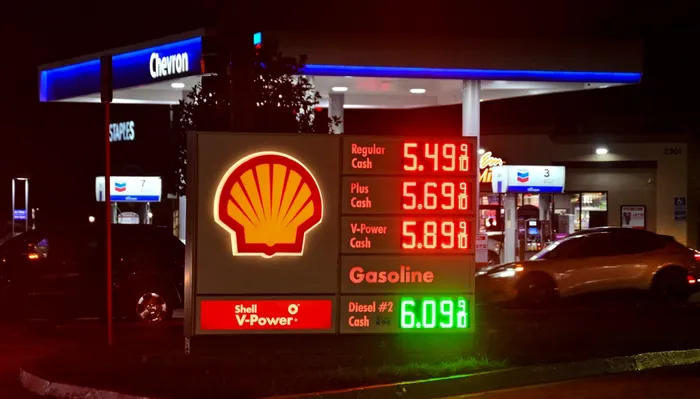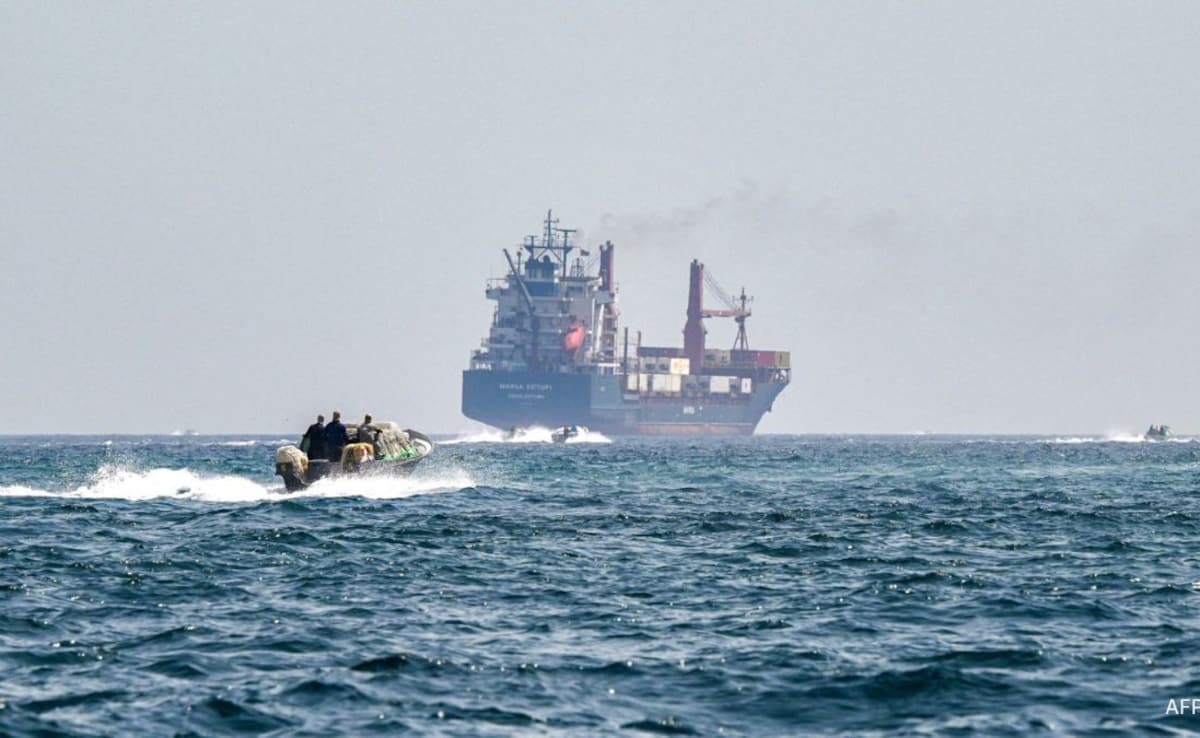
The Strait of Hormuz represents the world’s most significant chokepoint for energy transit, facilitating the movement of approximately 21 million barrels of oil per day (bpd), or roughly 21% of global petroleum liquid consumption. Goldman Sachs’ analytical framework for this corridor shifts away from binary "open or closed" scenarios, focusing instead on the escalating cost of transit and the displacement of insurance premiums. Market stability rests not on the physical absence of conflict, but on the capacity of global supply chains to absorb a shift in the cost-plus pricing of crude. Any prolonged disruption to this 21-mile-wide waterway forces a recalculation of global GDP growth, as the marginal cost of the last barrel of oil determines the price for the entire market.
The Mechanics of Chokepoint Vulnerability
Geopolitical risk in the Strait of Hormuz is functionally a tax on global trade. The vulnerability of the passage is defined by its bathymetry and the concentration of shipping lanes. Outbound and inbound lanes are each only two miles wide, separated by a two-mile buffer zone. This physical constraint creates a "bottleneck coefficient" where even minor kinetic interference—such as harassment of tankers or the deployment of sea mines—exponentially increases the War Risk Premium (WRP) charged by underwriters at Lloyd’s of London.
The economic impact of a disruption follows a specific decay function. Initial friction manifests as a spike in shipping insurance, followed by increased freight rates as shipowners demand "hardship" compensation. If the disruption persists, the mechanism shifts from price-based friction to physical supply shortages. Goldman Sachs identifies that for every million barrels of oil per day removed from the market without a corresponding release from Strategic Petroleum Reserves (SPR), the price of Brent crude carries an upside risk of $5 to $20 per barrel, depending on the prevailing inventory-to-use ratios.
The Three Pillars of Supply Chain Resilience
Evaluating the true threat to global energy requires disaggregating the supply side into three distinct operational buffers. These pillars determine how long the global economy can sustain a partial or total closure before entering a recessionary cycle.
- Spare Production Capacity (OPEC+): The primary defense against a Hormuz disruption is the volume of oil that can be produced outside the Persian Gulf. However, the majority of global spare capacity—held largely by Saudi Arabia and the UAE—is itself located behind the chokepoint. This creates a circular dependency: spare capacity is only effective if it can bypass the Strait.
- Bypass Infrastructure: The East-West Pipeline (Petroline) in Saudi Arabia and the Abu Dhabi Crude Oil Pipeline (ADCOP) provide a combined theoretical bypass capacity of roughly 6.5 million bpd. While significant, this covers less than 35% of the total volume typically transiting the Strait. The operational limitation here is not just pipeline diameter, but the availability of loading terminals on the Red Sea and the Gulf of Oman.
- Strategic Petroleum Reserves (SPR): National reserves serve as the final liquidity provider. The effectiveness of an SPR release is governed by the "drawdown rate"—the maximum speed at which oil can be pumped into the commercial system. If a Hormuz closure exceeds the 90-day window typical of strategic stocks, the global economy faces a hard supply floor.
The Asymmetry of Kinetic Interference
Conventional analysis often focuses on a total blockade, yet the more probable and damaging scenario is "gray zone" interference. This involves calibrated escalations that stop short of full-scale war but make commercial shipping uninsurable.
The cost function of maritime security changes when state actors utilize asymmetric tools. Fast attack craft, unmanned aerial vehicles (UAVs), and limpet mines require minimal capital expenditure but force high-cost defensive responses from naval coalitions. This asymmetry ensures that the "cost to disrupt" is significantly lower than the "cost to secure." For the consultant and strategist, the metric to watch is not just the price of Brent, but the "Crude-to-Freight Spread." When freight costs rise faster than the commodity price, it indicates that the market is pricing in structural transit risk rather than simple supply-demand imbalances.
Regional Reorientation of Trade Flows
A structural shift is occurring in how Asian economies—the primary destination for Hormuz-transiting crude—manage their energy security. China, India, and Japan receive approximately 75% of the oil flowing through the Strait. Their strategic response has moved from passive acceptance to active diversification.
China’s investment in the China-Pakistan Economic Corridor (CPEC) and its pursuit of land-based pipelines from Russia and Central Asia serve to lower its "Hormuz Dependency Ratio." Similarly, the development of the International North-South Transport Corridor (INSTC) aims to create a multi-modal route that bypasses traditional maritime chokepoints. These projects are not merely infrastructure; they are a long-term hedge against the volatility of the Strait.
The second limitation of these bypasses is their inability to handle the sheer volume of VLCCs (Very Large Crude Carriers). A single VLCC carries 2 million barrels of oil; replacing a daily flow of 21 million barrels would require a pipeline network and trucking fleet of impossible proportions. Consequently, the world remains tethered to the maritime reality of the Persian Gulf.
The Liquefied Natural Gas (LNG) Variable
While oil dominates the headlines, the Strait of Hormuz is the sole exit point for nearly 20% of global LNG trade, primarily from Qatar. Unlike oil, LNG has a much less flexible global supply chain. There is no "Strategic LNG Reserve" comparable to the SPR.
The physics of LNG require specialized liquefaction terminals and regasification facilities. If Qatari LNG is blocked, the European and Asian power sectors face an immediate energy deficit that cannot be bridged by redirecting tankers from other regions in the short term. The price of JKM (Japan Korea Marker) and TTF (Title Transfer Facility) gas futures would likely decouple from oil, reaching heights that force industrial curtailment in high-energy manufacturing sectors.
Quantifying the Probability of Total Closure
A total, sustained closure of the Strait is a "tail risk"—low probability but catastrophic impact. The deterrent against a total closure is the economic self-interest of the regional actors. A closure would effectively zero-out the GDP of most Gulf nations, as they lack the diversified revenue streams to survive a complete halt in exports.
Instead, the baseline expectation should be "Calibrated Friction." This involves:
- Periodic seizure of tankers on legal pretexts.
- GPS jamming and electronic warfare affecting navigation.
- Increased "shadow fleet" activity, where non-insured vessels take higher risks, potentially leading to environmental disasters that further impede the shipping lanes.
This environment favors companies with high "Supply Chain Visibility" and those that have hedged their energy inputs via long-term, fixed-price contracts or vertical integration into non-Gulf upstream assets.
The Strategic Playbook for Market Participants
The immediate tactical requirement for energy-intensive enterprises is the implementation of a "Chokepoint Stress Test." This involves modeling the impact of a $120 Brent environment sustained for six months, coupled with a 30% increase in logistics costs.
Strategic positioning necessitates a pivot toward the "Atlantic Basin" crude (Brent, WTI, Guyana) to reduce exposure to Persian Gulf volatility. For investors, the play is not just long energy, but long maritime security and logistics providers that specialize in high-risk transit. The divergence between "paper oil" (futures) and "physical oil" (spot) will widen during periods of friction; capturing this spread requires a deep understanding of the physical limitations of loading and unloading infrastructure outside the Hormuz zone.
The ultimate stabilizer is not a military presence, but the acceleration of global energy transition. Every megawatt of renewable energy or nuclear power added to the grid in Europe and Asia marginally reduces the geopolitical leverage held over the Strait of Hormuz. Until that transition reaches a tipping point, the global economy remains a hostage to the narrow, shallow waters of the Persian Gulf.
Integrate a dual-track hedging strategy: utilize out-of-the-money (OTM) call options on Brent crude to protect against price spikes while simultaneously securing medium-term charters for VLCCs outside the Gulf region to ensure physical delivery capability.