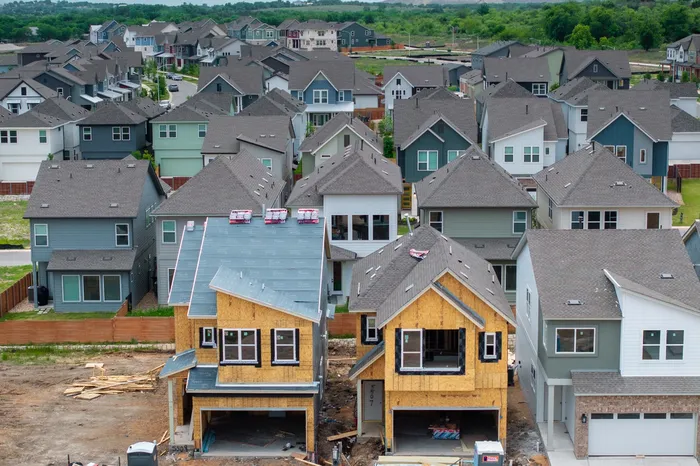
The American housing market is stuck in a deep freeze. You've seen the numbers. Inventory is sitting at historic lows while mortgage rates hover at levels that make 2021 look like a fantasy. Most homeowners are "locked in" by sub-3% rates they’d be crazy to trade for a 7% loan. Now, some policymakers and analysts are floating a radical plan to thaw the market by letting buyers "port" or assume these ultra-low interest rates. It sounds like a dream. It's actually a recipe for a financial disaster that could break the back of the banking system.
The core problem is simple. Nobody wants to move because moving costs too much. We've created a nation of accidental landlords and people who've decided to renovate their basements instead of buying a bigger house. The proposed "solution" involves allowing a seller to transfer their existing mortgage rate to a new buyer or carry that rate over to a new property. It aims to bridge the gap between what people can afford and what houses actually cost.
But here is the reality. This isn't a fix. It's a massive wealth transfer that ignores how risk is priced in the modern economy.
The Problem with Assuming Mortgages
Let's look at why this idea is gaining traction. Right now, if you want to buy a house, you're likely looking at a monthly payment nearly double what it would've been three years ago for the same property. Assumable mortgages—where a buyer takes over the seller's loan—exist for FHA and VA loans, but they’re rare in the conventional world where most of the market lives.
Proponents argue that making all loans portable would instantly create liquidity. They think it would convince the millions of people sitting on 2.5% rates to finally list their homes. They're wrong. If you let everyone keep their low rates, you aren't fixing the supply problem. You're just subsidizing demand in an already overvalued market.
Banks hate this. Imagine you're a bank holding a loan that pays you 3%. You're currently paying out 4.5% or 5% on high-yield savings accounts to keep deposits in the door. You're losing money on that mortgage every single day. The only thing saving these banks is the hope that the homeowner will eventually sell, allowing the bank to get their money back and lend it out again at 7%. If you force banks to let that 3% loan live on for another thirty years under a new owner, you're essentially telling the bank to stay insolvent.
Why Porting Rates Won't Lower Prices
Home prices stay high because supply is low. That's Economics 101. If you introduce rate portability, you might see more listings, but you'll also see even more aggressive bidding. Sellers will realize their 3% mortgage is an asset. They won't just sell the house. They'll sell the "right" to that low rate.
You'll see two prices for every home. There's the price of the sticks and bricks, and then there's the premium for the cheap debt. This happened in the late 70s and early 80s when interest rates spiked. People didn't get cheaper houses. They just paid "points" or higher premiums to get into creative financing deals.
It's a shell game. You end up with a housing market that functions more like a pawn shop than a transparent exchange of real estate.
The Hidden Risk to the Secondary Market
We need to talk about the plumbing of the financial system. Most mortgages aren't kept by your local bank. They're bundled into Mortgage-Backed Securities (MBS) and sold to investors like pension funds and insurance companies. These investors bought these bonds with the expectation that most people would refinance or move within seven to ten years. That's the "prepayment risk" they calculated.
If you suddenly change the rules and let these loans last forever via portability, those bonds become toxic. Their value would plummet. We're talking about trillions of dollars in the global financial system. If the value of MBS drops significantly, the ripple effect would hit everything from your 401(k) to the stability of regional banks. We saw what happened with Silicon Valley Bank when their bond portfolio lost value. This plan would do that on a national scale.
What a Real Recovery Looks Like
Stop looking for a magic wand to fix interest rates. The market is "frozen" because we have a massive mismatch between what sellers think their homes are worth and what buyers can actually pay. Historically, there are only two ways to fix this. Either incomes have to rise dramatically, or home prices have to come down.
Artificially propping up the market with portable rates just kicks the can down the road. It prevents the price correction that needs to happen for the next generation of buyers to enter the market. Honestly, it's a bit selfish. It protects the equity of current homeowners at the expense of everyone else.
Real solutions involve building. We have a shortage of millions of units. We need to strip away the local zoning laws that make it illegal to build townhomes or apartments in most neighborhoods. We need to lower the cost of construction. These are boring, difficult, long-term fixes. They aren't as sexy as a "plan to revive the market" via financial engineering, but they're the only things that actually work.
Practical Steps for Today's Market
If you're a buyer right now, don't wait for a government miracle. It’s not coming. Instead of hoping for a portable rate, look for "hidden" inventory. This includes:
- Subject-To Deals: This is where you buy a home and take over the payments without a formal assumption. It's legally complex and carries risk, but it's one of the few ways to access low rates today.
- Seller Financing: Some sellers who own their homes outright are willing to act as the bank. They get a steady monthly income, and you get a rate that’s often better than what a bank offers.
- New Construction Incentives: Builders are desperate. Many are offering "rate buy-downs" where they pay upfront to lower your mortgage rate for the first few years. This is a much safer way to get a lower payment than waiting for a policy shift that might break the economy.
The US property market isn't going to thaw overnight. It’s a slow process of adjustment. Trying to force a thaw with risky financial schemes is how we ended up in the 2008 mess. We shouldn't repeat those mistakes. Focus on the fundamentals. Look at the local demand. Don't buy more house than you can afford at today's rates, because those 3% days are gone, and they aren't coming back through the back door.
The best move you can make is to ignore the noise about "troubling plans" and "market revivals." Manage your own debt. Save for a larger down payment. Wait for the market to realize that 2021 was the outlier, not the new normal.