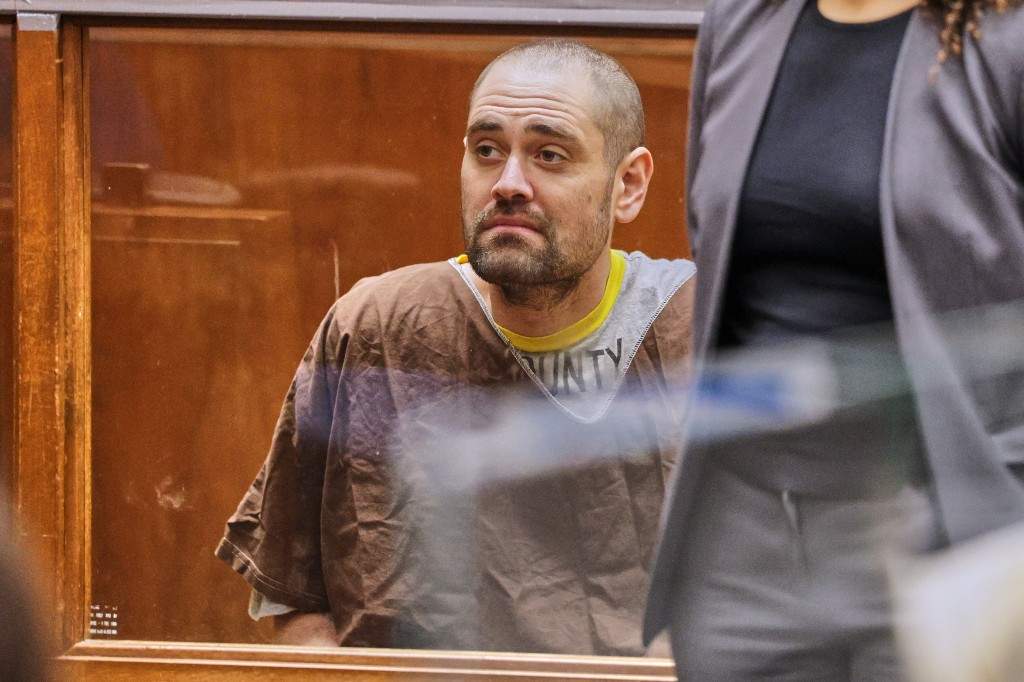
The trial of Julian Dunkerton, the co-founder and face of the fashion giant Superdry, has moved beyond simple legal proceedings into a high-stakes examination of power, memory, and the blurred lines of private conduct in public life. Dunkerton stands accused of rape and sexual assault following an incident in 2016 at his country estate. He denies the charges, insisting that every interaction was consensual. For a man who built a global empire on "cool" and rugged authenticity, the clinical setting of a courtroom represents the ultimate threat to a carefully curated legacy. This isn't just a criminal case. It is a reckoning for a corporate titan whose identity is inseparable from his brand.
The prosecution’s argument rests on the testimony of a woman who claims she was subjected to a violent encounter against her will. The defense, conversely, has painted a picture of a mutual, albeit brief, attraction between two adults. In the witness box, Dunkerton has had to recount the minutiae of a night nearly a decade ago, navigating the heavy machinery of the British justice system where every pause or inflection is scrutinized for weakness.
The Architecture of Consent in the Glare of Fame
When a public figure enters a courtroom, the power dynamics that served them in the boardroom become liabilities. Dunkerton built Superdry from a market stall into a FTSE 250 mainstay. He is used to being the final word. However, the law does not recognize corporate seniority. The central tension in this trial lies in the reconstruction of a single night at Dowdeswell Court, Dunkerton's Grade II-listed mansion. The physical environment—a sprawling, opulent estate—serves as the backdrop for a dispute over what happened behind closed doors.
Consent is rarely a straightforward legal checkbox in cases involving historical allegations. It is a shifting, subjective experience that juries must deconstruct years after the fact. Dunkerton told the court that the complainant’s behavior was "consistent" throughout the evening, suggesting a clear path of mutual intent. The prosecution suggests otherwise, pointing to the alleged physical distress of the complainant as evidence that the "consensual" narrative is a convenient fiction.
Witnesses have described a social atmosphere fueled by wealth and high-end hospitality. In these settings, the lines between professional networking and private socializing often bleed into one another. The defense strategy has focused heavily on the idea that the complainant was an active participant, a common tactic aimed at creating reasonable doubt by highlighting a "natural" progression of events.
Brand Integrity and the Liability of the Individual
For Superdry, the timing could not be more precarious. The company has struggled with a plummeting share price and a desperate restructuring plan to avoid insolvency. Having its founder embroiled in a rape trial adds a layer of reputational risk that no marketing budget can fix. Investors generally loathe uncertainty. When that uncertainty involves the moral character of a majority shareholder and former CEO, the damage can be permanent.
The fashion industry has seen its share of disgraced leaders, but Dunkerton is different. He is the "vibe" of the company. His personal taste dictated the heavy stitching and pseudo-Japanese graphics that defined British high-street fashion for a decade. If the face of the brand is convicted, the brand itself faces a symbolic death. Even an acquittal often leaves a permanent stain in the court of public opinion, where the burden of proof is significantly lower than in a criminal court.
Legal experts watching the case note the defense’s reliance on the "ordinary" nature of the encounter. By framing the night as a standard, if regrettable, social interaction, they aim to humanize a billionaire. They want the jury to see not a predator, but a man who misread—or correctly read—social cues in a way that any person might. It is a gamble.
The Weight of Historical Allegations
The 2016 timeline is a crucial factor. Why now? The prosecution argues that the trauma of the event led to a delayed report, a phenomenon well-documented in sexual assault cases. The defense uses the delay to poke holes in the reliability of memory. They suggest that the passage of time has allowed a "re-imagining" of the night’s events.
Courtroom observers have noted the intense focus on the complainant’s movements within the house. Where was she standing? Who else was in the room? These granular details are designed to test the consistency of her story. Dunkerton, for his part, has remained remarkably composed under cross-examination. He speaks with the cadence of a man used to being listened to, a trait that can either project innocence or arrogance depending on the juror’s perspective.
The evidence presented includes forensic analysis of phone records and testimony from other guests at the house that night. These "peripheral" witnesses are often the deciding factor. They provide the context that the two primary parties cannot. If a witness saw the complainant looking distressed shortly after the alleged incident, the defense's narrative of a "pleasant evening" falls apart. If, however, the witness saw them laughing together, the prosecution’s case loses its teeth.
The Psychology of the High Profile Defendant
There is a specific psychological pressure that comes with defending one's character in such a public forum. Dunkerton is not just fighting for his freedom; he is fighting for the right to exist in the public sphere. A conviction would trigger a total collapse of his remaining influence. The prosecution has attempted to highlight a sense of "entitlement" that often accompanies extreme wealth, suggesting that Dunkerton believed his status exempted him from the need for explicit consent.
Dunkerton’s rebuttal has been a flat rejection of this characterization. He has portrayed himself as a man who valued the woman’s company and acted only when he felt the feeling was returned. This is the "he said, she said" deadlock that defines so many sexual assault trials. Without physical evidence or a third-party recording, the jury is tasked with judging the "soul" of the testimony. Which version of the truth feels more grounded in the reality of human behavior?
The trial has also shone a light on the culture of the wealthy elite in the Cotswolds. It is a world of private parties and closed circles where the rules of the outside world often feel distant. The prosecution is banking on the jury’s ability to see through this veneer of privilege to the human cost underneath.
The Jury’s Impossible Task
Twelve citizens must now decide which of two diametrically opposed stories is true. There is no middle ground in a rape trial. Either the act was consensual, or it was a crime. The nuances of "gray area" consent are legally irrelevant here; the charge is binary.
Dunkerton’s defense team has been methodical. They have avoided flashy theatrics in favor of a slow, grinding deconstruction of the complainant’s timeline. They are looking for the one crack, the one contradiction that makes the entire accusation feel unreliable. This is the standard "scorched earth" defense required in high-profile sexual assault cases. It is brutal, it is personal, and it is the only way to secure an acquittal when the stakes are this high.
The prosecution’s closing arguments focused on the bravery of the complainant. They framed the act of coming forward against a man of Dunkerton’s stature as a David vs. Goliath struggle. This narrative appeals to the jury’s sense of fairness and justice. They want the jury to feel that a "not guilty" verdict is a betrayal of a victim who has already suffered for years in silence.
The Intersection of Law and Legacy
Regardless of the verdict, the trial has already changed the trajectory of Julian Dunkerton’s life. The details aired in court—the drinking, the late-night wandering of a massive estate, the specific interactions with a much younger woman—are now part of the public record. For a man who obsessed over the "authenticity" of vintage-inspired clothing, these revelations feel like a different kind of transparency.
The legal system is designed to be a cold, objective machine, but it is operated by humans with biases and emotions. The jurors will take their own life experiences into the deliberation room. They will think about their own daughters, their own bosses, and their own nights out. They will weigh Dunkerton's words against the complainant's tears.
Superdry’s board of directors is undoubtedly watching from the sidelines with bated breath. A founder is a symbol, and when a symbol is dragged through a rape trial, the contagion effect is real. The company’s "brand health" is now tied to a jury’s decision in an ancient court building far removed from the neon lights of a retail store.
The trial continues to peel back the layers of a life lived at the top of the social hierarchy. It reveals the fragility of reputation and the absolute power of a single allegation to halt a life in its tracks. Dunkerton maintains his innocence with the same fervor he used to build his company. The woman who accused him maintains her truth with the same persistence. Only one of them can walk away with their story intact.
The verdict will not just decide Dunkerton’s future; it will serve as a barometer for how society handles accusations against the powerful in an era where the benefit of the doubt is no longer a given.