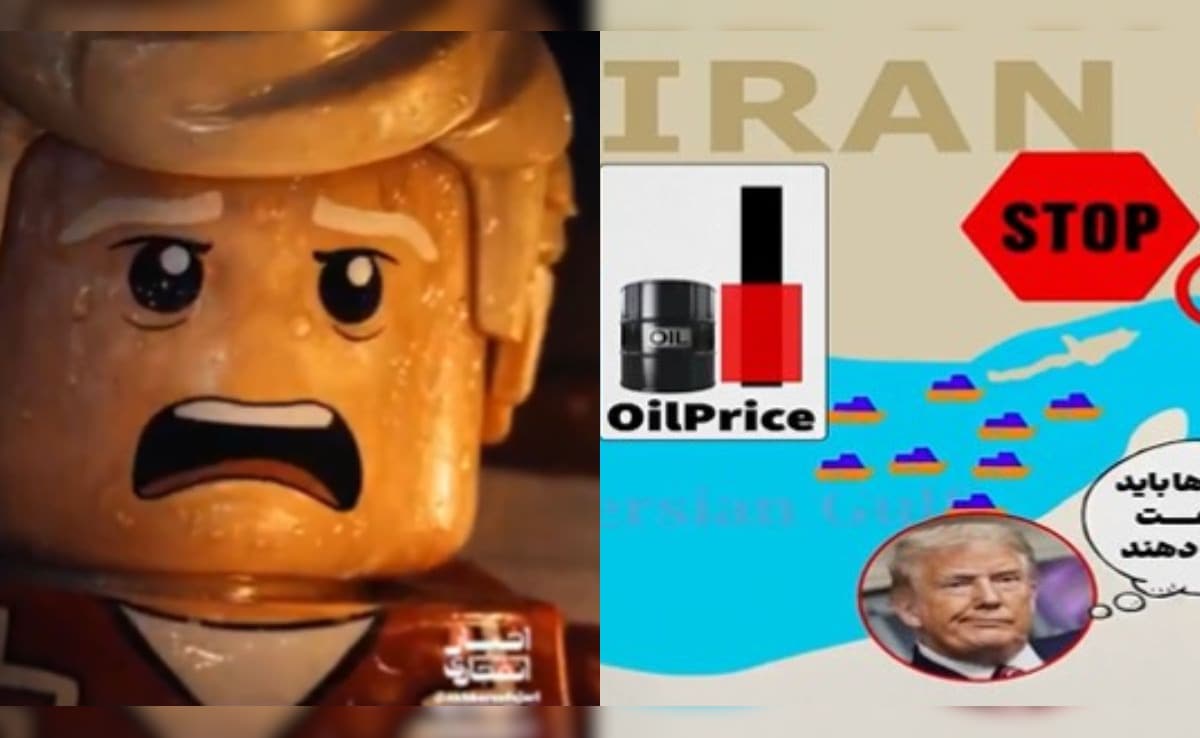
Western analysts are obsessed with shiny objects. They see a high-production animated video of a drone over a golf course or a deep-fried meme mocking a head of state and immediately scream about "dominance." They mistake activity for achievement. They confuse engagement with influence.
The prevailing narrative is that Iran has cracked the code of the social media war, outmaneuvering the US and Israel with a blend of niche references and "relatable" content. It is a lazy consensus built by people who look at Twitter metrics but don't understand the mechanics of power.
Iran isn't winning the social media war. It is shouting into an echo chamber it built for itself, spending millions on digital assets that have a shorter shelf life than a gallon of milk. If you want to understand how a nation-state loses its influence while gaining followers, look at the current Tehran playbook.
The Engagement Trap
Most "insider" reports focus on the volume of content. They point to the thousands of accounts, the sophisticated animation, and the way niche cultural references are used to bypass filters.
I have spent a decade dissecting state-sponsored influence operations. I have seen governments dump massive budgets into "viral" campaigns that look impressive on a PowerPoint slide but do absolutely nothing to shift the geopolitical needle. This is exactly what we are seeing here.
High engagement does not equal persuasion. In the world of psychological operations (PSYOP), there is a massive difference between affective resonance—making people feel something—and behavioral modification—making people do something.
Iran’s content is designed for the converted. It’s digital red meat for an existing base. It creates a feedback loop where the creators feel powerful because their numbers are up, while the actual target audience—the undecided, the skeptics, the power brokers—simply scrolls past or treats the content as a curiosity.
The Myth of the Niche Reference
The "sophistication" of using Western memes is largely a myth. Analysts love to point out when a foreign actor uses a specific template from Reddit or 4chan as if it's a sign of deep cultural infiltration.
It isn't. It's the digital equivalent of "Hello, fellow kids."
When a state actor uses a meme, the meme dies. Authenticity is the currency of the internet, and state-sponsored content is, by definition, inauthentic. The moment a user realizes a "dank meme" was rendered in a government-funded studio in Tehran, the psychological spell breaks.
The US and Israel aren't "losing" because they can't make memes; they are operating under the constraint of being status-quo powers. They have more to lose by being "cringe." Iran, playing the role of the disruptor, can throw everything at the wall. But throwing a lot of paint doesn't make you an artist; it just makes a mess.
Strategic Narcissism and the Failure to Persuade
If you want to influence an enemy, you have to speak their language, not just use their slang. You have to understand their values and subvert them.
Iran’s digital output is deeply self-referential. It relies on a specific revolutionary aesthetic that feels alien to anyone outside that ideological bubble. Even when they attempt to mimic Western styles, the underlying messaging remains rigid and uncompromising.
Take the animated "assassination" videos. They are technically impressive. They are also strategically illiterate. These videos don't scare the targets; they provide the targets with a perfect justification for more defense spending and more aggressive policies. They don't peel away the target's public support; they solidify it through the "rally 'round the flag" effect.
This is Strategic Narcissism: the tendency to see the world only through the lens of one’s own intentions and desires, ignoring the agency and reactions of others. Tehran is making content that makes Tehran feel good. That is the opposite of effective warfare.
The High Cost of Digital Chaff
Let’s talk about the resources. Rendering high-quality 3D animation isn't cheap. Maintaining thousands of bot accounts and "influencers" requires a massive, constant investment in infrastructure and human capital.
What is the ROI?
In the corporate world, if a marketing department spent 10% of the national budget on a campaign that failed to increase market share or change brand perception, heads would roll. In the world of intelligence and defense, we give it a scary name like "Hybrid Warfare" and assume it's working because it's happening.
We need to stop validating these operations by acting like they are effective. Every time a major news outlet runs a headline about how "scary" or "sophisticated" these videos are, they are doing the IRGC’s PR for them. They are providing the only metric of success these campaigns actually achieve: visibility.
The Israel-US Response Dilemma
The common critique is that the US and Israel are "clunky" and "bureaucratic" in their digital response.
Good.
Democracies should be bad at state-sponsored shitposting. The moment a democratic government masters the art of the deceptive, niche-reference meme, it has destroyed its own greatest asset: institutional credibility.
Israel’s digital strategy often leans into directness. It’s dry. It’s factual. It’s often boring. But in a digital environment flooded with "animated videos and niche references," the most disruptive thing you can be is boringly honest.
The "War on Social Media" is a race to the bottom. If you win by becoming the best liar, you still lose because you’ve destroyed the environment you’re trying to lead.
The Wrong Question
People ask: "How can we stop Iran from dominating the social media war?"
The question is flawed. You don't stop it. You ignore it. You treat it as the noise it is.
By obsessing over every meme and every bot network, Western intelligence agencies are allowing the adversary to dictate the tempo of the engagement. We are chasing ghosts in the machine while the real geopolitical moves—the ones involving kinetic force, economic treaties, and hard diplomacy—happen elsewhere.
Stop looking at the view counts. Start looking at the outcomes.
Has Iran’s social media "dominance" led to a lifting of sanctions? Has it slowed the Abraham Accords? Has it convinced the average American or Israeli that the Iranian government's worldview is the correct one?
No. It has done the opposite. It has turned the Iranian state into a digital caricature—loud, flashy, and ultimately, ignorable.
Stop Giving Them Credit for Your Own Anxiety
We are currently in a cycle of "cyber-orientalism," where we attribute mystical, advanced powers to adversaries simply because they use technology we recognize in ways we find distasteful.
An animated drone video is just a cartoon. A meme is just a picture with text. Neither of these things can sink a carrier or protect a nuclear facility.
The real danger isn't that Iran is "winning" a social media war. The danger is that we are so easily distracted by their digital theater that we forget how to play the real game.
The next time you see a "sophisticated" piece of Iranian propaganda, don't analyze its cultural impact. Don't marvel at its use of niche references.
Look at it for what it is: a desperate, expensive attempt to look relevant in a world that has already tuned them out.
Log off. The war isn't happening on your timeline. It's happening in the real world, and on that front, memes don't mean a thing.
Stop treating their digital noise like it's a signal.