The coffee is always lukewarm in terminal two. It sits in a paper cup that crinkles too easily under tired fingers, tasting faintly of burnt cardboard and anxiety.
At 8:14 on a Tuesday morning in late summer, Elena watches the departures board. She is flying to Glasgow to hold her newborn grandson for the first time, a trip delayed by a bout of pneumonia and then a sudden, frantic scramble for time off. She has packed a hand-knitted woolen blanket that smells faintly of lavender. It occupies half her carry-on.
Then, the destination rows flicker.
One by one, the bright white letters dissolve into blank spaces, like stars blinking out in a sudden coastal fog. A soft, collective groan ripples through the sea of molded plastic chairs. Somewhere near gate twenty-four, a toddler begins to wryly cry, picking up on the sharp, metallic tang of stress thickening the air.
Flight status: Delayed. Then: Pending. Finally: Cancelled.
Elena does not know what an air traffic control technical glitch looks like. To her, it is not a string of diagnostic errors on a server farm in Swanwick or a corrupted database query in a control room miles away. To her, it is a wall. It is a sudden, invisible ceiling dropped over the sky, freezing thousands of lives in mid-sentence.
We talk about aviation as an exercise in aerodynamics and fuel burn, but it is actually an exercise in choreography. Every single day, thousands of silver tubes filled with breathing, dreaming human beings lift off the tarmac and thread themselves through corridors of air three miles wide and thirty thousand feet high. We trust this system completely. We step into a metal cylinder, hand our coats to strangers, and fall asleep while hurtling through the stratosphere at five hundred miles per hour. We do this because we assume an invisible hand is guiding us, watching over us, making sure the math works.
When that invisible hand cramps, everything stops.
Consider what happens next in the quiet, fluorescent-lit bowels of the National Air Traffic Services operations center. (Note: To visualize this, imagine a dimly lit trading floor crossed with a NASA command room, where hundreds of controllers stare into glowing scopes.) Suddenly, the automated flight plan processing system stops ingesting data. Instead of streaming flight paths, the screens fill with warning flags.
The human mind is magnificent, but it cannot track three thousand metal tubes hurtling through the clouds at terminal velocity using manual tally sheets. Computers do that. When the computers go blind, the humans must step in the old way. They must slow the cadence down. They must widen the safety buffers from three miles to twenty, from five minutes to fifteen.
The math of safety demands stillness.
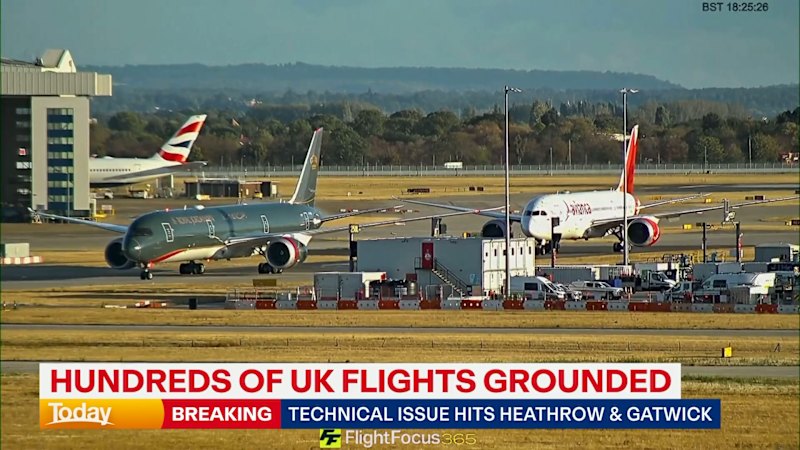
And so, across the United Kingdom, from Heathrow to Edinburgh, the planes stay put.
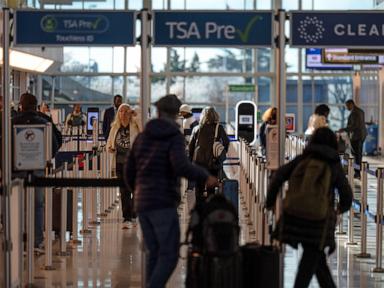
Down on the concourse, Elena joins the queue. It is a snaking, restless beast of rolling suitcases and crumpled boarding passes. People are checking their phones with frantic, thumb-swiping desperation, refreshing airline apps that only offer generic apologies. We are experiencing technical difficulties.
There is a peculiar loneliness to being stranded in an airport. You are nowhere. You are betwixt and between. You have left your kitchen, but you have not arrived at your destination. You are suspended in a purgatory of polished linoleum and overpriced sandwiches.
A business traveler in a charcoal suit stands near the front of the line, his jaw clenched so tightly a muscle jumps beneath his ear. He is missing a pitch meeting in Manchester that took three weeks to secure. Behind him, a young couple returning from a delayed honeymoon are doing rapid mental arithmetic about how much money they have left for hotel rooms and train tickets.
None of them are angry at the person behind the desk. That is the strange grace of these disasters. The gate agent, a young woman with a plastic name tag reading Chloe and dark circles under her eyes, is taking the brunt of an anger that has nowhere else to go. Her voice is hoarse. She has repeated the same three sentences seventy-four times in two hours.
"I am so sorry," she says to a man demanding an immediate rebooking. "There are no seats until Thursday. The entire airspace is throttled."
He sighs. The anger leaks out of him, leaving only exhaustion. He steps aside, dragging his bag toward the window, watching empty runways stretch out into the grey afternoon haze.
We forget how fragile our modern choreography really is. We build towering systems of digital complexity, layering software upon software, until we live atop a mountain of abstraction. We tap a screen, and a car arrives. We swipe a card, and food appears at our door. We book a flight, and continents shrink to a three-hour nap.
We treat these miracles as utilities, like running water or electricity. We only notice them when the pipes burst.
By mid-afternoon, engineers have isolated the corrupted data packet. They patch the system. They reboot the servers. The green lights blink back onto the consoles in Swanwick. The controllers let out a collective breath, leaning back in their ergonomic chairs, wiping sweat from their palms.
The fix takes hours. The recovery takes days.
Because when you stop a symphony halfway through, you cannot simply press play. Every plane is in the wrong city. Every crew is out of position, bumping up against legal maximum hours for flight decks. The dominoes have fallen, and someone has to stand them back up, one by one, by hand.
Elena finally gets her rebooked ticket. It is for tomorrow morning.
She leaves the terminal, stepping out into the chill British air, and finds a small, quiet hotel near the perimeter fence. From her window, she can see the runway lights blinking through the gathering dusk. Every few minutes, a jet climbs into the dark, roaring with sudden, defiant power.
She sits on the edge of the bed and pulls the hand-knitted woolen blanket from her bag. She runs her fingers over the soft, purple yarn, thinking of the tiny toes waiting for her in Glasgow.
The sky is open again. The invisible thread has been mended. But as she turns off the bedside lamp, she carries the quiet, lingering reminder of how close we always are to the edge, and how much faith we place in the silent watchers who keep the sky from falling.