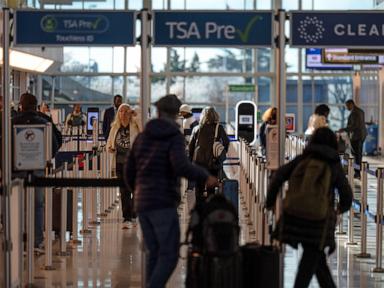
For a quarter of a century, the terminal glass has served as a one-way mirror.
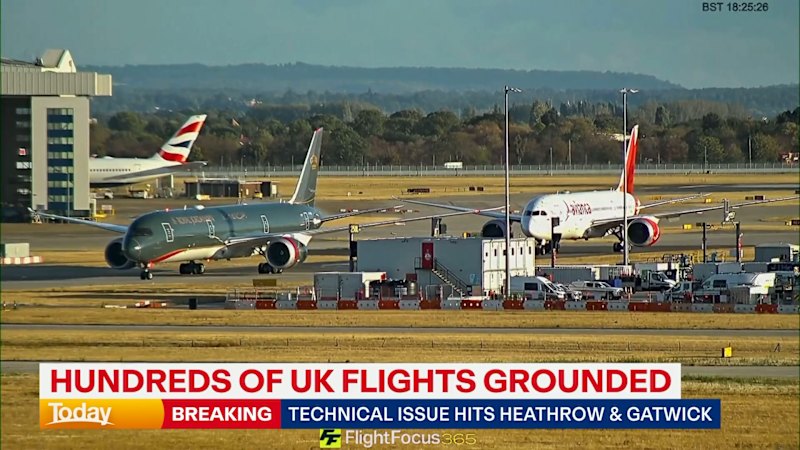
On one side stood the travelers: shoes off, belts unbuckled, laptops hoisted from bags in a frantic ritual of plastic bins and hurried obedience. On the other side stood the left-behinds. Grandparents clutching paper coffee cups, children pressing their palms against smudged windows, partners whispering promises they both knew were fragile. When the doors hissed shut and the boarding pass beeped its final validation, the line was drawn. Concrete. Absolute. Permanent. Recently making news recently: Stop Blaming Software Glitches For The British Air Traffic Control Collapse.
September 11 changed the geometry of public space. It traded the warm, chaotic intimacy of the greeting party for the cold geometry of the secure perimeter. We accepted the trade because fear demanded a price, and we paid it in the currency of separation.
Until now. Further details into this topic are covered by Lonely Planet.
The Architecture of Absence
Consider what happens when a terminal gate becomes a fortress.
For twenty-five years, airports functioned as modern border crossings disguised as transit hubs. You needed a golden ticket just to walk someone to the jetway or meet them at the arrival ramp. The logic was defensive. Keep the crowd thin. Keep the unknowns out. Minimize the variables in a system terrified of the unknown.
Yet, something quiet and irreplaceable bled out of the architecture.
Airports used to be stages for human drama. People proposed marriages by baggage claim. Soldiers returning home dropped their duffels into waiting arms while strangers wept near the concession stands. By locking down the gates, security architects engineered a sanitized efficiency, but they also severed the emotional tether between the journey and the home left behind.
Travel became solitary. Mechanical. Sterile.
Now, the Transportation Security Administration is quietly reversing course. Programs allowing non-ticketed visitors back past security checkpoints—once treated as administrative fantasies or dangerous vulnerabilities—are expanding across select airports nationwide. Programs like the one at Seattle-Tacoma International Airport and Pittsburgh International Airport are inviting everyday people back to the concourses.
Not to fly. Simply to be there.
The Logic of the Open Door
Change does not happen because bureaucrats suddenly grow sentimental. Change happens when the friction of the old way outweighs the utility of the control.
To understand why gate passes are returning, look at the evolution of airport design. Modern concourses are no longer just waiting rooms for metal tubes; they are miniature cities. They house farm-to-table restaurants, art installations, local microbreweries, and quiet spaces that rival downtown commercial districts. They are economic engines.
By locking non-passengers outside, airports walled off a massive consumer base. But the financial argument is only the surface current. The deeper shift is psychological.
Security experts realized over two decades of data collection that perimeter safety is not maintained by locking everyone out; it is maintained by vetting those who come in. With advanced biometric screening, explosive trace detection portals, and credential authentication technology that verifies identity against live databases in seconds, the modern checkpoint is infinitely more sophisticated than the metal detectors of 2001.
Technology caught up with our nostalgia. We can finally afford to be human again without compromising defense.
Imagine walking past the metal arches without a boarding pass tucked in your pocket. Imagine stepping through the security lane not because you are flying to Chicago or Tokyo, but because your elderly mother is terrified of navigating the labyrinthine terminals alone, and you want to walk her all the way to her seat.
This is not a loophole. It is a recalibration.
The Human Cost of the Wall
My own memories of airports are bound up in glass and waiting.
Years ago, before the world tightened its grip, my grandfather used to take me to the observation deck just to watch the silver hulls lift off the tarmac. We did not have tickets. We did not intend to go anywhere. We simply wanted to stand in the slipstream of human motion and imagine the horizons.
When those observation decks vanished, a small piece of civic poetry died with them. Airports became places you endured, not places you inhabited.
When we isolate travelers, we magnify the anxiety of transit. Air travel is inherently stressful. Long lines, delayed flights, lost baggage, and turbulent skies combine to fray the nerves of even the most seasoned flyer. Now picture introducing a frail traveler, an unaccompanied minor, or someone experiencing profound travel anxiety into that environment entirely alone.
The reintroduction of gate passes for non-passengers solves an invisible crisis of care. It allows families to shepherd their most vulnerable loved ones through the gauntlet. It allows a spouse to meet an arriving partner right at the jetway door, turning the exhausting reunion into an immediate embrace rather than a distant sprint across baggage claim.
We are remembering that transit is a shared human endeavor, not an isolated administrative transaction.
The Mechanics of Trust
Of course, opening the gates invites immediate skepticism. Skepticism is the default setting of any society that remembers the smoke of autumn mornings.
Critics wonder if expanding access compromises the sacred perimeter. They ask whether letting non-flyers past security creates congestion at the gates, strains TSA resources, or introduces unnecessary risk into a finely tuned machine.
These are fair questions. They deserve rigorous answers.
The reality of the modern gate pass program is built on strict friction. You cannot simply stroll off the street and into a concourse. You must apply in advance. Your identification is vetted through federal background checks. You submit to the exact same screening protocols as the passenger flying across the country. You are a guest under scrutiny.
Security today is dynamic, not static. It relies on intelligence, vetting, and targeted verification rather than blunt-force exclusion.
Consider how identity verification works now. When you hand your identification to a TSA officer, the credential authentication technology scans the barcode, checks security databases, and matches your face to the digital file in real time. Expanding this capability to include designated visitors means the system scales its trust intelligently. It trusts the vetted individual, not just the ticket holder.
What Lies Down the Concourse
We stand at a rare cultural intersection where technology allows us to undo some of our most defensive mistakes.
The return of gate access is more than an operational policy update. It is a cultural correction. It signals that a society can remain vigilant without becoming entirely estranged from itself. It proves that we can remember history without being permanently imprisoned by its worst day.
The glass doors are opening.
On the other side of the checkpoint, an old man waits by gate B4, holding a sign for a daughter he has not seen in three winters. He did not need a flight to get here. He only needed a system wise enough to let him walk the final hundred yards.