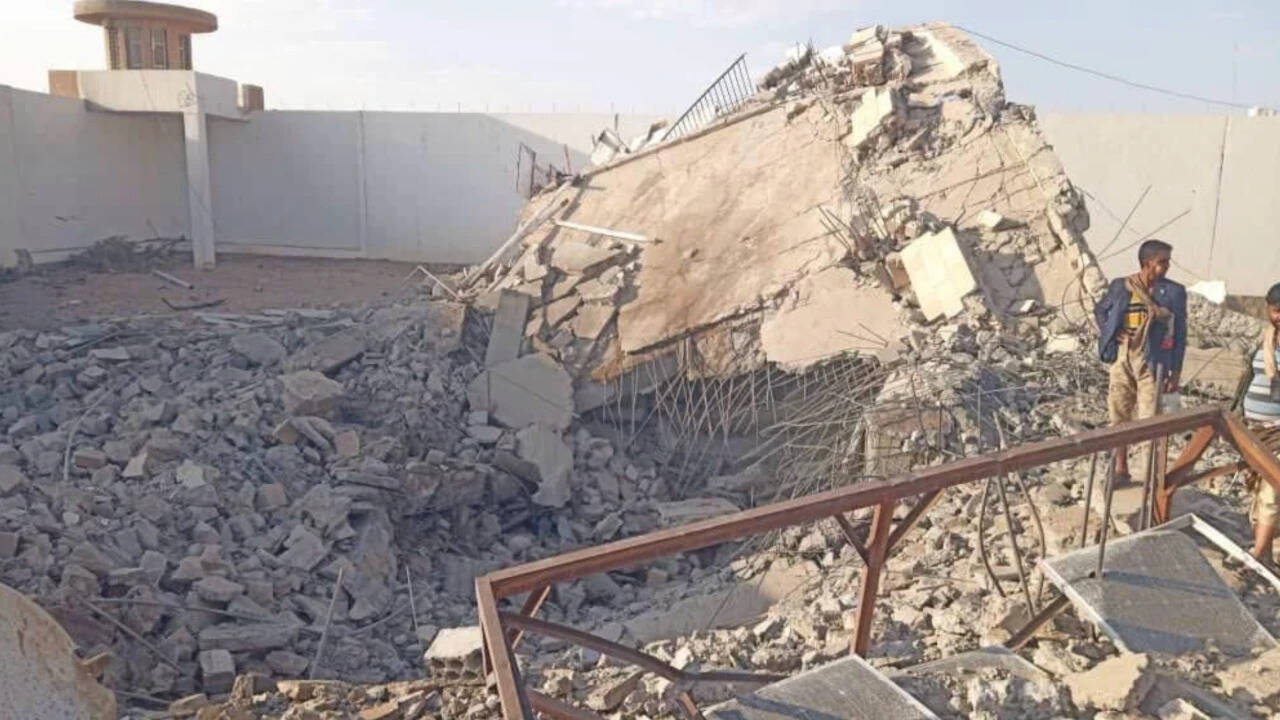
The airstrike did not arrive with the distant thunder of high-altitude strategic bombers. It came as a sudden, sharp fracture of the night air over Saada, slicing through the perimeter of a provincial prison facility and transforming a brick-and-mortar compound into a mass casualty site. By dawn, international monitors and local health officials were tallying the dead. Seven human lives extinguished instantly, including a child whose schoolbag remained intact amid the rubble.
Within hours, the propaganda apparatus swung into motion. The Houthi movement pointed a bloody finger squarely at the Saudi-led coalition, labeling the attack an intentional atrocity aimed at civilian infrastructure. Riyadh and its allies offered their standard operational denials, questioning coordinates, shifting blame, and pointing toward internal insurgent weapon caches. It is the predictable rhythm of a protracted proxy conflict.
Yet focusing solely on the immediate exchange of accusations misses the structural reality of how detention infrastructure operates in the Yemeni theater. Prisons in this conflict zone are not just holding areas for combatants or common criminals. They are strategic assets, bargaining chips, and unfortunately, frequently targeted nodes within a sprawling logistics network. Understanding why these facilities bleed requires looking past the rhetoric of the combatants and examining the grim mechanics of targeted infrastructure during protracted regional wars.
The Anatomy of a Facility Strike
Military planners sitting in command bunkers miles away do not target a detention facility by accident. Modern targeting methodology relies on rigorous verification chains, collateral damage estimates, and intelligence feeds gathered from reconnaissance drones, intercepted communications, and human assets on the ground. When a bomb drops on a jail, it happens because that specific grid coordinate has been flagged, vetted, and prioritized.
That reality leaves only two possibilities, neither of which speaks well of the combatants involved. Either the coalition intelligence apparatus suffered a catastrophic failure of target verification, confusing a civilian correctional facility with a legitimate military encampment, or the facility's dual-use nature had been compromised. In many active war zones, armed groups routinely repurpose state infrastructure. Schools become barracks. Warehouses become ammunition depots. Prisons become command posts or holding pens for high-value prisoners of war.
If the Saada facility housed military assets alongside civilian detainees, international humanitarian law draws a distinct line regarding proportionality. Even if a military objective exists within a compound, launching an airstrike that results in disproportionate civilian casualties violates the fundamental tenets of the Geneva Conventions. The presence of a single tactical advantage does not grant carte blanche to flatten an entire facility housing non-combatants.
The Information Battlefield
Wars are no longer fought exclusively with steel and high explosives. The narrative battle runs parallel to kinetic operations, often dictating the political cost of military maneuvers. When the Houthi leadership accused the coalition of committing deliberate massacres, they understood the propaganda value of civilian suffering. Every casualty image distributed through international wire services increases diplomatic pressure on Riyadh and its Western arms suppliers.
Conversely, the coalition faces an immense challenge in maintaining operational transparency. Military coalitions built from disparate national interests rarely speak with a single, coherent voice during a crisis. Bureaucratic inertia, fear of legal liability, and the desire to protect intelligence sources often result in delayed, defensive statements that invite skepticism.
This information vacuum allows both sides to manipulate casualty figures and distort the timeline of events. Human rights investigators on the ground face immense obstacles trying to verify claims independently. Access is restricted. Witnesses are intimidated. Forensic evidence is cleared away before impartial observers can document the crater depth, shrapnel dispersion, or residual chemical signatures that would definitively identify the ordnance used.
The Human Cost Behind the Wire
Statistics strip away the horror of war. Seven dead, including a child. The numbers roll off news tickers and fade into the background noise of a global news cycle saturated with distant crises. Behind those figures lie individual tragedies that compound the broader catastrophe of the Yemeni humanitarian collapse.
Detention facilities in Yemen were already strained to breaking point long before the first coalition aircraft crossed the border. Overcrowding, lack of basic sanitation, and severe malnutrition plagued the penal system. When an airstrike hits an already fragile institution, the survivors do not simply walk away. They are cast into a lawless environment devoid of medical care, legal representation, or basic security.
Families searching for missing relatives face an agonizing bureaucratic labyrinth. Are they dead beneath the concrete? Were they transferred to a secret holding site? Are they classified as combatants or civilian collateral? This systemic uncertainty functions as an instrument of psychological control, keeping populations compliant through fear and exhaustion.
Breaking the Cycle of Impunity
Accountability remains the rarest commodity in contemporary warfare. International inquiries frequently issue damning reports detailing violations committed by all parties to the conflict, yet these documents rarely translate into tangible legal consequences. The architecture of international law relies on the voluntary cooperation of sovereign states and non-state actors who possess zero incentive to prosecute their own leadership or allies.
Until the international community moves beyond symbolic condemnations and ties military assistance, diplomatic recognition, and economic engagement to strict adherence to humanitarian law, these strikes will continue. The blood spilled in Saada is not an isolated anomaly. It is the logical outcome of a war fought without restraint, where civilian lives are treated as acceptable friction in the pursuit of strategic dominance.